

Before, research into the survival of microbes on Mars focused on extremophiles, organisms that live in the most inhospitable environments on Earth—with high radiation, in salty regions, with significant temperature changes, or in arid zones. But, in 2020, several bacterial species found dwelling within or upon the human body were discovered to be capable of growing in media that mimic nutrient-poor conditions existing inside meteorites. This motivated researchers to see how bacteria would respond under Mars-like environmental conditions.
The researchers, spearheaded by microbiologist Tommaso Zaccaria of the German Aerospace Center in Cologne, conducted their experiments by containing samples of the four bacterial species in a box emulating the Martian environment, composed of regolith – a soil-like substance obtained on the Martian surface. They had expected the regolith to be toxic to bacteria and inhibit growth. Precisely the opposite took place. Three of the four bacterial species survived the experiment; in the case of P. aeruginosa, excellent growth occurred, with cells still growing after 21 days.
The researchers believe that the bacteria might have become established in the thin films of moisture available within the regolith, which would supply them with the required water and nutrients while also shielding them from at least some of the UV radiation. This is an important finding that supports the possibility of rapidly reproducing bacterial populations inadvertently delivered to Mars along with human missions, which could thereby threaten human health and make it more difficult to prevent the forward contamination of Mars with Earth microbes.
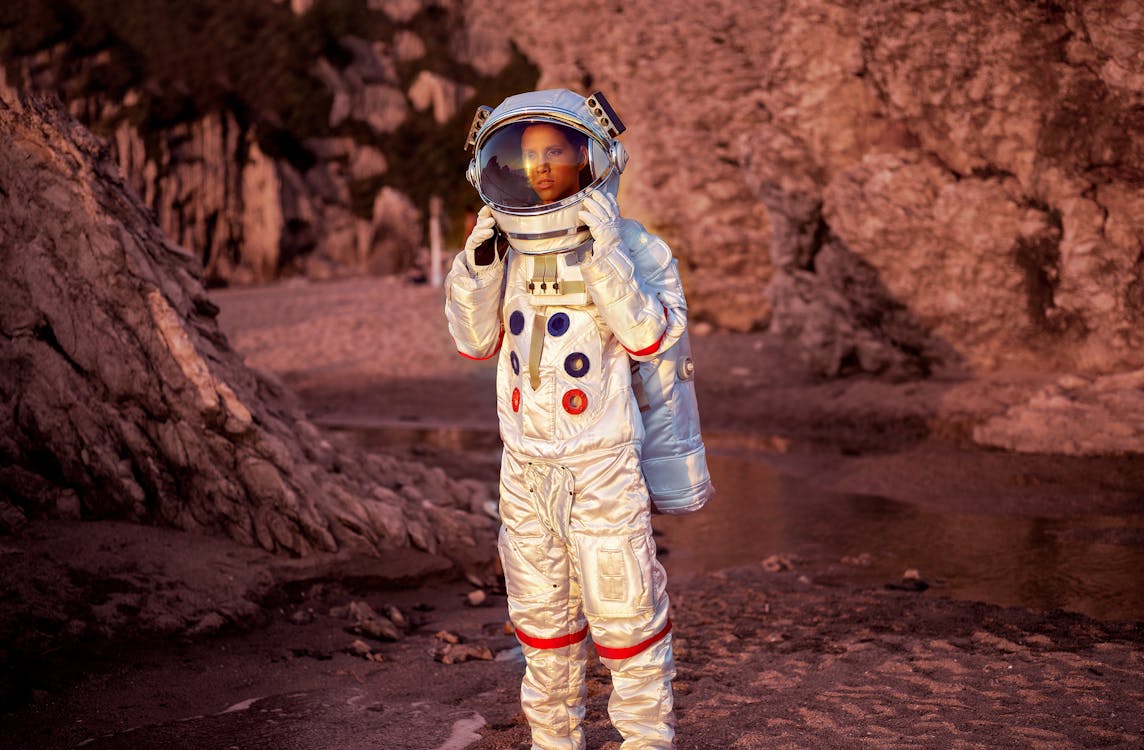
This research establishes the foundation for the requirement of planetary solid protection: if terrestrial bacteria have contaminated Mars, it will not only be tough to find native Martian life but will also block discovery through confusion with future missions carrying terrestrial organisms. He and his colleagues are advocating that some areas of Mars be protected in a way similar to national parks on Earth, so that only robotic missions can be performed there and so that the threat of bacterial contamination from humans would be at a minimum.

Moreover, the potential of these bacteria to persist and adapt to Martian conditions implies that broad-spectrum antibiotics would be available to manage infections, especially in future human missions to Mars. This becomes even more concerning when bearing in mind that the immune system of humans is likely to become stressed and dysregulated during spaceflight, thus predisposed to infections.
But despite the perennial problems created by such resilient bacteria, scientists like Samantha Waters from Mercer University still hold out hope. She says that if human ingenuity can tackle these problems and find solutions, that can prevent them from standing in the way of humanity's pursuit to reach and settle Mars. According to Waters, it is crucial to push forward our pursuit of this solar system. If we solve these problems in transit or on the settlement, they will usher in the next level of scientific breakthroughs and historic events.
In summary, this survival of pathogenic bacterial cells would be insufficient for future manned missions to Mars, indicative of equally broad capabilities in these microbes and the need for integrated planetary protection strategies. How humankind balances the risks and rewards of interplanetary exploration to walk on Mars is set to characterize our next steps.