Cellular membranes act as guardians of cellular integrity by regulating the passage of molecules in and out of the cell. Understanding the structure and function of these membranes is crucial for comprehending the intricacies of cellular processes. In this educational blog, we will explore the structure of model membranes, the dynamics of lipid bilayers, membrane protein functions, and the mechanisms governing cellular transport and electrical properties.
Structure of Model Membranes
The basic building block of cellular membranes is the lipid bilayer. Model membranes, like liposomes, provide simplified versions of these structures. Liposomes are made up of phospholipids organized in a double layer, imitating the lipid bilayer found in natural membranes. These models enable scientists to investigate membrane properties and interactions under controlled conditions.
 |
| Attribution: 1840567vibin, CC BY-SA 4.0 <https://creativecommons.org/licenses/by-sa/4.0>, via Wikimedia Commons |
Lipid Bilayer Dynamics
The lipid bilayer is not still; it shows dynamic properties that are crucial for cellular function. Lipid molecules can move laterally within the membrane, which is called lateral diffusion. Additionally, lipid molecules can undergo a flip-flop, where they move from one leaflet of the bilayer to the other. These dynamic processes affect membrane fluidity and permeability, influencing cellular activities such as signalling and transport.
 |
| AttributioBradleyhintze, CC BY-SA 3.0 <https://creativecommons.org/licenses/by-sa/3.0>, via Wikimedia Commons |
 |
| Attribution: OpenStax, CC BY 4.0 <https://creativecommons.org/licenses/by/4.0>, via Wikimedia Commons |
Membrane Protein Functions
Membrane proteins have diverse roles in cellular functions. These include facilitating diffusion, osmosis, and active transport. Integral membrane proteins span the lipid bilayer and form channels and transporters, selectively allowing ions and molecules to cross the membrane. On the other hand, peripheral membrane proteins interact with the membrane's surface and participate in processes such as signal transduction and membrane trafficking.
 |
| Attribution:Connectivid-D, CC BY-SA 4.0 <https://creativecommons.org/licenses/by-sa/4.0>, via Wikimedia Commons |
 |
| Attribution: Connectivid-D, CC BY-SA 4.0 <https://creativecommons.org/licenses/by-sa/4.0>, via Wikimedia Commons |
 |
| Credit: Ray1590, CC0, via Wikimedia Commons |
Transport Mechanisms
 |
| Attribution: Christinelmiller, CC BY-SA 4.0 <https://creativecommons.org/licenses/by-sa/4.0>, via Wikimedia Commons |
a. Diffusion:
Molecules move passively from high to low-concentration areas, essential for substance movement through the membrane.
 |
| Attribution: OpenStax, CC BY 4.0 <https://creativecommons.org/licenses/by/4.0>, via Wikimedia Commons |
b. Osmosis:
Osmosis is water movement across a semipermeable membrane from an area of low solute concentration to an area of high solute concentration. This process is crucial in maintaining cellular hydration and turgor pressure.
c. Ion Channels:
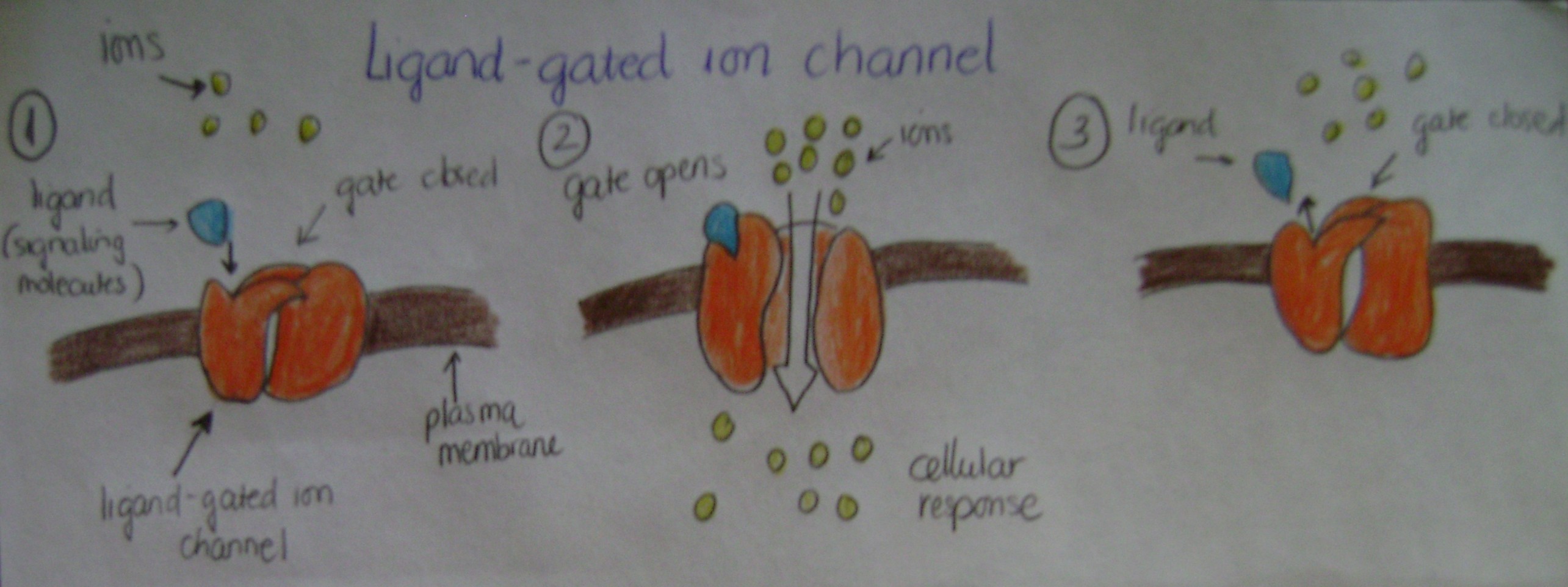
Ion channels are specialized membrane proteins that facilitate the selective transport of ions across the membrane. These gated channels can open or close in response to specific stimuli, regulating ion flow.
 |
| Attribution: Tlunchman, CC BY-SA 4.0 <https://creativecommons.org/licenses/by-sa/4.0>, via Wikimedia Commons |
 |
| Attribution: OpenStax, CC BY 4.0 <https://creativecommons.org/licenses/by/4.0>, via Wikimedia Commons |
 |
| Attribution: Ttn028, CC BY-SA 3.0 <https://creativecommons.org/licenses/by-sa/3.0>, via Wikimedia Commons |
 |
| Attribution: TSto1, CC BY-SA 4.0 <https://creativecommons.org/licenses/by-sa/4.0>, via Wikimedia Commons |
d. Active Transport:
Unlike passive transport, active transport requires energy to move molecules against their concentration gradient. Membrane pumps, such as the sodium-potassium pump, use ATP to transport ions across the membrane, maintaining essential electrochemical gradients for cellular function.
 |
| Attribution: Christinelmiller, CC BY-SA 4.0 <https://creativecommons.org/licenses/by-sa/4.0>, via Wikimedia Commons |
Mechanisms of Sorting and Regulation of Intracellular Transport:
Intracellular transport involves the movement of molecules and organelles within the cell. Sorting mechanisms ensure that proteins and lipids are directed to their appropriate destinations within the cell, such as the plasma membrane, endosomes, or lysosomes. The regulation of intracellular transport is tightly controlled, involving molecular motors, vesicle budding, and fusion events mediated by membrane-bound proteins.
Electrical Properties of Membranes:
The lipid bilayer has electrical properties that affect cellular excitability and signalling. Membrane potential, which is the voltage difference across the membrane, is caused by the uneven distribution of ions across the membrane. Ion channels and pumps play a role in creating and maintaining the membrane potential, which is important for processes like nerve conduction and muscle contraction. |
Attribution: Yujenkao, CC BY-SA 3.0 <https://creativecommons.org/licenses/by-sa/3.0>, via Wikimedia Commons |
Conclusion
Cellular membranes are dynamic structures essential for maintaining cellular homeostasis and facilitating communication with the external environment. Understanding the structure and function of membranes, as well as the mechanisms governing transport and electrical properties, provides insights into fundamental cellular processes and lays the foundation for advances in biomedical research and therapeutics.


