
In the nucleus of every cell, there is a complex arrangement of genetic material that controls the processes of life. This includes operons that coordinate gene expression, the structure of chromatin, and various types of genes and chromosomes. This blog will explore this intriguing world, covering topics such as operons, DNA structure, gene families, and more.
Operons:
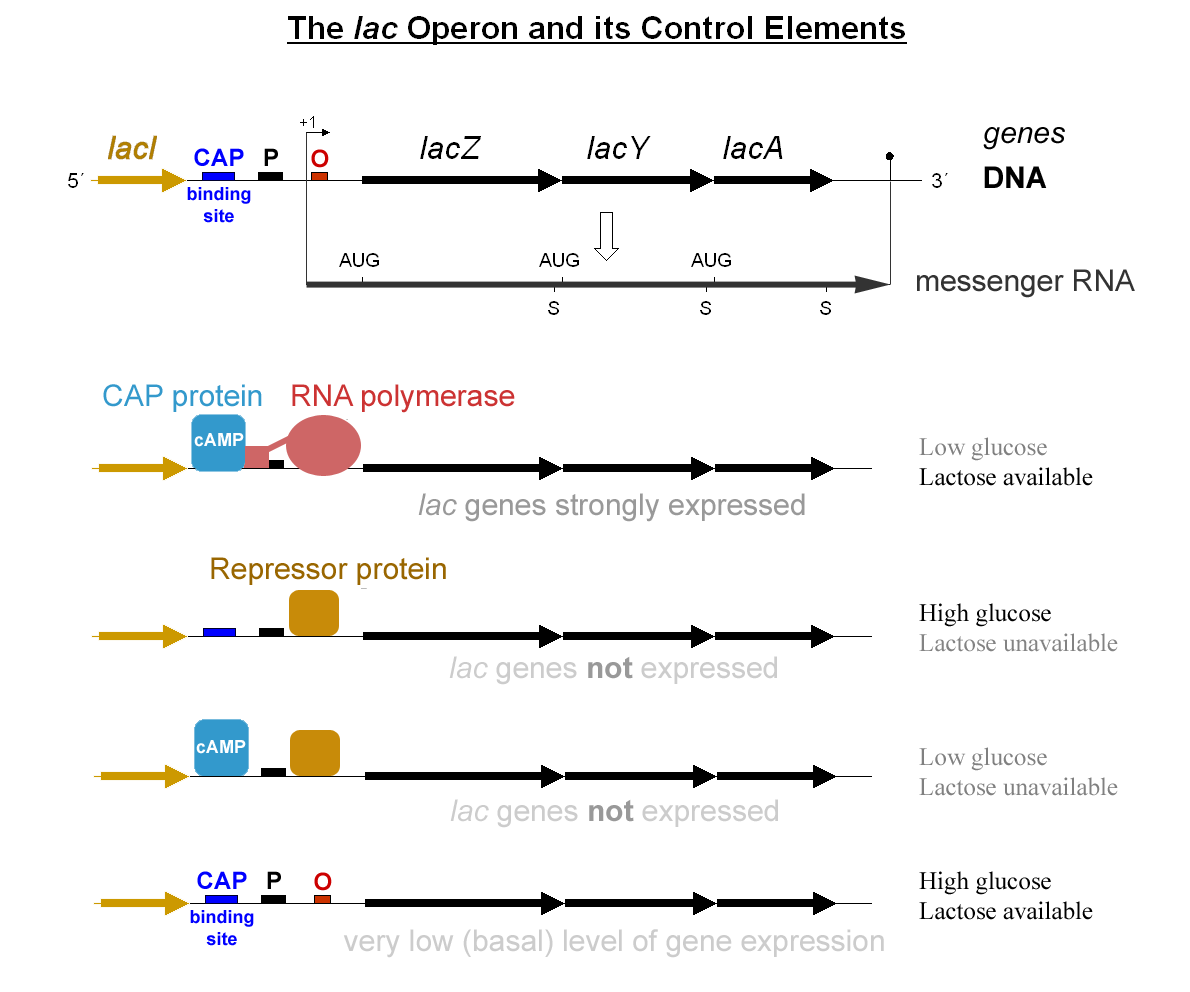
- Concept: Operons are essential functional units of prokaryotic gene regulation. They consist of a promoter, operator, and one or more structural genes, facilitating the coordinated expression of genes involved in related metabolic pathways.
- Function: Operons allow for efficient regulation of gene expression by coordinating the transcription of multiple genes in response to environmental signals. For instance, the lac operon regulates lactose metabolism in Escherichia coli.
 |
| Attribution: Lac_operon.png: G3proderivative work: Tereseik, CC BY 2.0 <https://creativecommons.org/licenses/by/2.0>, via Wikimedia Commons |
Unique and Repetitive DNA:
- Unique DNA: Unique DNA sequences are specific to individual organisms or species. They encode proteins, regulatory elements, and non-coding RNAs essential for cellular function.
- Repetitive DNA: There are numerous copies of repetitive DNA sequences throughout the genome. These sequences can be further distinguished as tandem repeats (such as satellite DNA) and interspersed repeats (such as transposable elements).
Interrupted Genes:
- Structure: Interrupted genes are characterized by the presence of coding sequences (exons) interspersed with non-coding sequences (introns). Precursor-mRNA (pre-mRNA) transcripts undergo a process called splicing, which involves the removal of introns and the subsequent joining of exons, ultimately leading to the production of mature mRNA.
- Function: Introns are non-coding segments of DNA within a gene that plays an important regulatory role in gene expression. They provide evolutionary flexibility by enabling the shuffling and diversification of exons through a process called alternative splicing.
Gene Families:
- Definition: Gene families comprise multiple genes with sequence similarity and functional homology, often resulting from gene duplication events followed by divergent evolution.
- Function: Gene families play a crucial role in broadening the functional capabilities of organisms by producing a wide array of protein isoforms with specialized functions. For instance, the globin gene family facilitates oxygen transport, while the homeobox gene family governs various developmental processes.
Structure of Chromatin and Chromosomes:
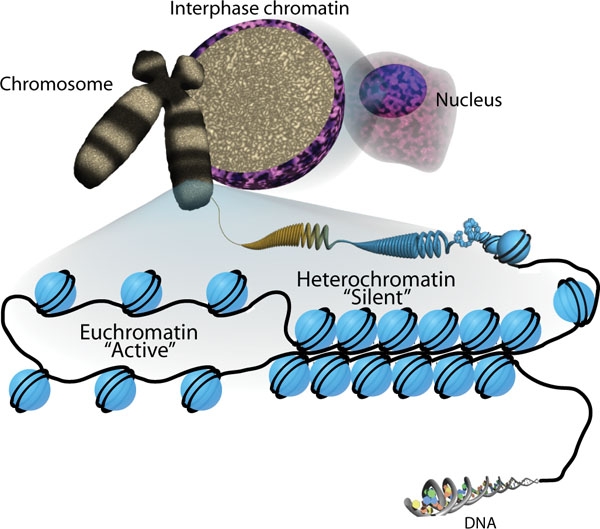
- Chromatin: Chromatin is a complex combination of DNA, histone proteins, and non-histone proteins that make up the structure of a eukaryotic chromosome. It has two main forms: euchromatin, which is less condensed and involved in active transcription, and heterochromatin, which is highly condensed and associated with gene repression.

Attribution: Darryl Leja, NHGRI, Public domain, via Wikimedia Commons
- Euchromatin: Euchromatin refers to the loosely packed form of chromatin within a cell's nucleus. It is associated with active gene transcription, acting as a gene expression and regulation site. Euchromatin is characterized by regions of accessible DNA, allowing for the transcriptional machinery to access and transcribe the genetic information stored within these regions. This accessible nature of euchromatin makes it a crucial component in regulating and expressing genes within the cell.
- Heterochromatin: Heterochromatin is tightly packed chromatin linked to gene silencing and transcriptional repression. It consists of highly repetitive DNA sequences and is crucial for maintaining chromosome structure and stability.
Attribution: Sha, K. and Boyer, L. A. The chromatin signature of pluripotent cells (May 31, 2009), StemBook, ed. The Stem Cell Research Community, StemBook, doi/10.3824/stembook.1.45.1, http://www.stembook.org., CC BY 3.0 <https://creativecommons.org/licenses/by/3.0>, via Wikimedia Commons
Transposons:
- Definition: Transposons, or jumping genes, are special DNA sequences that can move within the genome through transposition. This movement can result in these sequences being relocated to new positions in the genome, which can contribute to genetic diversity and the evolution of the genome.
- Function: Transposons, or "jumping genes," are DNA sequences that can move within the genome. They have a significant impact on genome dynamics by promoting genetic diversity, causing genome rearrangements, and influencing the evolution of gene regulatory networks. However, their activity can also introduce genetic instability and be implicated in the development of various diseases.

Attribution: Mjeltsch, CC BY-SA 4.0 <https://creativecommons.org/licenses/by-sa/4.0>, via Wikimedia Commons
Conclusion:
The exquisite organization of genes and chromosomes orchestrates the intricate dance of life, governing the complex molecular processes crucial for cellular function and the development of living organisms. From the harmonized expression of operons to the dynamic structure of chromatin and the mobility of transposons, every facet of genetic organization mirrors the extraordinary complexity and adaptability of life. Delving into the organization of genes and chromosomes provides profound insights into the mechanisms that control genetic processes, shape evolution, and contribute to the development of diseases. This understanding opens pathways for advancements in biotechnology, medicine, and various other fields.