
Plant hormones or phytohormones are very important chemical messengers controlling many expressions of growth by plants, development, and responses. They are synthesized in some tissues, and their activity characteristically works at slow rates. The major classes of plant hormones include auxins, gibberellins, cytokinins, ethylene, abscisic acid, brassinosteroids, jasmonates, and salicylic acid.
Biosynthesis of Plant Hormones
General Pathways and Precursor Molecules
Plant hormones are synthesized through myriad biochemical pathways using precursor molecules, which are often derived from primary metabolism. These pathways are tightly controlled to make sure that the proper levels of the hormones are reached for plant functions.
Auxins
Auxins, mainly indole-3-acetic acid (IAA), are synthesized from the amino acid tryptophan in a series of enzymatic reactions. The significant enzymes are tryptophan aminotransferase and indole-3-pyruvate decarboxylase.
 |
| Attribution: TheScienceContributor, CC BY-SA 4.0 <https://creativecommons.org/licenses/by-sa/4.0>, via Wikimedia Commons |
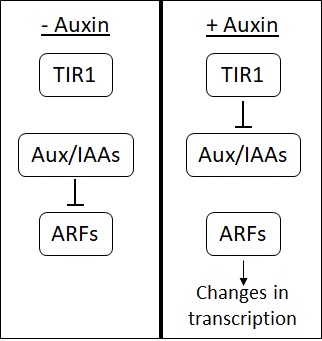 |
| Attribution: Scotanist, CC BY-SA 4.0 <https://creativecommons.org/licenses/by-sa/4.0>, via Wikimedia Commons |
Gibberellins
Gibberellins (GAs) are diterpenoid molecules synthesized from geranylgeranyl diphosphate (GGPP). Steps include the formation of ent-kaurene, which is converted to active GAs through oxidation reactions catalyzed by cytochrome P450 monooxygenases. Some further modifications lead to the production of several active cytokinins.
 |
| Attribution: Scotanist, CC BY-SA 4.0 <https://creativecommons.org/licenses/by-sa/4.0>, via Wikimedia Commons |
 |
| Attribution: User: Innerstream, Public domain, via Wikimedia Commons |
Ethylene
Ethylene is synthesized from the amino acid methionine via the Yang cycle. The central intermediate, SAM, is converted to 1-aminocyclopropane-1-carboxylic acid (ACC) by the enzyme ACC synthase. ACC is then oxidized to ethylene by the enzyme ACC oxidase.

Abscisic Acid
Abscisic acid (ABA) is produced from carotenoids. Hydroxylation and oxidation The cleavage of the carotenoid zeaxanthin gives xanthoxin, which is subsequently modified to ABA by further oxidation reactions.
 |
| Attribution: Charlesy, Public domain, via Wikimedia Commons |
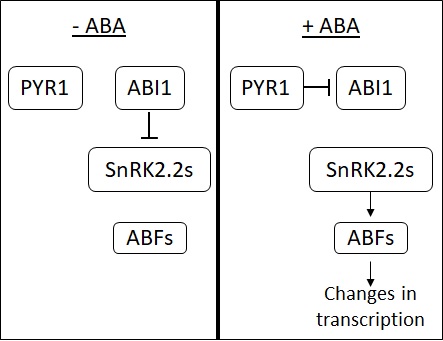 |
| Attribution: Scotanist, CC BY-SA 4.0 <https://creativecommons.org/licenses/by-sa/4.0>, via Wikimedia Commons |
Brassinosteroids
Brassinosteroids are derived from campesterol, a plant sterol. This occurs through a series of hydroxylation and then oxidation steps, catalyzed by cytochrome P450 enzymes.
 |
| Attribution: Scotanist, CC BY-SA 4.0 <https://creativecommons.org/licenses/by-sa/4.0>, via Wikimedia Commons |
Jasmonates
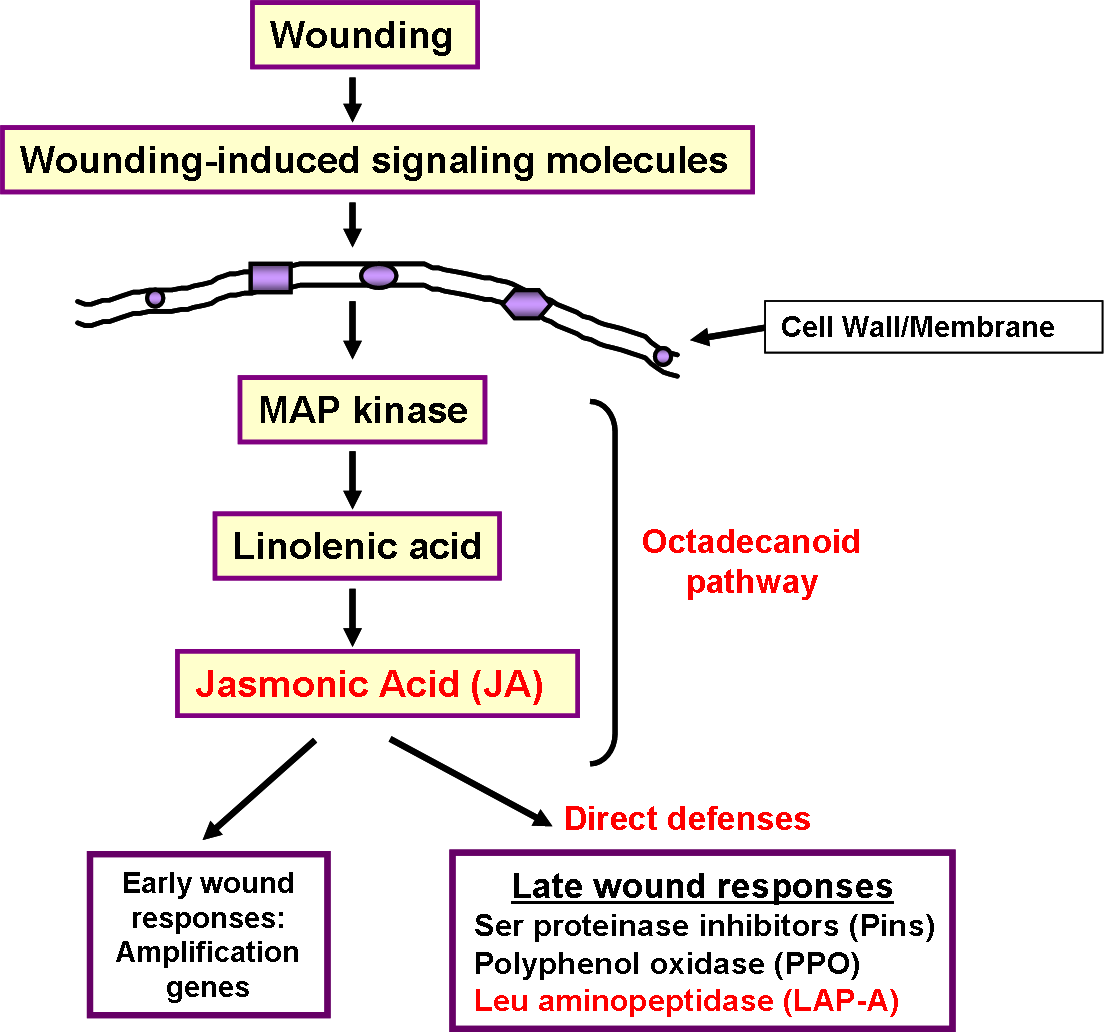
Jasmonates are synthesized from linolenic acid through the octadecanoid pathway. The most critical steps are the formation of 12-oxo-phytodienoic acid (OPDA) and its conversion to jasmonic acid.
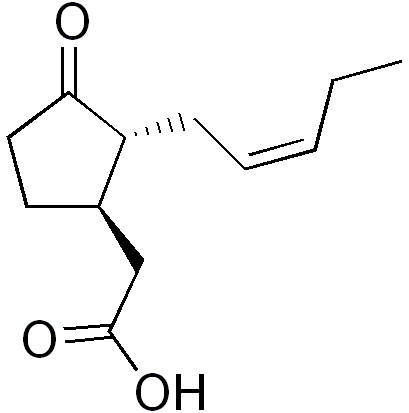 |
| Fig.- Jasmonic acid |
 |
| Fig.- Methyl Jasmonate |
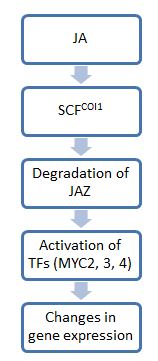 |
| Attribution: Ary1688, CC BY-SA 3.0 <https://creativecommons.org/licenses/by-sa/3.0>, via Wikimedia Commons |
Salicylic Acid
Salicylic acid is synthesized in plants from chorismate through two major pathways, the phenylalanine ammonia-lyase pathway and the isochorismate pathway, leading to the production of salicylic acid directly from chorismate or phenylalanine.
Storage and Degradation of Plant Hormones
Mechanisms of Hormone Storage in Plant Cells
Plant hormones within plant cells can be stored in an inactive form, most often as conjugates with sugars, amino acids, or peptides. These conjugates can be conformed in vacuoles or bind with cellular structures and hence can activate at a faster rate.
Enzymatic Degradation of Hormones and their Regulation
levels of free hormones in the plasma are controlled via enzymatic degradation. Special enzymes like oxidases, dehydrogenases, and hydrolases degrade the hormones into inactive substances, ensuring the activation and degradation are under control.
Conjugation and Sequestration
Hormones can be conjugated with various molecules, like glucose or amino acids. Such conjugations inactivate hormones. The process of conjugation is reversible. This helps the plant to store and mobilize hormones according to the requirement.
Transport of Plant Hormones
Mechanism of Hormone Transport
Hormones are transported through vascular tissues (xylem and phloem) and cell-to-cell movement. The transport may be passive or active via specific transport proteins.
Transport Proteins and Channels
PIN and ABC auxin transporters are auxiliary proteins in charge of the direction of cell movement through hormones. These proteins ensure that the hormones reach their target tissues correctly.
Transport Mechanisms
Auxins: There is a polar transport mechanism controlled by PIN, together with AUX1/LAX proteins.
Gibberellins: They are transported using both the xylem and phloem. Cytokinins: The flow direction is in the xylem, from the roots toward the shoots.
Ethylene: Diffuses as a gas through plant tissues.
Abscisic Acid: Transported in both xylem and phloem.
Brassinosteroids: Probably transported through the phloem.
Jasmonates: Transported through the phloem. Salicylic Acid: Transported through the phloem and can move cell-to-cell.
Physiological Effects of Plant Hormones
Overview of Hormonal Influence
Plant hormones influence nearly all aspects of plant growth and development, from seed germination to senescence. They potently act synergistically or antagonistically to control processes appropriately in response to internal and external signals.
Specific Actions of Each Hormone
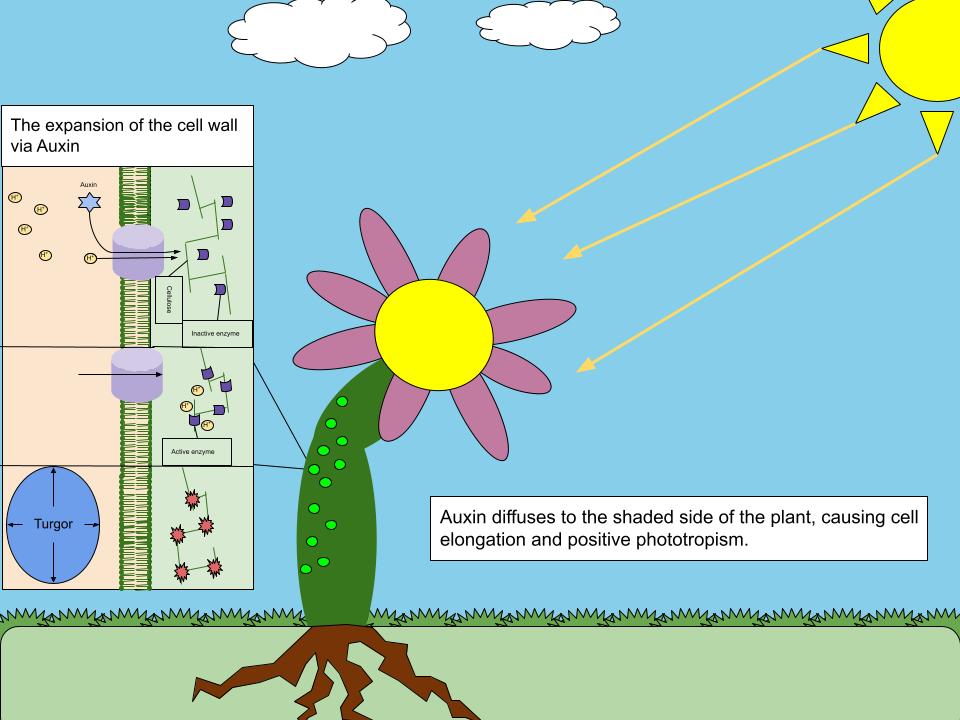
Auxins: Auxins elongate cells promote the initiation of roots, and direct tropic responses (phototropism and gravitropism). They also play roles in apical dominance and vascular differentiation.
 |
| Attribution: Patricklockwoood, CC BY-SA 4.0 <https://creativecommons.org/licenses/by-sa/4.0>, via Wikimedia Commons |
 |
| Attribution: MacKhayman, CC BY-SA 3.0 <https://creativecommons.org/licenses/by-sa/3.0>, via Wikimedia Commons |
Gibberellins: Gibberellins promote stem elongation and flowering, as well as the germination of seeds. They also affect fruit and leaf growth.
 |
| Attribution: Lee Spahr, CC BY-SA 3.0 <https://creativecommons.org/licenses/by-sa/3.0>, via Wikimedia Commons |
Cytokinins: promote cell division and the initiation of shoots, although they delay senescence by maintaining chlorophyll content. They also act with auxins in their mutual regulation of organogenesis.
Ethylene: influences fruit ripening, leaf abscission, and stress reactions, mediating the response to mechanical stress and attack by pathogens.
Abscisic Acid: controls the closure of stomata when there is a water shortage, can induce seed dormancy, and is involved in the response to environmental stress.
Brassinosteroids: promote cell expansion, vascular differentiation, and tolerance to stress. They also enhance germination and photomorphogenesis.
 |
| Attribution: Bojjam V. Vardhini, Naser A. Anjum, CC BY 4.0 <https://creativecommons.org/licenses/by/4.0>, via Wikimedia Commons |
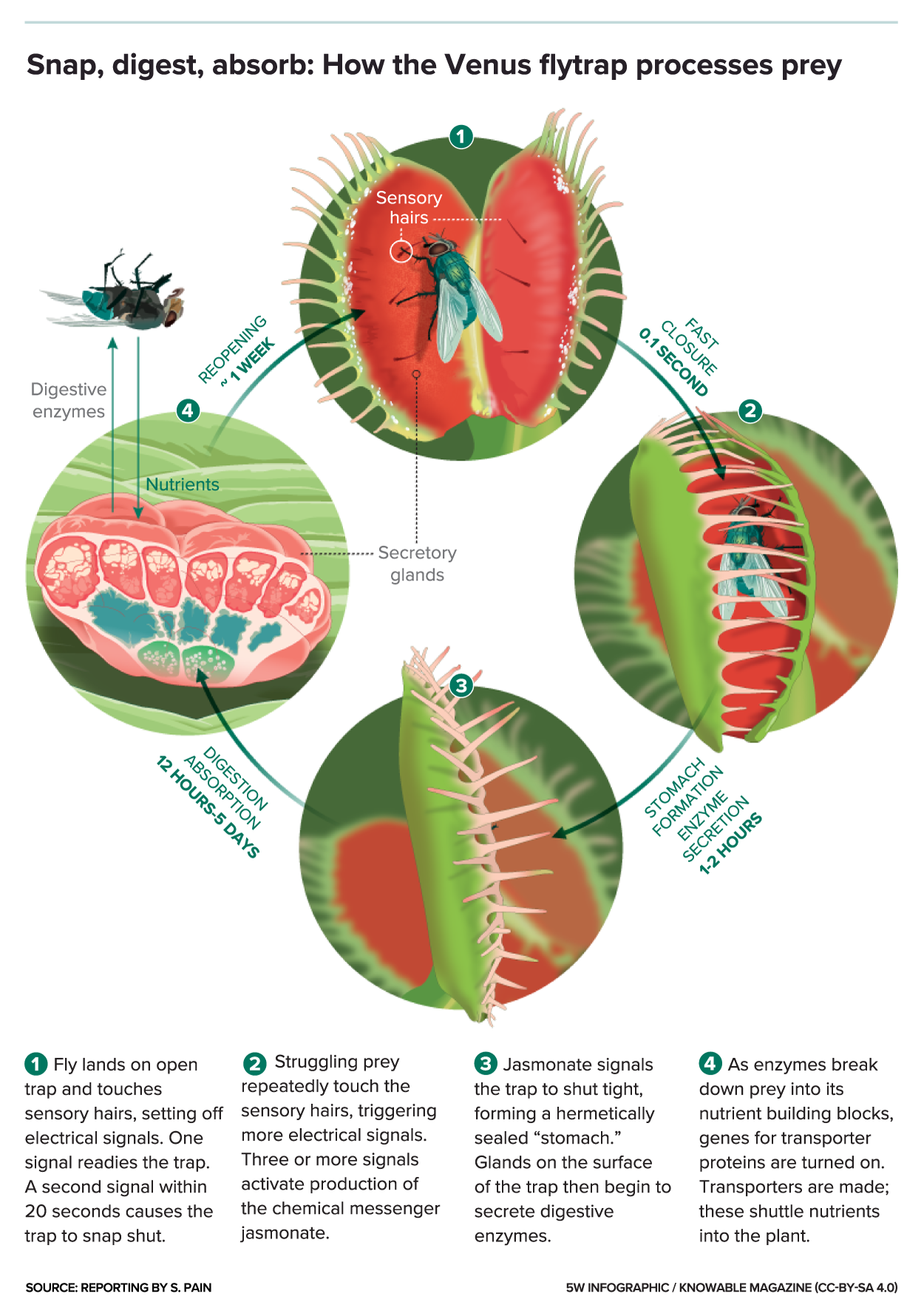
Jasmonates: They have a significant role in defence responses from herbivores and pathogens, reproductive development, and wound reactions. Salicylic Acid: It plays a critical role in pathogen defence and systemic acquired resistance. It also moderates flowering and thermogenesis.
 |
| Attribution: Rmbs25, Public domain, via Wikimedia Commons |
 |
| Attribution: L. Modica / Knowable Magazine, CC BY-SA 4.0 <https://creativecommons.org/licenses/by-sa/4.0>, via Wikimedia Commons |
Mechanisms of Action
Hormone Receptors and Perception
Hormones act by linking up with particular receptors that are present either on the surface of the cell or within the cell. These receptors set off signal transduction pathways that result in cellular responses.
Signal Transduction Pathways
The binding of the hormone sets off a cascade of events mainly involving secondary messengers, protein kinases, and, ultimately, transcription factors. These pathways amplify the hormonal signal and lead to changes in gene expression.
 |
| Attribution: Kbousfield, CC BY-SA 3.0 <https://creativecommons.org/licenses/by-sa/3.0>, via Wikimedia Commons |
Interaction with Transcription Factors and Gene Expression
The activated transcription factors bind to specific DNA sequences and regulate the expression of target genes. This leads to the physiological changes triggered by this regulation through the hormone.
Crosstalk of Different Hormone Signaling Pathways
The hormonal pathways never work in isolation. Crosstalk of different hormone signalling pathways enables the plant to integrate more than one signal and manifest complex responses. For example, the cross-talk between auxins and cytokinins regulates organogenesis, while jasmonates with salicylic acid, for example, modulate defence.
Conclusion
Plant hormones are at the heart of the complex regulatory networks controlling plant growth, development, and responsiveness to environmental signals. An understanding of their biosynthesis, storage, breakdown, and transport, together with a sense of their physiological effects and their mode of action, facilitates an understanding of plant biology and can be used in agricultural practice to gain increased crop yield and stress resilience. Future research will unveil the complexity in the background of hormone cross-talk and integration for plant adaptation and survival. The detailed review helps address significant aspects associated with plant hormone biology and makes overall knowledge easy for academic research and practical applications.