
RNA synthesis and processing are complex processes that play a central role in transferring genetic information within cells. Starting with the beginning of transcription and extending to the changes made to RNA after transcription, understanding these processes reveals the ever-changing landscape of gene expression control and RNA function. In this in-depth educational article, we set out on a thorough exploration of RNA production and modification, diving into things such as transcription regulators, RNA builders, RNA modification processes, and the various roles of RNA molecules.

Transcription Factors and Machinery
Transcription Initiation: For transcription to begin, a pre-initiation complex must be formed, which consists of RNA polymerase, transcription factors, and promoter sequences that are recognized by specific transcription factors.
Transcription Activators and Repressors: Transcription factors can turn gene expression on or off by attaching to enhancer or silencer elements in DNA, correspondingly.
RNA Polymerases:
Types of RNA Polymerases:
Eukaryotic cells possess three types of RNA polymerases: RNA Pol I, which transcribes genes for rRNA; RNA Pol II, responsible for transcribing protein-coding genes and certain non-coding RNAs; and RNA Pol III, which transcribes tRNA and other small RNAs.
RNA polymerases facilitate the production of RNA molecules by utilizing DNA templates and integrating ribonucleotides in a 5'-to-3' orientation.
.gif) |
| Attribution: Rosanna Hartline (RosieScienceGal), CC BY 4.0 <https://creativecommons.org/licenses/by/4.0>, via Wikimedia Commons |
Capping, Elongation, and Termination:
Capping: After RNA is newly synthesized, it goes through capping, during which a 7-methylguanosine cap is attached to the 5' end. This cap serves to protect the RNA molecule and helps in the export and translation of mRNA.
 |
| Attribution: MSPaintDrawings, CC BY-SA 4.0 <https://creativecommons.org/licenses/by-sa/4.0>, via Wikimedia Commons |
RNA Processing:
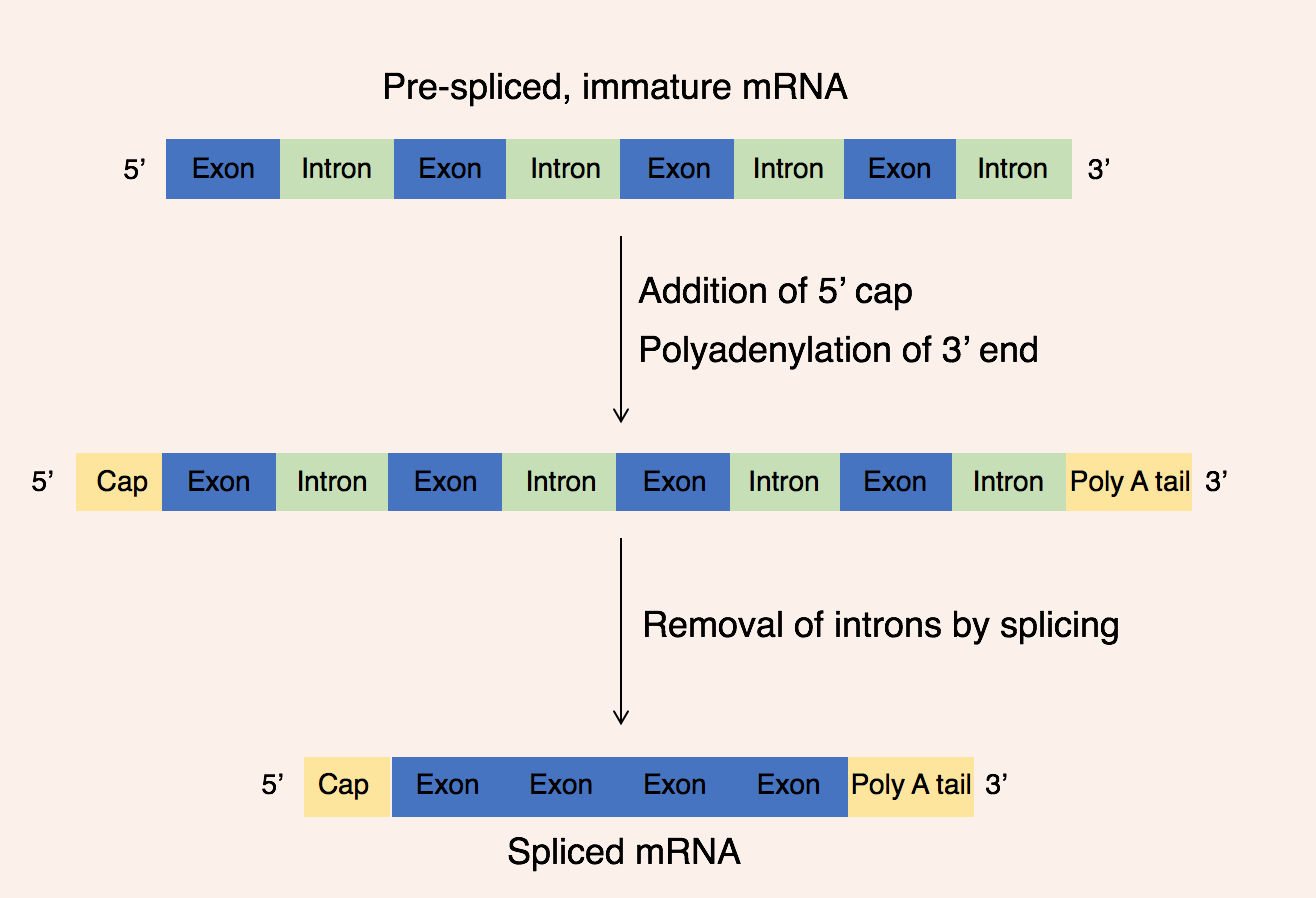
RNA Splicing: The spliceosome, which is a complex of RNA and protein, removes introns from pre-mRNA transcripts, creating mature mRNA molecules.
 |
| Attribution: Kep17, CC BY-SA 4.0 <https://creativecommons.org/licenses/by-sa/4.0>, via Wikimedia Commons |
Structure and Function of Different Types of RNA:
Messenger RNA (mRNA): The RNA molecule carries the genetic information from DNA to the ribosome, where it acts as a blueprint for creating proteins.
 |
| Attribution: Christinelmiller, CC BY-SA 4.0 <https://creativecommons.org/licenses/by-sa/4.0>, via Wikimedia Commons |
RNA Transport:
mRNA Export: Mature messenger RNA molecules are transported from the nucleus to the cytoplasm through nuclear pore complexes, and once there, they are translated into proteins.
Conclusion
RNA synthesis and processing are continuously changing and carefully regulated processes critical for gene expression and cell function. Every stage in these processes, from the start of transcription to the development of functional RNA molecules, is precisely coordinated to ensure the correct transmission of genetic material. Grasping RNA production and modification gives us a better understanding of gene regulation, RNA roles, and cell function, with implications for fields including molecular biology, medicine, and biotechnology. As we uncover the intricacies of RNA biology, we develop a deeper understanding of the essential processes that form the basis of life.
Tags
Capping
Education
Elongation
Initiation Complex
Polyadenylation
Repressor
RNA Processing
RNA Synthesis
RNA Transport
Splicing
Termination
Transcription Factors
Types of RNA