
The excretory system is one of the most vital, yet often overlooked, systems in our body. It plays an essential role in keeping our internal environment stable and healthy by getting rid of waste and regulating things like water balance, blood pressure, and electrolyte levels. In humans, the kidneys are the main organs responsible for this, but excretion takes on different forms across various species, each adapted to its environment.
In this blog, we’ll take a deep dive into the fascinating world of excretion. We’ll explore how different animals handle waste, how the human kidney works, and how our body maintains the perfect balance of water, blood, and electrolytes.
The Importance of the Excretory System
Every second, our bodies are hard at work breaking down food, creating energy, and performing countless chemical reactions. Along the way, waste products like urea, uric acid, and ammonia are produced. These waste products, if not properly removed, can become toxic. That’s where the excretory system comes in, ensuring that our body stays clean and balanced.
The excretory system isn’t just about waste removal—it’s a finely-tuned network responsible for regulating essential functions that keep us alive.
Key Players in the Human Excretory System
- Kidneys: The star of the show, the kidneys filter the blood, produce urine, and help maintain water and electrolyte balance.
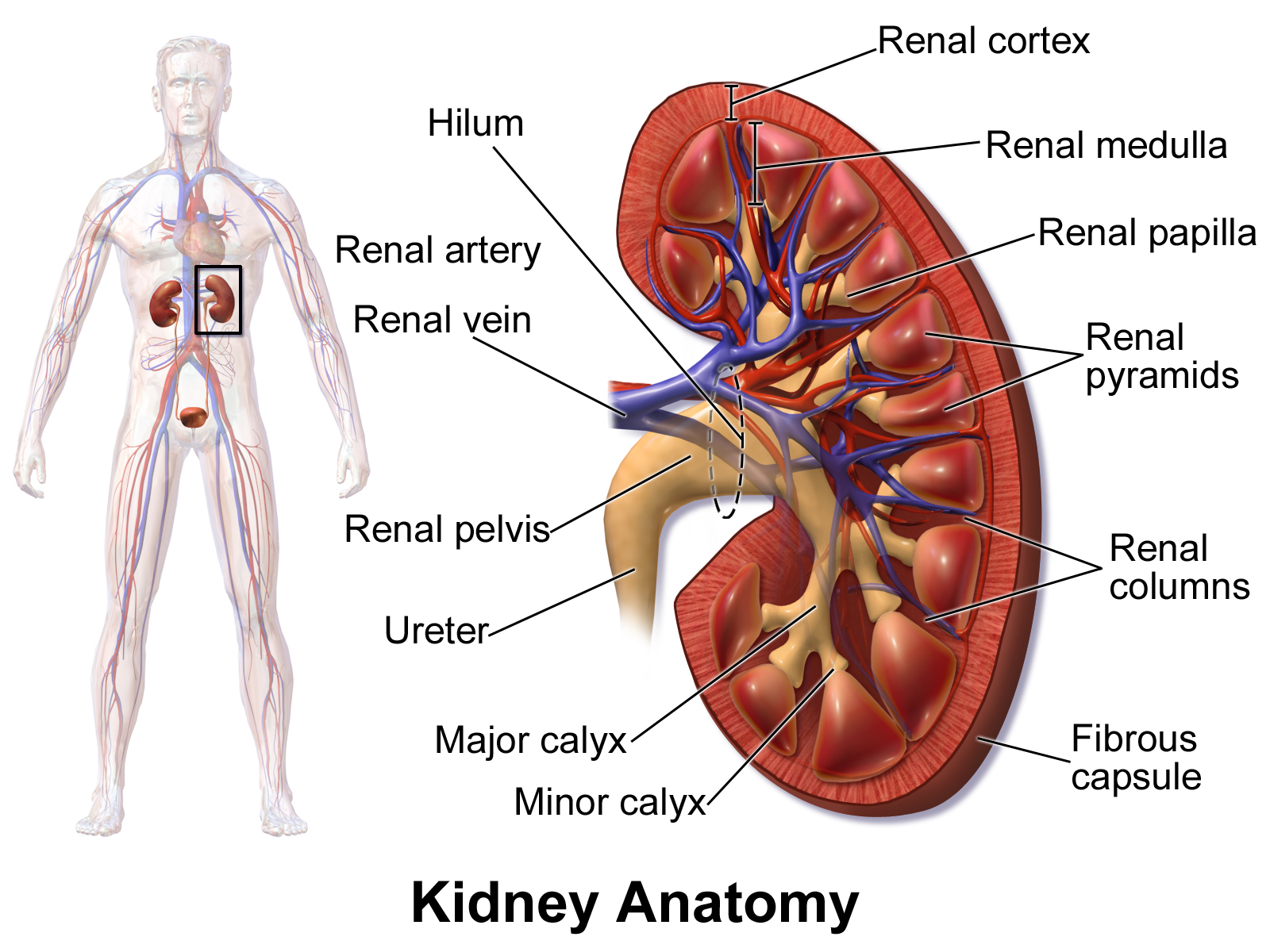 |
| Attribution: BruceBlaus. When using this image in external sources it can be cited as:Blausen.com staff (2014). "Medical gallery of Blausen Medical 2014". WikiJournal of Medicine 1 (2). DOI:10.15347/wjm/2014.010. ISSN 2002-4436., CC BY 3.0 <https://creativecommons.org/licenses/by/3.0>, via Wikimedia Commons |
- Ureters, Bladder, and Urethra: Once the urine is produced, it travels down the ureters to the bladder, where it’s stored until we decide it’s time to urinate.
.png) |
| Attribution: BruceBlaus, CC BY-SA 4.0 <https://creativecommons.org/licenses/by-sa/4.0>, via Wikimedia Commons |
- Skin and Lungs: Yes, even the skin and lungs help with excretion! The skin releases small amounts of urea and salts through sweat, while the lungs get rid of carbon dioxide from the blood.
Different organisms handle excretion in unique ways, depending on where they live and their metabolic needs.
Comparative Physiology of Excretion: How Different Animals Handle Waste
In the animal kingdom, the way creatures get rid of their waste varies a lot. While humans excrete urea, other animals have evolved different methods that suit their environments.
1. Ammonotelic Animals: Excreting Ammonia
Some animals, especially those that live in water, excrete ammonia. Ammonia is highly toxic but very soluble in water, so it can be quickly diluted and flushed away. Animals that excrete ammonia include:
- Fish: Most bony fish excrete ammonia directly into the water through their gills.
- Amphibians: In their larval stages (like tadpoles), amphibians also excrete ammonia.
- Aquatic Invertebrates: Creatures like shrimp and crabs release ammonia directly into the water.
2. Ureotelic Animals: Excreting Urea
Animals that excrete urea are called ureotelic. Urea is much less toxic than ammonia and can be safely concentrated in urine. This is a great strategy for land animals that need to conserve water. Examples include:
- Mammals: Humans and most mammals convert ammonia into urea in the liver, which is then filtered out by the kidneys.
- Amphibians: Adult frogs and other amphibians excrete urea after transitioning from water to land.
- Sharks: Interestingly, sharks use urea to maintain their internal osmotic balance with seawater.
3. Uricotelic Animals: Excreting Uric Acid
Uricotelic animals, such as birds and reptiles, excrete uric acid. Uric acid is almost insoluble in water, so it can be excreted as a paste or solid, which conserves water—perfect for life in dry environments. Examples include:
- Birds: Birds excrete uric acid as a semi-solid paste to conserve water.
- Reptiles: Snakes and lizards also use this method to survive in dry habitats.
- Insects: Many desert-dwelling insects excrete uric acid to minimize water loss.
These different excretory strategies show how beautifully animals have evolved to handle the balance between removing toxins and conserving water.
The Human Kidney: How It Works
In humans, the kidneys are the central organs for excretion, performing various crucial tasks beyond just filtering waste. They regulate water levels and electrolytes and even control blood pressure. But how do they do it?
Structure of the Kidney
Each kidney contains about a million nephrons, the tiny filtering units that do the heavy lifting of producing urine. A nephron consists of:
- Bowman’s Capsule: A cup-like structure surrounding the glomerulus, a cluster of tiny blood vessels where filtration begins.
- Proximal Convoluted Tubule: The site where most water, electrolytes, and nutrients are reabsorbed.
- Loop of Henle: A key structure responsible for concentrating urine.
- Distal Convoluted Tubule: Where further fine-tuning of water and electrolyte balance happens.
- Collecting Duct: The final stop for urine before it heads to the ureters.

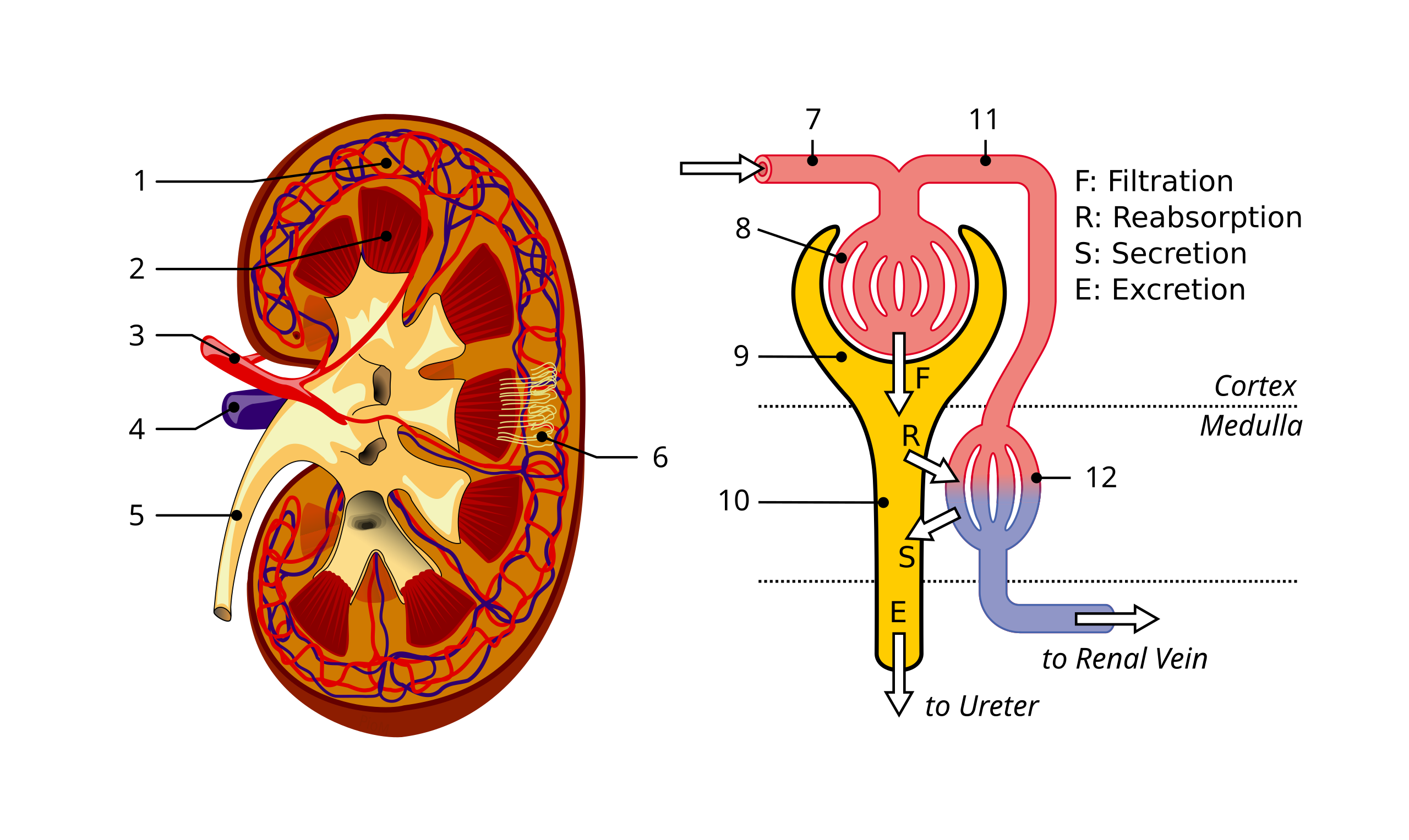 |
| Fig- Schematics of kidney and nephron. 1: Renal cortex. 2: Medulla. 3: Renal artery. 4: Renal vein. 5: Ureter. 6: Nephrons. 7: Afferent arteriole. 8:Glomerulus. 9: Bowman’s capsule. 10: Tubuli and loop of Henle. 11: Efferent arteriole. 12: Peritubular capillaries. Attribution: File:Physiology_of_Nephron.svg: Madhero88File:KidneyStructures_PioM.svg: Piotr Michał Jaworski; PioM EN DE PLderivative work: Daniel Sachse (Antares42), CC BY-SA 3.0 <https://creativecommons.org/licenses/by-sa/3.0>, via Wikimedia Commons |
Kidney Functions
- Water Balance: The kidneys adjust the concentration of urine based on how hydrated you are. When you’re dehydrated, they’ll concentrate your urine to conserve water.
- Electrolyte Balance: The kidneys keep tabs on important ions like sodium, potassium, and calcium, ensuring they’re kept in the right balance for healthy bodily function.
- Blood Pressure Regulation: The kidneys play a key role in regulating blood pressure through the renin-angiotensin-aldosterone system (RAAS).
- Acid-Base Balance: The kidneys help maintain the body’s pH by controlling how much hydrogen and bicarbonate are excreted or reabsorbed.
How Urine is Formed: From Filtration to Elimination
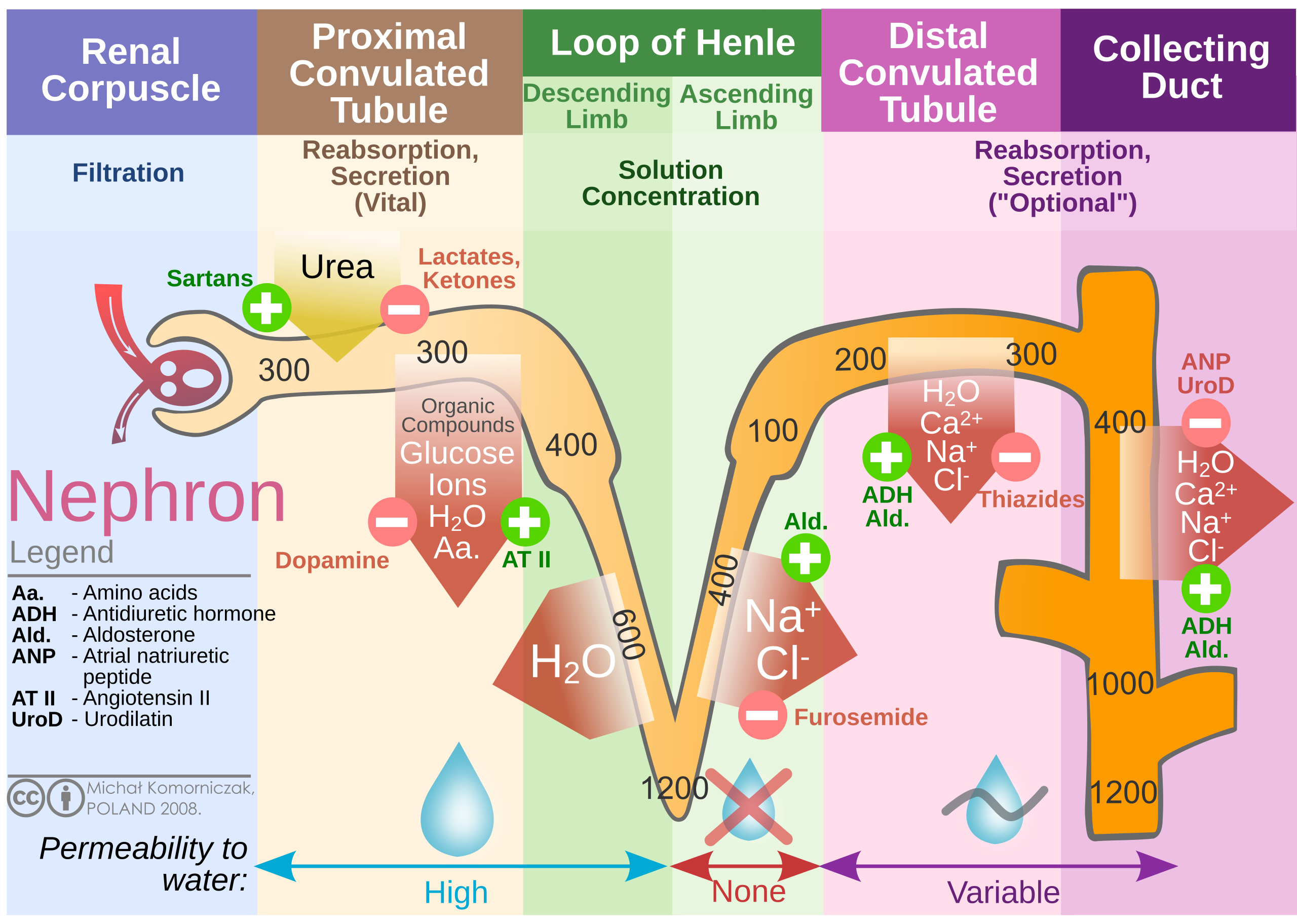
Urine formation is a fascinating process that occurs in three main steps: filtration, reabsorption, and secretion.
1. Filtration
Blood enters the glomerulus, where pressure forces water and small solutes like glucose, electrolytes, and urea through a membrane into Bowman’s capsule. This is the first step of urine formation, creating what’s called “filtrate.”
2. Reabsorption
Next, the filtrate moves through the proximal convoluted tubule, where most water, glucose, and electrolytes are reabsorbed back into the blood. This ensures that important substances aren’t lost in urine.
3. Secretion
In the final stage, unwanted substances like hydrogen ions and creatinine are actively secreted into the tubule. What’s left is a concentrated solution of waste—urine—ready to be excreted.
 |
| Attribution: Nephron-urine.svg: M.Komorniczak, polish wikipedist.Kidney nephron molar transport diagram.png: *Nephron-urine.svg: M.Komorniczak, polish wikipedist.derivative work: Juvo415derivative work: Mcstrother, CC BY-SA 3.0 <https://creativecommons.org/licenses/by-sa/3.0>, via Wikimedia Commons |
Urine Concentration: The Kidney’s Water-Conserving Trick
One of the kidney’s coolest tricks is its ability to concentrate urine, allowing us to conserve water when necessary. This happens in the loop of Henle through a process known as the countercurrent multiplier system.
- Descending Limb: Water leaves the filtrate here, making it more concentrated.
- Ascending Limb: The filtrate becomes less concentrated as sodium and chloride are actively pumped out.
This creates a gradient in the kidney, allowing water to be reabsorbed from the collecting duct when needed, especially when the body releases antidiuretic hormone (ADH).
Waste Elimination and Micturition
Once urine is formed, it travels through the ureters to the bladder, where it’s stored until it’s time to urinate.
Bladder Storage
The bladder is a flexible, muscular sac that can store urine for several hours. When the bladder gets full, it sends a signal to the brain that it’s time to go.
The Act of Urination: Micturition
Micturition is the technical term for urination. It involves both involuntary and voluntary muscle control:
- The detrusor muscle in the bladder contracts, while the internal urethral sphincter relaxes to let urine out.
- We voluntarily control the external urethral sphincter, allowing us to hold or release urine as needed.
Regulation of Water Balance and Blood Volume
Maintaining the right balance of water in the body is crucial, and the kidneys are constantly fine-tuning this process.
Hormones at Play
Several hormones help regulate water balance and blood volume:
- ADH (Antidiuretic Hormone): Released by the brain when we’re dehydrated, ADH signals the kidneys to conserve water by concentrating the urine.
- Aldosterone: Part of the RAAS, aldosterone promotes the reabsorption of sodium, which helps the body retain water and raise blood volume.
- Atrial Natriuretic Peptide (ANP): ANP reduces sodium reabsorption, helping to lower blood volume when it’s too high.
Electrolyte and Acid-Base Balance
The kidneys also keep our electrolyte levels in check, making sure essential ions like sodium and potassium are at optimal levels.
Sodium and Potassium
The balance of sodium and potassium is critical for proper muscle and nerve function. Too much or too little of either can lead to serious health problems.
Acid-Base Balance
To maintain the body’s ideal pH, the kidneys either excrete or retain hydrogen ions and bicarbonate. This keeps the body’s internal environment just right for enzymes and other metabolic processes to function properly.
Conclusion: A Delicate Balance
The excretory system is an incredible network of processes and organs working together to maintain our body’s balance. From filtering blood and forming urine to regulating blood pressure, electrolyte levels, and pH, the kidneys and their supporting players ensure we stay healthy and stable. Whether we’re talking about a desert-dwelling lizard or a human sipping water in a cool room, excretion is a critical process for life.