
Picture this: an industrial site once marred by toxic chemicals, now transformed into lush, green fields or forests. Rivers once contaminated with heavy metals and oil are now flowing clean and clear. This isn’t some distant dream; it’s happening right now, thanks to the wonders of bioremediation and phytoremediation. These two remarkable natural processes use plants and microorganisms to clean up pollution, making the planet healthier and safer, all while reducing our reliance on harsh chemicals.
In this blog, we’ll dive into how these green warriors work, the unique roles they play in restoring our environment, and some amazing examples of real-world cleanups in action. Nature has given us some incredible allies to combat pollution, and scientists are finding new ways to harness these natural cleanup crews to tackle some of the biggest environmental challenges.
 |
| Attribution: Vicente Neto, CC BY 4.0 <https://creativecommons.org/licenses/by/4.0>, via Wikimedia Commons |
Bioremediation: Microbes as Nature’s Tiny Cleanup Crew
Bioremediation taps into the power of microbes—tiny organisms like bacteria and fungi—that can break down pollutants in the environment. These microbes act as nature’s chemical engineers, digesting toxic substances and converting them into harmless byproducts like water, carbon dioxide, and even nutrient-rich soil.
 |
| Attribution- Angelahartsock, CC0, via Wikimedia Commons |
How Bioremediation Works
In bioremediation, scientists help stimulate specific microbes in polluted areas or introduce new strains that thrive on pollutants. These microbes use contaminants as their “food,” breaking down chemicals as they feed. Some approaches scientists use in bioremediation include:
- Bioaugmentation: Adding specially selected strains of microbes that are particularly good at breaking down certain pollutants.
- Biostimulation: Altering the environment to support existing microbes, like adding nutrients or adjusting pH levels, to help them degrade pollutants faster.
This process makes bioremediation highly adaptable to different environments and types of pollution. It’s used to clean up everything from oil spills to hazardous waste sites.
Types of Bioremediation
Bioremediation can be done in two main ways:
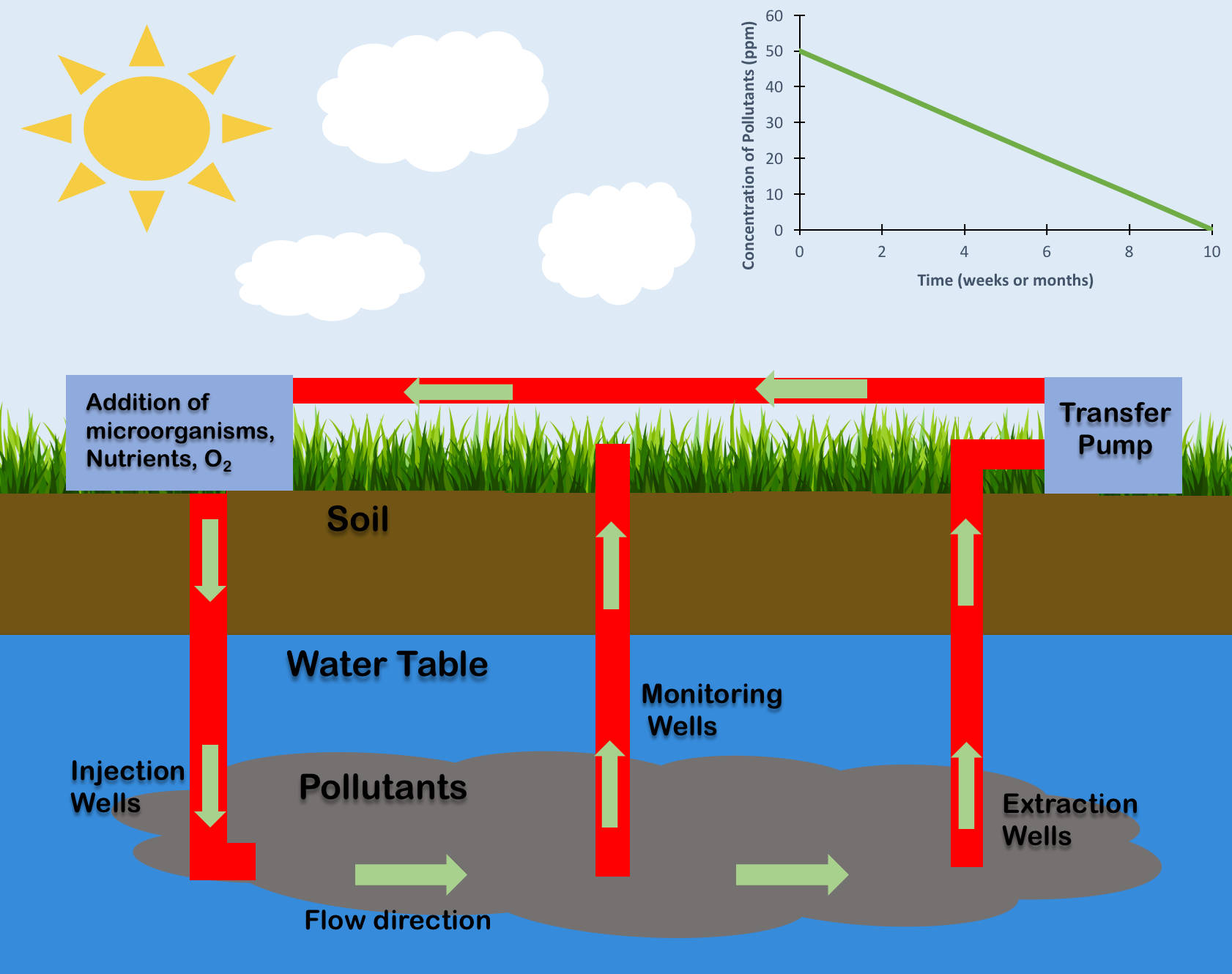
- In Situ Bioremediation: Treating contamination on-site, such as cleaning polluted soil directly at the site, which minimizes the need to excavate and transport materials.
 |
| Attribution: Hoodlind, CC BY-SA 4.0 <https://creativecommons.org/licenses/by-sa/4.0>, via Wikimedia Commons |
- Ex Situ Bioremediation: Moving contaminated soil or water to a treatment location where specialized microbial processes are applied.
With the help of these natural microorganisms, bioremediation offers an eco-friendly way to clean up pollutants that’s gentler and more sustainable than traditional cleanup methods.
Phytoremediation: How Plants Are Reclaiming Polluted Land
While bioremediation relies on microbes, phytoremediation uses the unique abilities of plants to extract, stabilize, and even degrade pollutants in the soil and water. Certain plants, known as “hyperaccumulators,” can absorb high levels of contaminants like heavy metals, pesticides, and even radioactive materials, which makes them essential for tackling complex pollution problems.
How Phytoremediation Works
In phytoremediation, plants “breathe in” toxins from the soil through their roots, leaves, and stems, either storing them in their tissues or breaking them down into less harmful forms. Here’s how these natural green cleaners operate:
- Phytoextraction: Certain plants absorb pollutants through their roots and store them in their leaves or stems. This method works especially well for heavy metals, which are notoriously hard to remove from soil.
- Phytostabilization: Plants prevent pollutants from spreading by stabilizing them in the soil. Some plants can immobilize harmful chemicals, reducing the risk of them leaching into nearby water sources.
 |
| Attribution: Townie (Arulnangai & Xavier Dengra from the original in .png extension), CC BY-SA 4.0 <https://creativecommons.org/licenses/by-sa/4.0>, via Wikimedia Commons |
- Phytodegradation: Some plants can even break down organic pollutants within their tissues or in the soil surrounding their roots.
- Rhizofiltration: Aquatic plants can filter toxins directly from water through their roots, making this approach ideal for polluted rivers, lakes, and ponds.
In addition to cleaning up contaminants, phytoremediation helps create greener spaces and healthier ecosystems, adding a touch of beauty to what were once toxic sites.
Bioremediation in Action: Microbes Saving the Day
Bioremediation has already shown amazing results in various settings, from oceans to industrial zones. Here are some inspiring ways it’s being used around the world:
Cleaning Up Oil Spills
One of the most impressive uses of bioremediation is in cleaning up oil spills. Bacteria like Alcanivorax borkumensis specialize in breaking down hydrocarbons found in oil, turning them into nontoxic byproducts. For instance, during the Deepwater Horizon oil spill, microbial bioremediation was used to reduce the environmental damage in the Gulf of Mexico.
Tackling Industrial Waste
Factories and plants often produce harmful byproducts like solvents, heavy metals, and synthetic chemicals, which can end up polluting the surrounding land and water. Bacteria such as Pseudomonas putida are being used to digest toxic substances like benzene and toluene, helping industries clean up their mess sustainably.
Wastewater Treatment
In wastewater treatment plants, bioremediation plays a key role by breaking down organic waste naturally. Certain bacteria feed on organic pollutants, helping transform wastewater into safe, clean water. Plus, the biogas produced by these microbes during treatment can be captured and used as a renewable energy source.
These examples show how bioremediation, by harnessing natural microbial diversity, offers a sustainable, effective solution to pollution challenges, helping industries and communities tackle contamination issues in an eco-friendly way.
Phytoremediation in Action: How Plants Are Transforming Polluted Sites
Phytoremediation also has some impressive success stories, as plants help clean up a range of environmental problems—from toxic soils to polluted waters. Here are a few standout applications:
Heavy Metal Absorption in Soil
Industrial and mining activities often leave soils laced with heavy metals, such as lead, cadmium, and arsenic. Hyperaccumulator plants like Indian mustard and sunflowers have been used to absorb these toxins, storing them in their stems and leaves. Afterward, these plants can be safely harvested and disposed of, removing the contaminants from the environment.
Restoring Mining Lands
Mining leaves a lasting impact, often rendering soil toxic. In abandoned mining sites, phytoremediation is helping restore the land by planting metal-accumulating species that slowly absorb and stabilize contaminants. For example, alpine pennycress has been used to absorb heavy metals like zinc and cadmium, making the soil safer over time.
Waterway Filtration
Water hyacinth and duckweed are particularly good at removing toxins from contaminated water. For example, they can extract pesticides and metals from agricultural runoff in ponds and lakes, keeping our water bodies cleaner. These aquatic plants have even been used in places like India to reduce industrial contamination in rivers.
With their ability to detoxify and revitalize landscapes, these plants provide a green, effective, and visually appealing solution to pollution, turning toxic sites into thriving ecosystems.
The Science Behind Bioremediation and Phytoremediation: How It Works
What makes microbes and plants so good at cleaning up pollution? It all comes down to some remarkable biology:
Microbial Metabolism and Pollution Breakdown
Microbes involved in bioremediation have evolved to “eat” pollutants as their primary source of food. They convert these contaminants through metabolic pathways that break down complex molecules into simpler, non-toxic ones. Some bacteria even use specific enzymes to detoxify heavy metals, making them safer for the environment.
The Rhizosphere Effect
In phytoremediation, plants don’t work alone. They often collaborate with soil microbes around their roots (known as the rhizosphere) to break down pollutants even more effectively. The plants release natural compounds that stimulate microbial growth, creating a beneficial environment where both plants and microbes contribute to breaking down contaminants.
This natural teamwork between plants and microbes is why these processes work so well, allowing for a thorough cleanup without damaging the surrounding ecosystem.
Why Bioremediation and Phytoremediation Are So Powerful
There are plenty of good reasons to choose bioremediation and phytoremediation over traditional methods:
- Eco-Friendly: Unlike many chemical-based cleanup methods, these natural solutions don’t add further pollutants to the environment.
- Cost-Effective: Bioremediation and phytoremediation are typically cheaper than other cleanup methods, especially for large areas.
- Minimal Disruption: By working in harmony with nature, these processes avoid major disruptions to the ecosystem or local communities.
- Long-Term Benefits: Once established, many bioremediation and phytoremediation projects can continue to provide environmental benefits for years.
These advantages make them especially valuable for large-scale or sensitive sites where a gentle, sustainable approach is needed.
Challenges and Limitations: When Natural Cleanup Has Limits
While these methods offer amazing benefits, they’re not without some challenges:
- Time: Both processes can take longer than traditional methods, as they rely on the natural growth of plants and microbes.
- Specific Conditions: Environmental factors like soil pH, temperature, and the type of pollutant can impact the effectiveness of these methods.
- High Contaminant Concentrations: Extreme pollution levels may be too high for microbes or plants to manage effectively.
- Handling Contaminated Biomass: In phytoremediation, plants that absorb contaminants need to be disposed of properly to avoid secondary pollution.
Despite these challenges, ongoing research is finding ways to overcome many of these limitations, making bioremediation and phytoremediation even more adaptable and efficient.
What’s Next: The Future of Natural Pollution Cleanup
Some exciting advancements on the horizon could make bioremediation and phytoremediation even more powerful:
- Genetic Engineering: Scientists are exploring ways to enhance the pollution-busting abilities of certain plants and microbes, enabling them to handle a broader range of contaminants.
- Nanotechnology: Tiny particles are being designed to work alongside plants and microbes, helping break down particularly stubborn pollutants.
- Hybrid Solutions: Combining natural cleanup methods with traditional ones (like chemical oxidation) can create hybrid systems that tackle pollution more effectively.
- Smart Monitoring: New environmental sensors make it possible to track progress in real-time, helping scientists fine-tune conditions for optimal cleanup.
With these innovations, bioremediation and phytoremediation will continue to evolve, offering greener solutions for a cleaner future.
Conclusion: Nature Knows Best – Working With Plants and Microbes for a Cleaner Planet
When it comes to tackling pollution, sometimes the best solution is the simplest one. Bioremediation and phytoremediation harness the natural abilities of plants and microbes to restore our environment, reminding us that nature often has the tools we need to solve our biggest challenges. By working with these natural allies, we’re creating greener, healthier places for future generations.
The future of environmental cleanup looks brighter, greener, and more sustainable. With plants and microbes on our side, we have the chance to restore polluted spaces to places of beauty and life, proving that sometimes, the best way to heal the planet is simply to let nature do what it does best.