
Think about the last time you stepped outside. Maybe you felt the warmth of the sun on your face, heard birds chirping, or smelled fresh-cut grass. All these moments might seem simple, but they’re part of a much bigger picture—the intricate dance of life that makes up the environment around us. Whether it’s a light breeze or a wild animal hunting its prey, everything in nature is connected in ways we don’t always see.
In this blog, we’ll break down how living organisms (the biotic world), the physical landscape, and non-living factors (the abiotic world) work together to support life on Earth. Understanding these interactions is more important now than ever, especially as we face challenges like climate change and habitat destruction. So let’s dive into the complex web of life that keeps our planet running smoothly.
What is the Environment? More Than Just the World Around Us
We often think of the environment as the forests, oceans, and wildlife we see on nature shows, but it’s so much more than that. The environment includes everything that surrounds us—both the living (biotic) and non-living (abiotic) elements. And what's truly fascinating is how these pieces come together to form ecosystems where life can thrive.
At its core, the environment can be broken down into three main parts:
- Physical Environment: This is the non-living backdrop of our world—things like air, water, and soil. It also includes forces like weather and temperature.
- Biotic Environment: All the living organisms around us, from plants and animals to fungi and microbes.
- Abiotic Environment: These are the non-living chemical and physical elements that affect ecosystems, such as sunlight, temperature, and minerals.
What makes this so exciting? It’s how these elements constantly interact, creating a balance that allows life to flourish.
The Physical Environment: The Stage Where Life Plays Out
The physical environment is like the stage where all of life’s interactions take place. Without it, there’d be no foundation for ecosystems to develop. Here are some of the key players:
The Atmosphere: Earth's Invisible Shield
The atmosphere is a layer of gases that surrounds our planet. It might not be something we think about daily, but without it, life couldn’t exist.
- What’s in It? The atmosphere is made mostly of nitrogen (78%) and oxygen (21%), with small amounts of other gases like carbon dioxide and methane. It protects us by blocking harmful solar radiation and helping to regulate the Earth’s temperature.
- Weather & Climate: Our weather comes from atmospheric movements—storms, winds, and temperature changes. Long-term patterns, called climate, shape ecosystems. For example, rainforests are hot and wet, while deserts are dry and sunny. The animals and plants in each place are adapted to those specific conditions.
The Hydrosphere: Water—The Essence of Life
Water covers about 71% of the Earth’s surface, creating the hydrosphere. This includes oceans, lakes, rivers, and underground water. Without water, life as we know it wouldn’t be possible.
- Water Cycle: Water moves continuously through the environment in the water cycle. It evaporates from oceans, forms clouds, and falls back as rain, nourishing ecosystems along the way. This cycle is essential for plants, animals, and even the weather patterns we depend on.
 |
| Attribution- John Evans and Howard Periman, USGS, Public domain, via Wikimedia Commons |
The Lithosphere: The Ground Beneath Our Feet
The lithosphere is made up of the Earth’s crust and upper mantle. It includes the landforms we see—mountains, valleys, and plateaus—as well as soil, which is critical for plant life.
- Soil: Soil is where plants take root and get the nutrients they need to grow. Different soils support different ecosystems, whether it's grasslands, forests, or deserts.
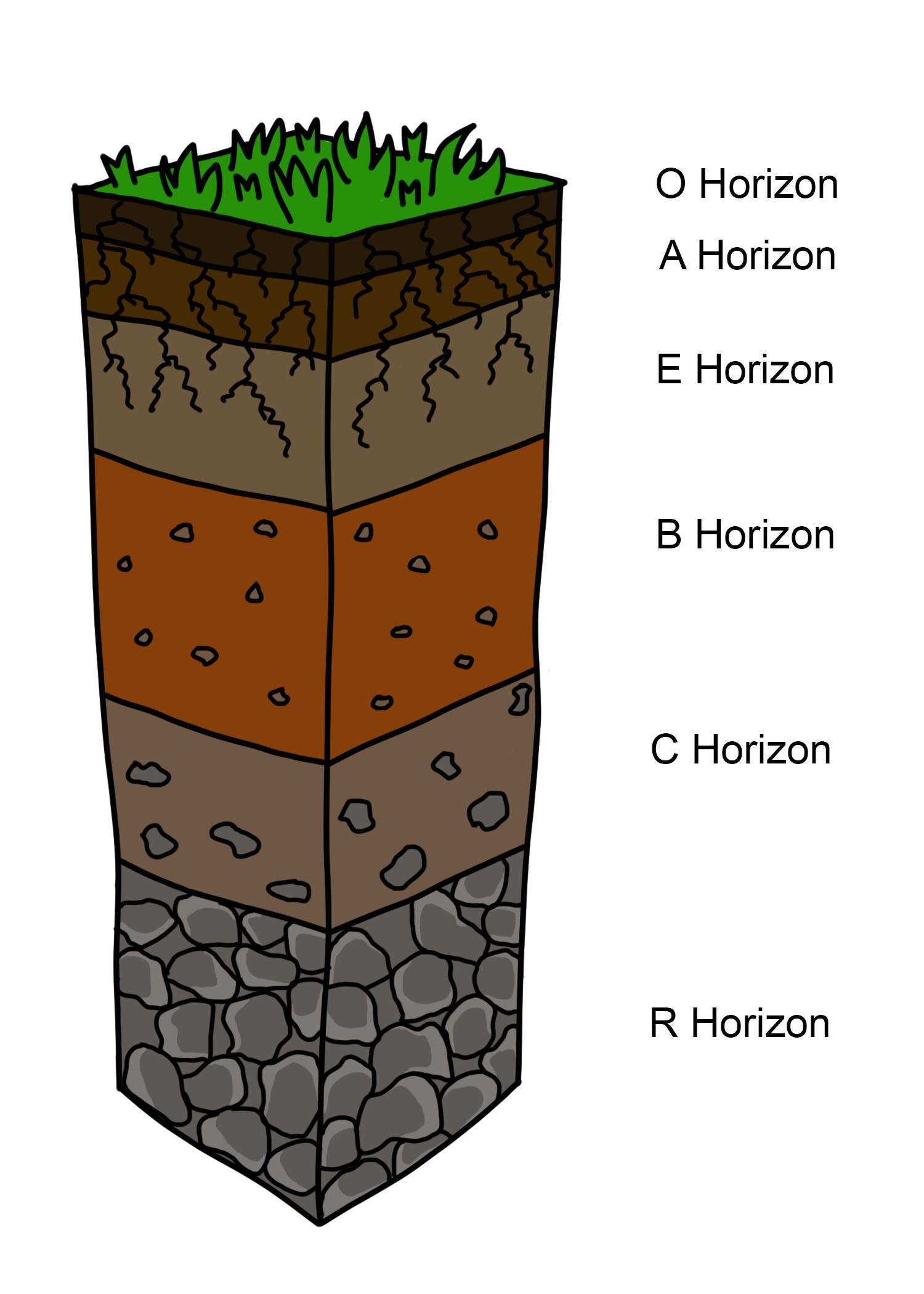 |
| Attribution: Lewi1224, CC BY-SA 4.0 <https://creativecommons.org/licenses/by-sa/4.0>, via Wikimedia Commons |
The Biotic Environment: Life in Action
The biotic environment refers to all living things on Earth—plants, animals, fungi, and microorganisms. These living organisms interact in ecosystems, creating complex relationships that are crucial for survival.
Energy Flow: Producers, Consumers, and Decomposers
Life is sustained by energy flowing through ecosystems, and organisms can be grouped based on how they get that energy:
- Producers (Autotrophs): Plants, algae, and some bacteria make their own food through photosynthesis, using sunlight to convert carbon dioxide and water into sugars.
- Consumers (Heterotrophs): These are organisms that can’t make their own food, so they must eat other organisms. They’re divided into:
- Herbivores: Eat plants (e.g., cows, rabbits)
- Carnivores: Eat meat (e.g., lions, wolves)
- Omnivores: Eat both plants and animals (e.g., humans, bears)
- Decomposers: Fungi and bacteria break down dead plants and animals, returning nutrients to the soil and keeping the cycle of life going.
Relationships in Nature: Predators, Prey, and Competitors
Nature is full of interactions—predator-prey relationships being one of the most familiar. Predators keep prey populations in check, and prey helps sustain predator species.
- Example: In a savanna, lions (predators) hunt antelope (prey). This relationship prevents the overpopulation of antelope, which could otherwise strip the grasslands bare.
In addition, competition occurs when organisms vie for the same resources, like food or space. Over time, species adapt to reduce competition, finding their own ecological niches to survive.
The Abiotic Environment: The Non-Living Essentials
The abiotic environment might be non-living, but it’s just as important as the living organisms it supports. These non-living factors determine what kinds of life can survive and thrive in different ecosystems.
Sunlight: The Life Force
Without sunlight, most life on Earth wouldn’t exist. It powers photosynthesis, the process plants use to make their own food. Sunlight is the base of the food web.
- Photosynthesis: Plants convert sunlight, water, and carbon dioxide into glucose (sugar) and oxygen. This process provides energy for herbivores, which in turn feed carnivores.
Temperature and Climate
Temperature is critical for life. Different species are adapted to survive within specific temperature ranges. Some organisms thrive in hot, tropical environments, while others are suited to icy, polar climates.
- Climate Zones: Earth’s climate is divided into zones—tropical, temperate, and polar—based on temperature and rainfall. Each zone supports different types of ecosystems and species.
Water Availability
Life on Earth depends on water, and the amount of available water in an environment shapes the kinds of organisms that can live there. Deserts, for example, have limited water, so plants like cacti and animals like camels are adapted to survive long dry periods. Rainforests, on the other hand, are lush with plant and animal life due to the abundance of water.
Nutrients: Food for Plants
Plants need nutrients like nitrogen, phosphorus, and potassium to grow. They absorb these from the soil or water. In turn, animals get these nutrients by eating plants or other animals. This cycle of nutrients moving through the environment keeps ecosystems healthy and balanced.
Interactions Between Biotic and Abiotic Worlds: The Balance of Life
The magic of life happens where biotic and abiotic worlds meet. Plants use sunlight (an abiotic factor) to make food, and animals eat plants or other animals to survive. These interactions are the building blocks of ecosystems.
Photosynthesis: Where Sunlight Meets Life
Plants bridge the gap between abiotic factors like sunlight, carbon dioxide, and water, and the biotic world. Without this process, there would be no life.
- Example: In the process of photosynthesis, plants convert sunlight into energy, forming the basis of the food chain. Herbivores feed on these plants, and carnivores feed on herbivores.
Nutrient Cycles: Connecting the Living and Non-Living Worlds
Nutrient cycles like the carbon cycle and the nitrogen cycle show how life interacts with non-living components. For example, plants absorb carbon dioxide from the atmosphere, animals eat plants, and when animals die, decomposers return nutrients to the soil, completing the cycle.
Human Impact: Tipping the Balance
Humans are a part of the environment, but we’ve had an enormous impact on it, often disrupting the delicate balance between biotic and abiotic components.
Climate Change
Our use of fossil fuels has increased the amount of carbon dioxide in the atmosphere, driving climate change. This is leading to warmer global temperatures, changing weather patterns, and causing rising sea levels.
- Ecosystem Impact: Species adapted to specific climates, like polar bears in the Arctic, are struggling to survive as their habitats disappear.
Habitat Destruction
Deforestation, urbanization, and pollution have led to the loss of many ecosystems. When habitats are destroyed, the organisms that depend on them have nowhere to go.
Conservation and Sustainability: Protecting Our World
With the growing realization that we’re tipping the balance of the environment, conservation efforts are now more critical than ever. We need to protect both the biotic and abiotic elements to preserve life on Earth.
Conservation
Conservation means protecting and restoring ecosystems and the species within them. This includes efforts to stop deforestation, reduce pollution, and promote biodiversity.
Sustainability
To ensure that future generations can thrive, we need to adopt sustainable practices. This means using resources wisely, reducing waste, and finding ways to live in harmony with nature.
Conclusion: The Delicate Dance of Life
The environment is a complex and beautiful web of interactions between living and non-living things. From the sun shining on plants, to animals grazing, to the water cycle that nourishes all life, these interactions create the balance that sustains us. As humans, we are part of this system, and it’s up to us to protect it.
By understanding how biotic and abiotic factors interact, we can better appreciate the importance of preserving ecosystems and making sustainable choices. The health of our planet—and our future—depends on it.