
The nervous system is the body's command centre, controlling everything we do—from breathing and moving to thinking and feeling. It’s a complex network of billions of specialized cells and structures that allow us to experience the world and respond to it. But how does it all work? In this blog, we’ll break down the basics of the nervous system: from the function of neurons and action potentials to the important roles played by the brain, spinal cord, and more. We’ll also explore how the nervous system keeps us standing tall by maintaining muscle tone and posture.
 |
| Attribution: theEmirr, CC BY 3.0 <https://creativecommons.org/licenses/by/3.0>, via Wikimedia Commons |
Neurons: The Nervous System’s Messengers
At the core of everything the nervous system does are neurons. These are the specialized cells responsible for carrying messages throughout the body. Think of them as the body’s own electrical wiring system, constantly transmitting signals from one part of the body to another.
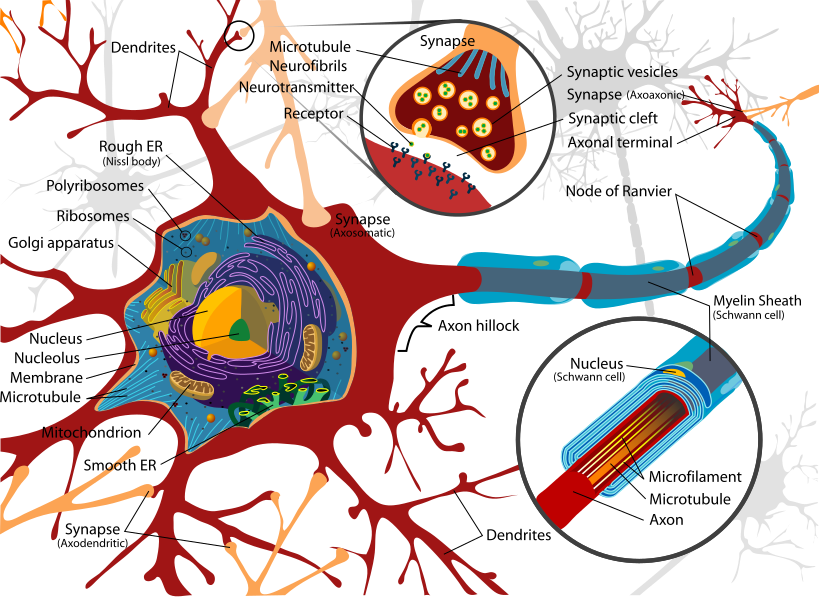
Each neuron has a few key parts:
- Cell body: The neuron’s control centre, which contains its DNA and manages cell functions.
- Dendrites: These branch-like extensions reach out to other neurons to receive messages.
- Axon: This long extension transmits electrical signals to other neurons, muscles, or glands.
 |
| Attribution- LadyofHats, Public domain, via Wikimedia Commons |
When neurons communicate, they don’t touch directly. Instead, they use tiny gaps called synapses. Electrical impulses trigger the release of chemical signals known as neurotransmitters that cross the synapse to continue the signal onto the next cell. It’s like a relay race where the baton is passed from one runner to the next!
Action Potentials: How Neurons Send Signals
The messages sent between neurons are in the form of electrical impulses known as action potentials. But how exactly do these signals travel?
An action potential occurs when a neuron becomes electrically charged. Normally, the inside of a neuron is more negative than the outside. But when it’s activated by a stimulus, that balance shifts. Positive ions (sodium ions) rush into the cell, creating an electrical current. This current moves down the axon like a wave, carrying the signal to the next neuron or target cell.
Once the signal reaches the end of the axon, it triggers the release of neurotransmitters into the synapse, passing the message along. This whole process happens in milliseconds, allowing the nervous system to respond quickly to stimuli—whether it’s reacting to a loud noise or adjusting your posture while walking.
 |
| Attribution: Helixitta, CC BY-SA 4.0 <https://creativecommons.org/licenses/by-sa/4.0>, via Wikimedia Commons |
The Brain and Spinal Cord: Central Command
When people think of the nervous system, the brain and spinal cord usually come to mind first—and for good reason. Together, these structures make up the central nervous system (CNS), which acts as the body’s control centre.
The Brain
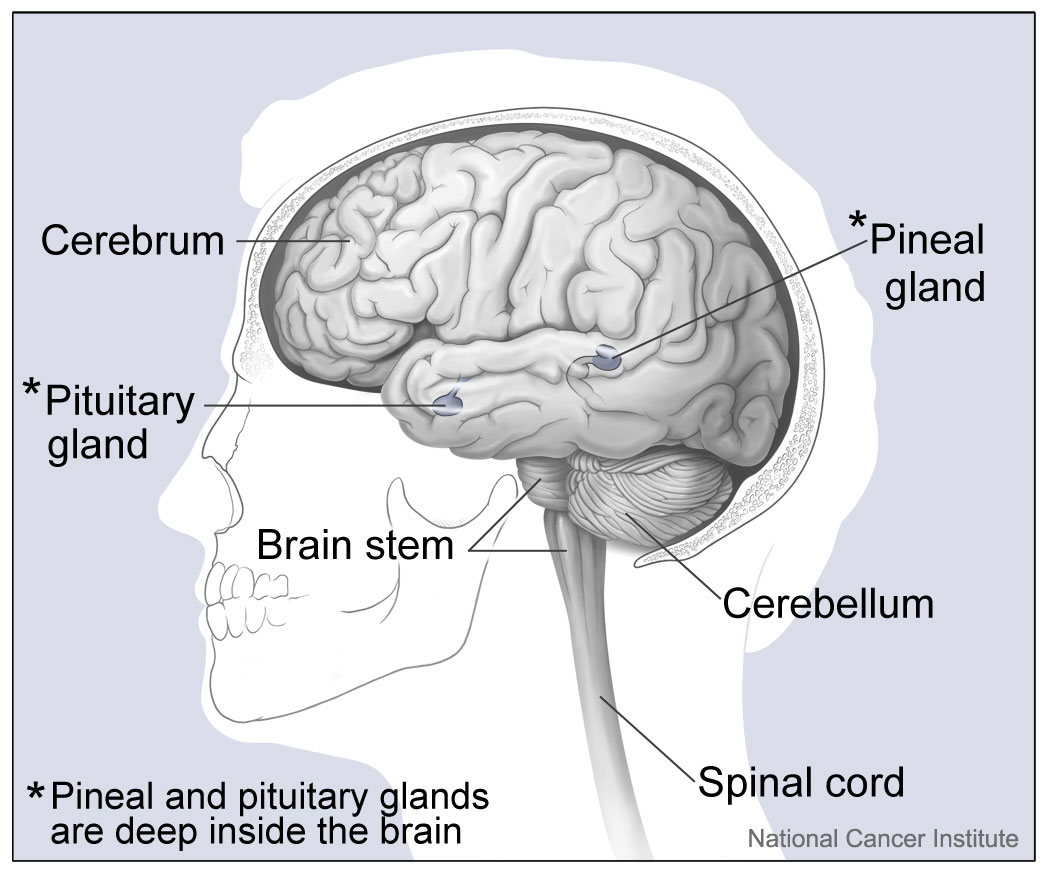
The brain is a highly specialized organ that processes all incoming information and sends out instructions to the rest of the body. It’s divided into several regions, each responsible for specific functions:
- Cerebrum: The largest part of the brain, responsible for higher-level functions like thinking, memory, emotion, and voluntary movement.
- Cerebellum: Controls balance and coordination, making sure our movements are smooth and precise.
- Brainstem: Regulates vital functions, such as heart rate, breathing, and blood pressure.
Each region of the brain plays its own unique role, working together to keep everything running smoothly.
 |
| Attribution- Alan Hoofring (Illustrator), Public domain, via Wikimedia Commons |
 |
| Attribution: Vectorized image by Jkwchui, via Wikimedia Commons. Labeled for reuse., CC BY-SA 4.0 <https://creativecommons.org/licenses/by-sa/4.0>, via Wikimedia Commons |
The Spinal Cord
The spinal cord is the brain’s direct line of communication with the rest of the body. Running from the base of the brain down through the spine, it acts like a highway, carrying messages to and from the brain. Without the spinal cord, the brain wouldn’t be able to control muscles or receive information from sensory organs.
Additionally, the spinal cord handles simple reflexes, like pulling your hand away from a hot stove. These reflexes happen without needing the brain’s involvement, helping us react to danger in the blink of an eye.
The Central and Peripheral Nervous Systems
The nervous system is divided into two main parts: the central nervous system (CNS) and the peripheral nervous system (PNS).
 |
| Attribution: Christinelmiller, CC BY-SA 4.0 <https://creativecommons.org/licenses/by-sa/4.0>, via Wikimedia Commons |
- Central Nervous System (CNS): This includes the brain and spinal cord. It processes information and sends out instructions to the body.
- Peripheral Nervous System (PNS): All the nerves that branch out from the CNS and connect to the rest of the body make up the PNS. The PNS can be further divided into:
- Somatic Nervous System: Controls voluntary movements, like when you decide to wave or run.
- Autonomic Nervous System: Manages involuntary functions, such as heart rate, digestion, and breathing. It also has two divisions:
- Sympathetic Nervous System: Prepares the body for stressful situations (the "fight-or-flight" response).
- Parasympathetic Nervous System: Calms the body down after stress and regulates normal body functions during rest.
 |
| Attribution: The original uploader was Fuzzform at English Wikipedia, GFDL <http://www.gnu.org/copyleft/fdl.html>, via Wikimedia Commons |
Muscle Tone and Posture: How the Nervous System Keeps Us Balanced
The nervous system isn’t just about reacting to external stimuli or processing thoughts—it also plays a vital role in maintaining muscle tone and posture. Muscle tone is the slight tension we feel in our muscles, even when we’re not actively using them. It helps keep muscles firm and ready for action.
The brain and spinal cord work together to adjust muscle tone and maintain posture. For example, the cerebellum receives information about body position and makes real-time adjustments to ensure we stay balanced. This is especially important when standing, walking, or performing any movement that requires coordination.
Additionally, reflexes controlled by the spinal cord help maintain muscle tone without conscious effort. These reflexes are automatic responses to sensory input, like the stretch reflex that keeps muscles from over-stretching or contracting too quickly.

Conclusion
The nervous system is one of the body’s most remarkable and essential networks. Neurons, with their ability to generate action potentials, make rapid communication across the body possible, while the brain and spinal cord act as the central command for interpreting signals and directing actions. Together, the central and peripheral nervous systems keep us moving, thinking, and feeling.
Beyond just controlling movements and thoughts, the nervous system keeps us balanced and upright by regulating muscle tone and posture—ensuring that our bodies are always ready to react to the world around us.
Understanding the nervous system helps us appreciate how intricate and finely tuned our bodies are, and how this system, which we rely on every second of every day, keeps us functioning, alive, and aware.