
Biomolecules are the building blocks of life; they make up the complex web that allows creatures to develop, procreate, and survive. Gaining knowledge about these molecules' makeup, arrangement, and purpose helps one appreciate the intricacies of biological functions. Explore the distinct qualities and functions of vitamins, proteins, lipids, carbs, and nucleic acids in life as this blog explores their fascinating universe.

Carbohydrates: The Energy Providers
Composition and Structure:
The components of carbohydrates are carbon (C), hydrogen (H), and oxygen (O), usually in the following ratios: 1:2:1. Their structure divides them into three primary categories:
1. Monosaccharides: Simple sugars like glucose and fructose.
2. Disaccharides: Formed by two monosaccharides, such as sucrose (glucose + fructose).
3. Polysaccharides: Long chains of monosaccharides, including starch, glycogen, and cellulose.
 |
| Attribution: OpenStax College, CC BY 3.0 <https://creativecommons.org/licenses/by/3.0>, via Wikimedia Commons |
Function:
Energy comes mostly from carbohydrates. Because they provide ATP, monosaccharides like glucose are essential for cellular respiration. Polysaccharides such as starch and glycogen store energy in plants and animals, whereas cellulose gives plant cell walls structural support.
Lipids: The Hydrophobic Molecules
Composition and Structure:
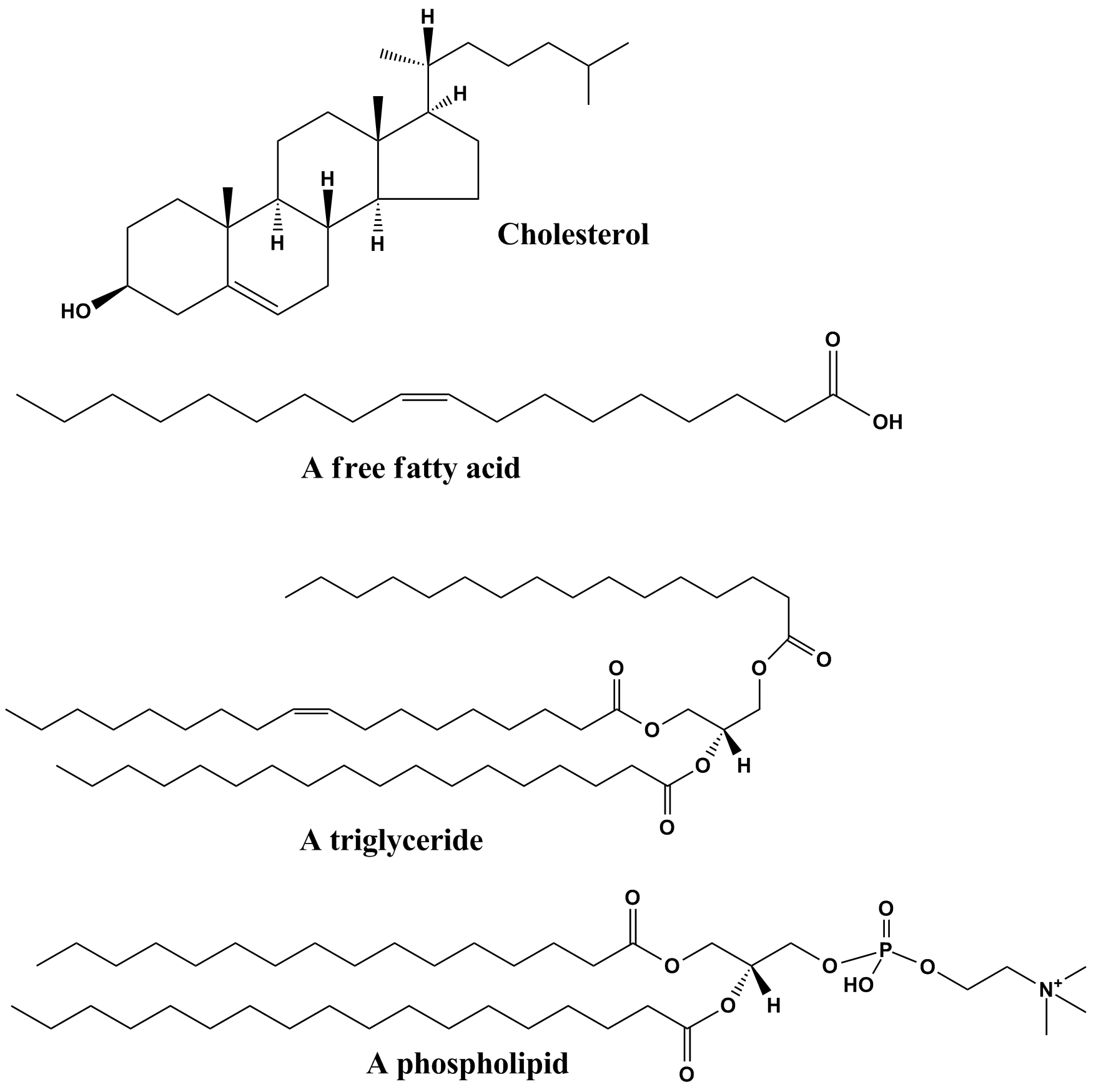
Carbon, hydrogen, and oxygen comprise most lipids; in contrast to carbohydrates, lipids contain far less oxygen. They consist of steroids, phospholipids, fats, and oils. Their structures might differ greatly:
 |
| Attribution: Lmaps at the English Wikipedia, CC BY-SA 3.0 <http://creativecommons.org/licenses/by-sa/3.0/>, via Wikimedia Commons |
1. Triglycerides: Glycerol backbone with three fatty acid chains.
 |
| Attribution: Rlawson at English Wikibooks, CC BY-SA 3.0 <https://creativecommons.org/licenses/by-sa/3.0>, via Wikimedia Commons |
 |
| Attribution: Smokefoot, CC BY-SA 3.0 <https://creativecommons.org/licenses/by-sa/3.0>, via Wikimedia Commons |
 |
| Attribution: The original uploader was Magnus Manske at English Wikibooks., CC BY-SA 2.5 <https://creativecommons.org/licenses/by-sa/2.5>, via Wikimedia Commons |
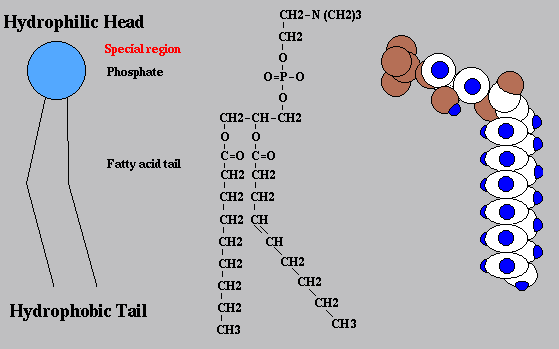
2. Phospholipids: Glycerol, two fatty acids, and a phosphate group, forming a bilayer in cell membranes.
3. Steroids: Four fused carbon rings with various functional groups.

Function:
Triglycerides function as long-term energy stores in lipids necessary for energy storage. Cell membranes comprise phospholipids, which act as a barrier and promote cell signaling. Steroids, like cholesterol, are precursors to hormones and are essential for the fluidity of membranes.
Proteins: The Workhorses of the Cell
Composition and Structure:
Peptide bonds bind amino acids together to form polypeptide chains, which are the building blocks of proteins. The arrangement of each of the 20 distinct amino acids in a protein determines its specific structure. There are four structural levels in proteins:
 |
| Attribution: SadiesBurrow, CC BY-SA 4.0 <https://creativecommons.org/licenses/by-sa/4.0>, via Wikimedia Commons |
 |
| Attribution: Biochemlife, CC BY-SA 4.0 <https://creativecommons.org/licenses/by-sa/4.0>, via Wikimedia Commons |
 |
| Attribution:Kep17, CC BY-SA 4.0 <https://creativecommons.org/licenses/by-sa/4.0>, via Wikimedia Commons |
Primary: Amino acid sequence.
 |
| Attribution: Thomas Shafee, CC BY-SA 4.0 <https://creativecommons.org/licenses/by-sa/4.0>, via Wikimedia Commons |
 |
| Attribution: Saure011, CC BY-SA 4.0 <https://creativecommons.org/licenses/by-sa/4.0>, via Wikimedia Commons |
Quaternary: Multiple polypeptide chains forming a functional protein.
 |
| Attribution: Pinguin.tk, CC BY-SA 3.0 <http://creativecommons.org/licenses/by-sa/3.0/>, via Wikimedia Commons |
Function:
Nucleic Acids: The Information Carriers
Composition and Structure:
DNA and RNA are examples of nucleic acids. Nucleotides are made up of a phosphate group, a nitrogenous base (adenine, thymine/uracil, cytosine, or guanine), and a five-carbon sugar (deoxyribose in DNA and ribose in RNA). Whereas RNA is often single-stranded, DNA forms a double helix.
Function:
Genetic information is stored in DNA, which directs the creation of proteins and controls biological functions. Messenger RNA (mRNA) carries the genetic code, ribosomal RNA (rRNA) forms the core of ribosomes, and transfer RNA (tRNA) brings amino acids during protein synthesis. RNA plays multiple roles in translating genetic information into proteins.
Vitamins: The Essential Micronutrients
Composition and Structure:
Vitamins are organic substances needed in trace amounts for certain metabolic processes. According to their solubility, they are divided into two groups:
1. Water-soluble vitamins: Vitamin C and B vitamins, which dissolve in water and are not stored in the body.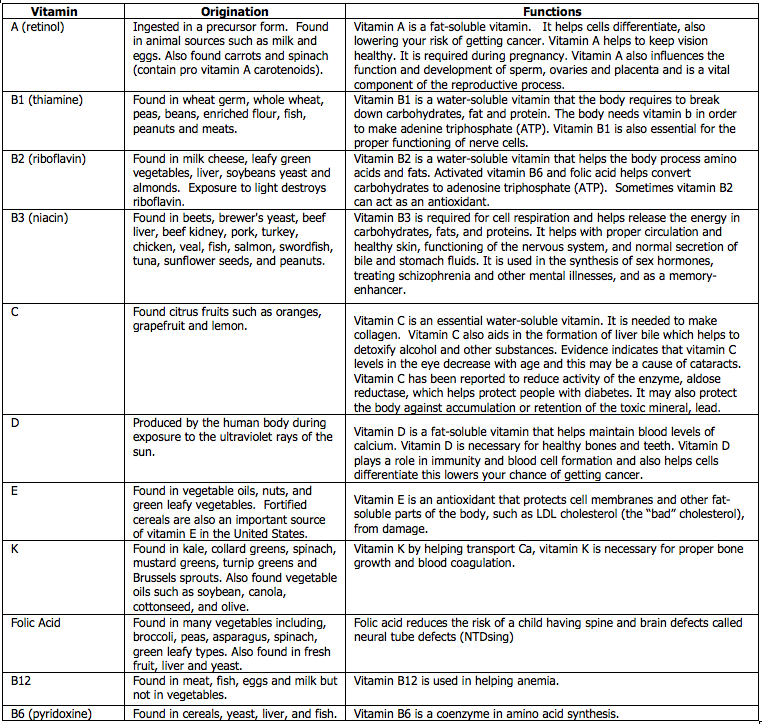 |
| Credit: No machine-readable author provided. Stephaniegreenwood assumed (based on copyright claims)., Public domain, via Wikimedia Commons |
Function:
Vitamins participate in metabolic pathways as cofactors and coenzymes. For instance, vitamin B vitamins are involved in energy metabolism, and vitamin C is essential for collagen formation and antioxidant defense. The functions of fat-soluble vitamins include blood coagulation (vitamin K), antioxidant defense (vitamin E), calcium homeostasis (vitamin D), and vision (vitamin A).
Conclusion
The complex and exquisitely ordered structure of life at the molecular level is revealed by the study of biomolecules. The several classes of biomolecules, namely proteins, lipids, carbohydrates, nucleic acids, and vitamins, each have a distinct and essential function in the complexity and operation of living things. Understanding these building blocks will help us better comprehend the biological processes that support life and pave the way for developments in environmental science, biotechnology, and medicine.