Cancer is a disease that is intricate and multifaceted, stemming from abnormal genetic changes and disturbances in cellular processes. This leads to uncontrolled cell growth and division. Understanding the molecular mechanisms behind cancer, including the involvement of oncogenes and tumor suppressor genes, as well as the complex interactions between cancer cells and their surrounding environment, provides valuable insights into disease progression and potential treatment approaches. In this highly detailed educational blog post, we explore the genetic foundation of cancer, the functions of oncogenes and tumor suppressor genes, the dysregulation of the cell cycle, cancer induced by viruses, the spread of cancer to other parts of the body, the interactions between cancer cells and healthy cells, programmed cell death (apoptosis), and various treatment methods to address uncontrolled cell growth.
Cancer Genetic Rearrangements in Progenitor Cells:
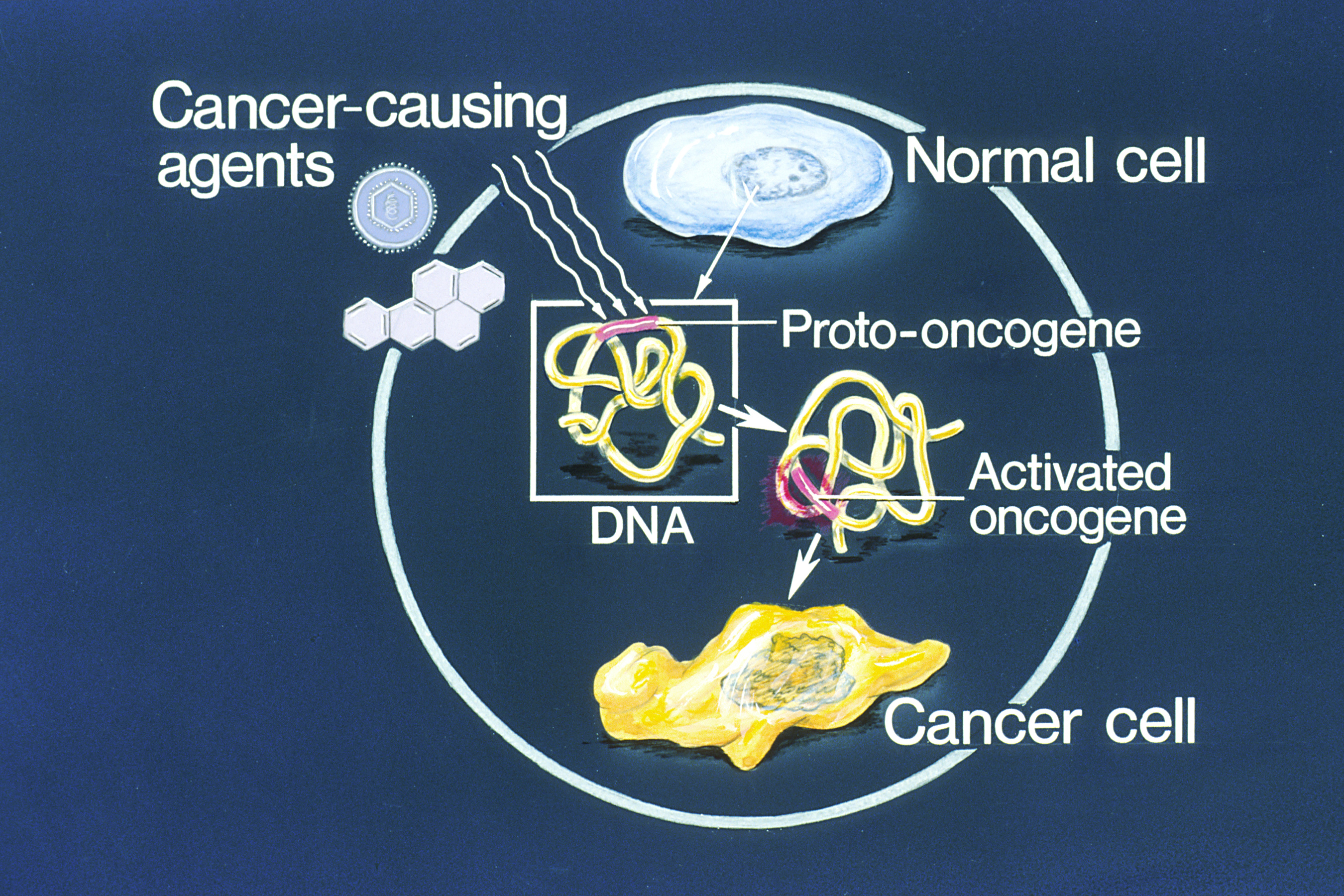
Oncogenic Transformation: Genetic changes and mutations in precursor cells interfere with regular cellular functions, resulting in the conversion of cells into cancerous forms.
 |
| Attribution: Unknown Illustrator, Public domain, via Wikimedia Commons |
Chromosomal Aberrations: Chromosomal rearrangements, removals, and increases can trigger oncogenes or deactivate tumor suppressor genes, which leads to the development of cancer. |
| Attribution: Philippe Hupé, CC BY-SA 3.0 <https://creativecommons.org/licenses/by-sa/3.0>, via Wikimedia Commons |
Oncogenes and Tumor Suppressor Genes:
Oncogenes: Oncogenes are specific genes that have the potential to cause cancer. When these genes are mutated or overexpressed, they can promote uncontrolled cell growth and proliferation. Examples of oncogenes include growth factor receptors such as EGFR and signal transduction proteins like Ras. |
| Attribution: Haywardlc, CC BY-SA 3.0 <https://creativecommons.org/licenses/by-sa/3.0>, via Wikimedia Commons |
Tumor Suppressor Genes: Tumor suppressor genes are responsible for encoding proteins that play a critical role in regulating the progression of the cell cycle, repairing damaged DNA, and promoting cell death (apoptosis). Examples of important tumour suppressor genes include p53, BRCA1, and PTEN.
 |
| Attribution: Philippe Hupé, CC BY-SA 3.0 <https://creativecommons.org/licenses/by-sa/3.0>, via Wikimedia Commons |
Cancer and the Cell Cycle:
Dysregulated Cell Cycle: Cancer cells can bypass the normal control points in the cell cycle, allowing them to grow and divide uncontrollably. This is often caused by changes in the levels of cyclins, cyclin-dependent kinases (CDKs), and checkpoint proteins.
 |
| Attribution: BruceBlaus, CC BY-SA 4.0 <https://creativecommons.org/licenses/by-sa/4.0>, via Wikimedia Commons |
 |
| Attribution: So-Hee Kim and Kwang-Hyun Baek, CC BY 4.0 <https://creativecommons.org/licenses/by/4.0>, via Wikimedia Commons |
Cell Cycle Checkpoint Abrogation: When checkpoint proteins are deactivated, cancer cells can ignore control processes and continue dividing without regulation.
Virus-Induced Cancer:
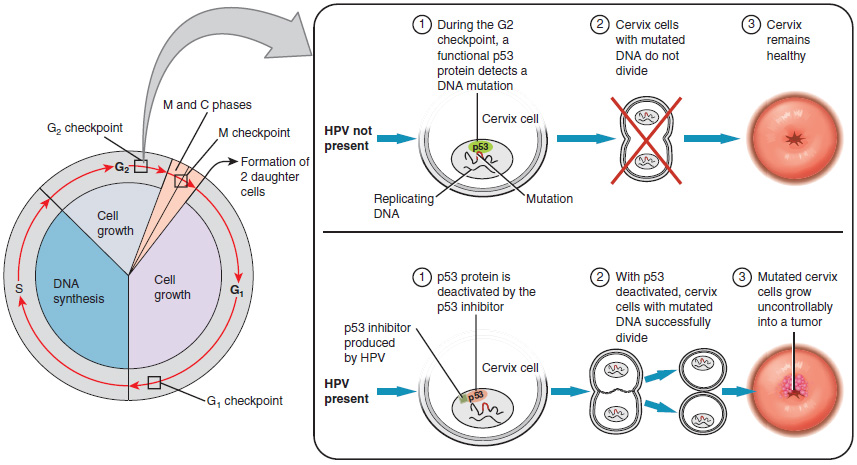
Oncogenic Viruses: Some viruses, like human papillomavirus (HPV) and Epstein-Barr virus (EBV), can integrate their DNA into the genomes of host cells. This integration can disrupt cellular pathways and contribute to the development of cancer.
 |
| Attribution: OpenStax College, CC BY 3.0 <https://creativecommons.org/licenses/by/3.0>, via Wikimedia Commons |
Viral Oncoproteins: Oncoproteins that go viral disrupt the regulation of the cell cycle, encourage the survival of cells, and hinder apoptosis, all of which contribute to the development of cancer.Metastasis:
Cancer Spread: Metastasis occurs when cancer cells move from the original tumour location to other organs or tissues, aided by cellular movement, infiltration, and the formation of new blood vessels. |
| Attribution: Jane Hurd (Illustrator), Public domain, via Wikimedia Commons |
 |
| Attribution: Mikael Häggströmderivative work Adert, CC0, via Wikimedia Commons |
EMT: EMT allows cancer cells to gain the ability to move and invade other tissues, thus facilitating the spread of metastatic cancer.
Interaction of Cancer Cells with Normal Cells:
Tumour Microenvironment: Stromal cells, immune cells, and the extracellular matrix interact with cancer cells within the tumour microenvironment, impacting tumour growth, invasion, and immune evasion.
Paracrine Signaling: Cytokines, growth factors, and extracellular vesicles secreted by cancer cells influence the actions of nearby normal cells, thus facilitating the advancement of tumours.
Apoptotic Dysregulation: Cancer cells can bypass programmed cell death, also known as apoptosis, by either mutating the apoptotic regulators or disrupting survival pathways such as PI3K/AKT and Bcl-2 family proteins.
Therapeutic Targeting: Targeted therapies, like BH3 mimetics and immune checkpoint inhibitors, offer a promising strategy for treating cancer by triggering apoptosis in cancer cells.Conclusion
The development and progression of cancer are influenced by a multitude of factors including genetic mutations, disrupted communication within the body, and complex interactions in the environment surrounding the tumour. From the early stages of cancer development to its spread and the treatments used, it is crucial to comprehend the underlying molecular mechanisms to develop more effective therapies and improve patient outcomes. As we continue to decipher the intricate molecular nature of cancer, we open the door to new, more tailored approaches to diagnosis, prevention, and treatment, which will ultimately contribute to our ongoing efforts to combat this devastating illness.
