DNA replication, repair, and recombination are complex procedures that are crucial for preserving genomic integrity and promoting genetic diversity. From the accurate copying of genetic material to the intricate mechanisms that rectify DNA damage and encourage genetic variation, comprehending these processes is vital for unravelling the enigmas of life itself. In this comprehensive educational blog, we set out on a fascinating exploration of DNA replication, repair, and recombination, delving into the molecular machinery, controlling factors, and adaptive tactics that govern these fundamental processes.
DNA Replication:
Unit of Replication: DNA is replicated bidirectionally from replication origins, leading to the creation of two identical daughter DNA molecules. DNA replication varies from prokaryotes to Eukaryotes.
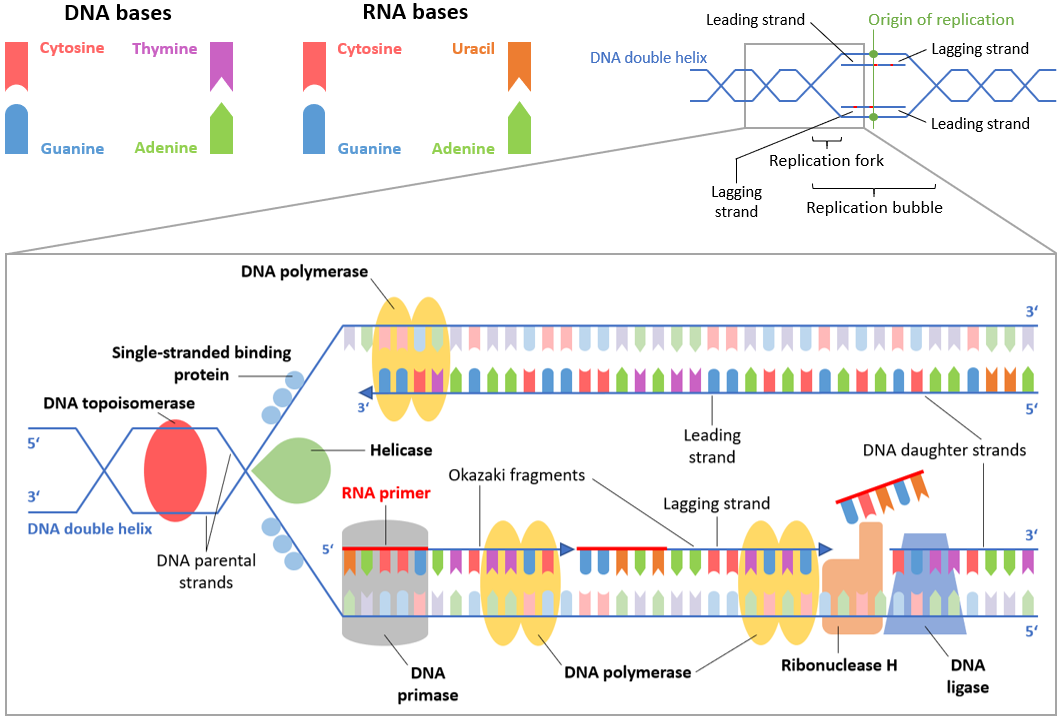
Enzymes Involved: The enzymes critical for DNA replication consist of DNA polymerases, helicases, primases, and DNA ligases.
Replication Origin and Replication Fork: The locations where DNA replication begins are known as replication origins. These sites lead to the creation of replication forks, where DNA strands are unwound and synthesized.
Fidelity of Replication: The locations where DNA replication begins are known as replication origins. These sites lead to the creation of replication forks, where DNA strands are unwound and synthesized.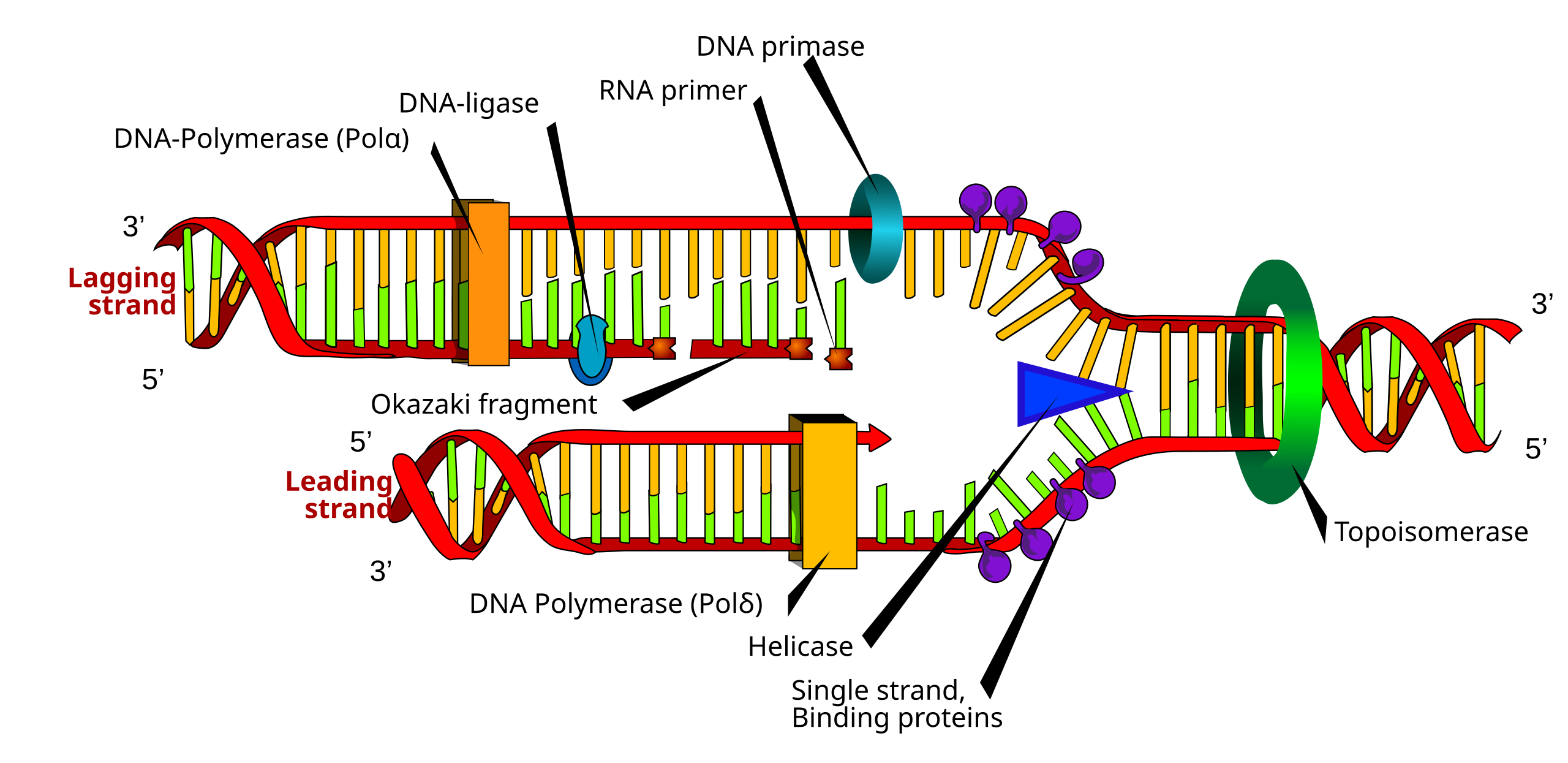 |
| Attribution- LadyofHats, Public domain, via Wikimedia Commons |
 |
| Attribution:VWALevi2020, CC BY 4.0 <https://creativecommons.org/licenses/by/4.0>, via Wikimedia Commons |
DNA Repair Mechanisms:
DNA Damage: DNA can be harmed by different factors, such as chemical mutagens, radiation, and reactive oxygen species. Examples of DNA damage involve changes to the bases, DNA breaks, and cross-links.
Repair Mechanisms: Cells use various DNA repair methods to fix DNA damage, such as base excision repair (BER), nucleotide excision repair (NER), mismatch repair (MMR), homologous recombination (HR), and non-homologous end joining (NHEJ).
 |
| Attribution: Bernstein0275, CC BY-SA 4.0 <https://creativecommons.org/licenses/by-sa/4.0>, via Wikimedia Commons |
 |
| Attribution- MethylC5, CC0, via Wikimedia Commons |
 |
| Attribution: J.J.Froehlich, CC BY-SA 4.0 <https://creativecommons.org/licenses/by-sa/4.0>, via Wikimedia Commons |
 |
| Attribution: Eunice Laurent, CC BY-SA 4.0 <https://creativecommons.org/licenses/by-sa/4.0>, via Wikimedia Commons |
Homologous Recombination: Homologous recombination involves the exchange of genetic material between DNA strands from homologous chromosomes, which results in genetic diversity and the repair of DNA double-strand breaks. |
Attribution: https://upload.wikimedia.org/wikipedia/commons/thumb/6/6a/Chi_Recombination_Model_for_Wikipedia.tif/lossy-page1-1912px-Chi_Recombination_Model_for_Wikipedia.tif.jpg
 | Attribution: https://upload.wikimedia.org/wikipedia/commons/thumb/c/ca/HR_schematic_diagram.svg/650px-HR_schematic_diagram.svg.png
|
|
Site-Specific Recombination: Site-specific recombination includes the swapping of DNA sequences between particular recognition sites, facilitated by recombinases and auxiliary proteins. |
Attribution: Marjan W. van der Woude and Andreas J. Baumler, CC BY 3.0 <https://creativecommons.org/licenses/by/3.0>, via Wikimedia Commons
|
The mechanisms of DNA replication, repair, and recombination are complex processes that allow cells to maintain the stability of their genetic material, ensure accurate transmission of genetic information, and facilitate genetic variation. The precision of DNA polymerases during replication and the adaptability of DNA repair pathways in repairing DNA damage both demonstrate the remarkable flexibility and strength of life at the molecular level. Understanding DNA replication, repair, and recombination not only expands our understanding of essential biological principles but also has significant implications for fields like biotechnology, medicine, and evolutionary biology. As we uncover the secrets of DNA, we gain a better understanding of the mechanisms that support the diversity and intricacy of life.

