
The body's defence system, which includes innate and adaptive elements, protects against harmful organisms and maintains tissue stability. Understanding the complexities of immune function, from identifying antigens to coordinating immune responses, is crucial for combating infections and creating new treatments. This in-depth educational blog takes us through the innate and adaptive immune systems, examining the various cells, molecules, and processes involved in immune surveillance, antigen recognition, and immune response regulation.
Innate immune system:
Cells: Innate immune cells, such as macrophages, neutrophils, dendritic cells, and natural killer (NK) cells, play a critical role in the immediate defence against invading pathogens. They accomplish this through processes like phagocytosis (engulfing and destroying pathogens), secretion of signalling molecules called cytokines, and direct killing of infected cells.
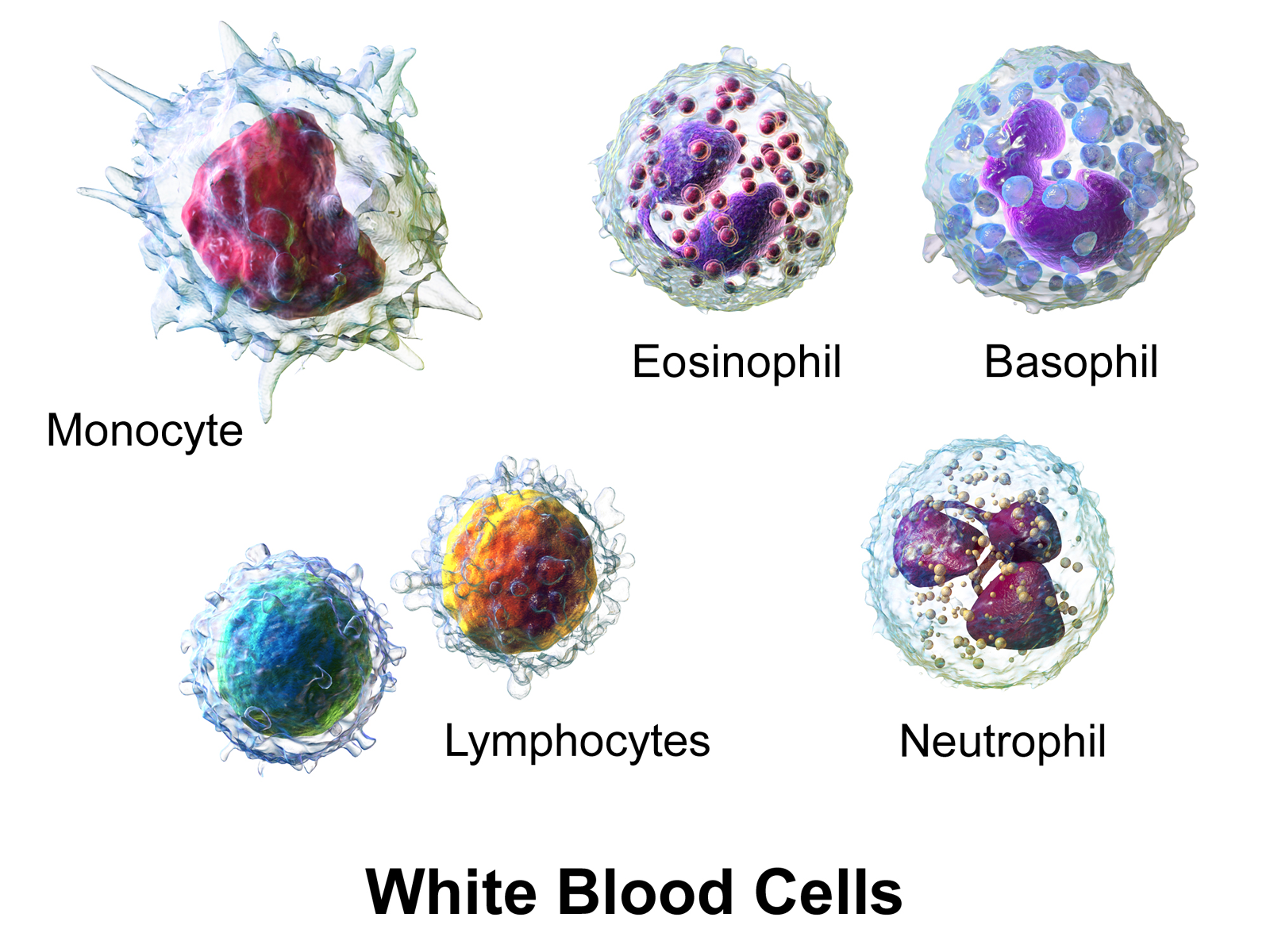 |
| Attribution: BruceBlaus. When using this image in external sources it can be cited as:Blausen.com staff (2014). "Medical gallery of Blausen Medical 2014". WikiJournal of Medicine 1 (2). DOI:10.15347/wjm/2014.010. ISSN 2002-4436., CC BY 3.0 <https://creativecommons.org/licenses/by/3.0>, via Wikimedia Commons |
Molecules: Pattern recognition receptors (PRRs) like Toll-like receptors (TLRs) and NOD-like receptors (NLRs) are specialized proteins that detect specific patterns found on microbial invaders, known as pathogen-associated molecular patterns (PAMPs). When these receptors recognize PAMPs, they trigger the body's immune system to mount an inflammatory response to combat the invading pathogens.
 |
| Attribution: Immcarle105, CC BY-SA 4.0 <https://creativecommons.org/licenses/by-sa/4.0>, via Wikimedia Commons |
Adaptive Immune System:
Cells: B and T lymphocytes, which make up adaptive immune cells, have specificity for antigens and can form memories. Antibodies are produced by B cells, while T cells identify antigens displayed by major histocompatibility complex (MHC) molecules.
 |
| Attribution: סתו כסלו, CC BY-SA 4.0 <https://creativecommons.org/licenses/by-sa/4.0>, via Wikimedia Commons |
Antibody Structure and Function:
Structure: Antibodies, also known as immunoglobulins (Ig), are comprised of two heavy and two light chains connected by disulfide bonds. The variable regions determine the antigen specificity, while the constant regions facilitate effector functions.
 |
| Attribution: Immcarle70, CC BY-SA 4.0 <https://creativecommons.org/licenses/by-sa/4.0>, via Wikimedia Commons |
Antibody Diversity and Engineering:
Generation: The body creates diverse antibodies by using somatic recombination, junctional diversity, and somatic hypermutation to ensure that a wide range of antigens can be recognized.
Antigen Processing and Presentation:
MHC Molecules: Molecules of MHC class I and II display antigens to CD8+ and CD4+ T cells, initiating the activation and differentiation of T cells, respectively.
 |
| Attribution: סתו כסלו, CC BY-SA 4.0 <https://creativecommons.org/licenses/by-sa/4.0>, via Wikimedia Commons |
 |
| Attribution: סתו כסלו, CC BY-SA 4.0 <https://creativecommons.org/licenses/by-sa/4.0>, via Wikimedia Commons |
Immune Responses and Modulation:
Humoral Response: B cells differentiate into plasma cells, which generate antibodies that play a role in humoral immunity.
 |
Fig.-Step 1: A macrophage engulfs the pathogen. Step 2: The macrophage then digests the bacterium and presents the pathogen’s antigens. Step 3: A T helper cell binds to the macrophage and becomes an activated T helper cell. Step 4: The activated T helper cell binds to a B cell in order to activate the B cell. Step 5: When the B cells are activated, some B cells turn into plasma cells and are released in the blood, while other B cells become B memory cells that quicken response for a second exposure. Step 6: Plasma cells then secrete antibodies, which bind to antigens to fight the invading pathogens. Source: Urry, Lisa A., et al. Campbell Biology. Pearson Higher Education, Inc., 2018. Attribution: Reh0318, CC BY-SA 4.0 <https://creativecommons.org/licenses/by-sa/4.0>, via Wikimedia Commons |
Immunopathology and Immune Disorders:
Inflammation: Host defence is contributed to by inflammatory responses but may also result in tissue damage and immunopathology.
Immune Responses to Infections:
Bacterial Infections (e.g., Tuberculosis): The immune system uses innate and adaptive responses to defend against bacterial pathogens. T cell-mediated immunity is critical in the fight against tuberculosis.
Parasitic Infections (e.g., Malaria): The body's natural and learned immune responses work against parasites, but how parasites avoid detection and manipulate the immune system play a role in the development of malaria.
Viral Infections (e.g., HIV): HIV can hide from the immune system, causing damage to T cells and resulting in a gradual weakening of the immune system.
Vaccines: The process of vaccination triggers the body's immune system to produce defences that can fight against diseases, thereby reducing the risk of getting infected and helping to build up immunity within the community.
Immunodeficiencies and Vaccines:
Immunodeficiencies: Individuals with congenital and acquired immunodeficiencies experience a weakening of their immune system, which makes them more susceptible to infections and certain types of cancer.
Conclusion:
The body's defence mechanism, known as the immune system, is crucial for protecting against pathogens and preserving tissue integrity. Every part of the immune system, from the innate response to adaptive immunity, has a significant role in defending the host and monitoring immune function. It is imperative to comprehend the complexities of immune system function, antigen recognition, and immune regulation to address infections, manage immunopathology, and create effective vaccines and immunotherapies. As we uncover the secrets of immune response and regulation, we gain a better understanding of the extraordinary ability and durability of the human immune system in the ongoing fight against infectious diseases and immune-related disorders.
Tags
Adaptive Immunity
Antibody Structure
Antigen Presentation
Antigens
B and T Cell Epitopes
Biology
Diversity
Immunodeficiencies
Infections
Innate Immunity
MHC Molecules
NET Lifesciences
Science
Vaccines