
Plants are sessile and cannot run away from stressful conditions, as do animals. Thus, they have evolved highly sophisticated physiological and biochemical mechanisms to deal with stress. These may be broadly categorized as biotic (caused by living organisms, such as pathogens and insects) and abiotic (caused by non-living factors, such as water, temperature, and salt). Understanding plant stress physiology is essential for improving crop resilience, which is necessary for food security.
Introduction to Plant Stress Physiology
What is Plant Stress?
Plant stress is an external condition that adversely affects plant growth, development, and productivity. Once plants undergo stress, they initiate a series of physiological and molecular changes to lessen the negative impacts and survive. These modifications are broadly divided into two:
Biotic Stress: Stresses induced by living organisms like pathogens (viruses, bacteria, fungi) and herbivorous insects.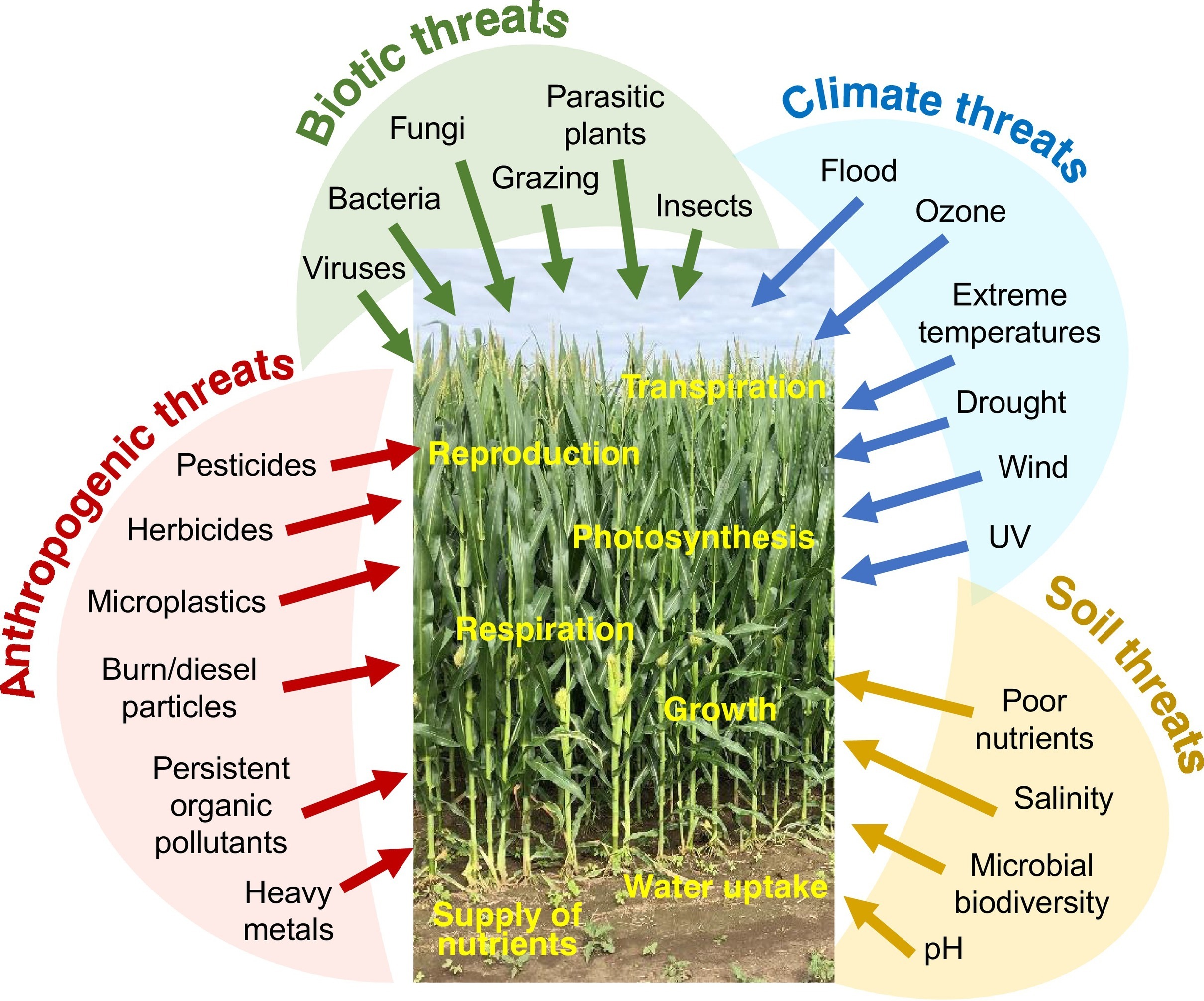 |
| Attribution: Zandalinas, Sara I.; Fritschi, Felix B.; Mittler, Ron (2021), CC BY 4.0 <https://creativecommons.org/licenses/by/4.0>, via Wikimedia Commons |
Biotic Stresses and Plant Responses
A.Pathogen-Induced Stress
Pathogens like viruses, bacteria, and fungi can considerably damage plants. Plants have developed numerous defence strategies that get activated upon the recognition of invading pathogens.
Pathogen Recognition:
Plants recognize invasions of pathogens through conserved molecular signatures as PAMPs by pattern recognition receptors (PRRs) on the surface of a cell.Production of Antimicrobial Compounds:
Phytoalexins: Produced de novo after the attack by a pathogen.B. Insect-Induced Stress
Another primary source of plant stress can be insect herbivory. Plant senses the presence of an insect through several cues, and the response generally involves:
Mechanical Damage Sensing:
Wound Signals: Feeding damage by insects causes the release of plant hormones, including jasmonic acid (JA) and salicylic acid (SA), which are essential for defence signalling.Chemical Defense:
Secondary Metabolites Production: Toxic compounds are naturally made and produced by any plant. Examples are alkaloids, terpenoids, and phenolics, which are against reducing herbivores.Attracting Natural Enemies:
Volatile Organic Compounds (VOCs): Plants release VOCs to attract predators or parasites.Abiotic Stresses and Plant Responses
Water Stress (Drought and Flooding)
Water availability is essential for a plant to survive, and both these problems raise severe issues:
A.Drought Stress:
Osmotic Adjustment: Accumulation of osmolytes like proline, and glycine betaine to maintain turgor of cells.B.Flooding Stress:
Anaerobic Respiration: Switch from aerobic to anaerobic respiration in root cells.Temperature Stress (Heat and Cold)
Temperature stresses up and down can drastically alter plant growth and productivity:
A.Heat Stress:
Heat Shock Proteins (HSPs): Proteins aid in refolding denatured proteins are deployed; proteins also protect cellular structures.B.Cold Stress:
Cold Acclimation: Gradual exposure to low-temperature results in the expression of cold-responsive genes.High soil salinity may lead to osmotic stress and ion toxicity. The response mechanism includes the following:
a.Accumulation of osmotically active solutes, which means the synthesis of compatible solutes like proline, glycine betaine, and trehalose to maintain osmotic balance.C.Antioxidant Defense:
Sensing of ROS leads to activation of antioxidant enzymes, such as superoxide dismutase (SOD), catalase (CAT), and peroxidases, for the alleviation of oxidative damage.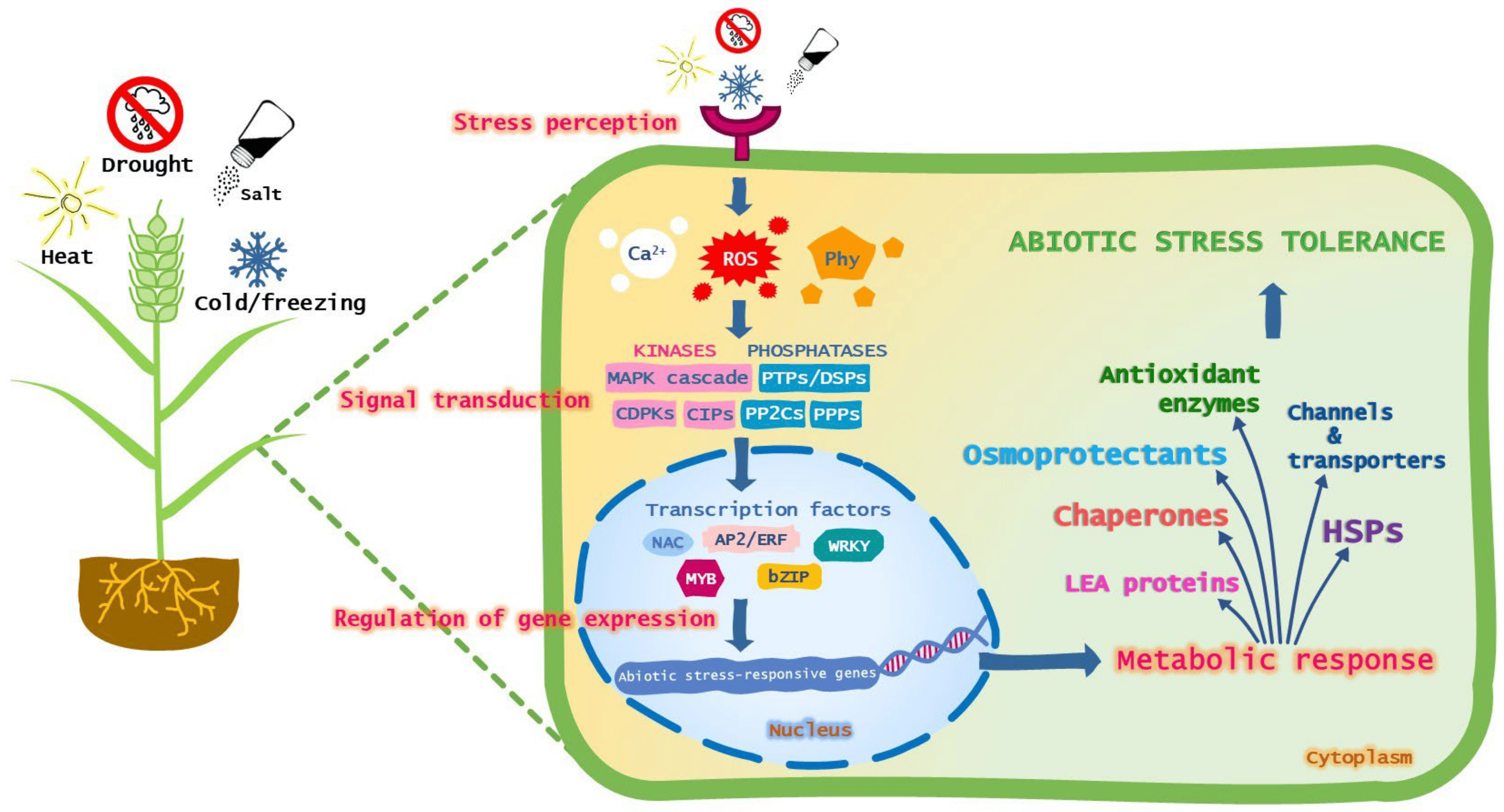 |
| Attribution: Trono, Daniela, and Nicola Pecchioni, CC BY 4.0 <https://creativecommons.org/licenses/by/4.0>, via Wikimedia Commons |
Integrative Stress Responses and Signaling Networks
Most times, plants are subjected to multiple stresses, and their responses are usually controlled by complex signalling networks that involve cross-talk between different pathways:
Hormonal Cross-Talk:
Jasmonic Acid (JA): It is for the defence against insect herbivores and necrotrophic pathogens.Gene Expression Regulation
Transcription Factors: These are the stress-responsive TFs, including DREB, NAC, and WRKY, which regulate other stress-responsive genes.Signaling Molecules
Reactive Oxygen Species(ROS): ROS can act as signalling molecules in response to biotic and abiotic stress or as an adverse stress condition.Conclusion
A comprehensive perception of the elaborate network of responses that plants deploy against biotic and abiotic stresses stands out as a necessity in devising strategies for enhancing its resilience efforts. Advances in molecular biology and biotechnologies, therefore, promise to become very instrumental tools in developing crops with enhanced stress tolerance, hence ensuring agricultural sustainability and food security against the background of climate change and a growing global population. In the future, further plant stress physiology mechanisms are expected to evolve methodologies toward innovative products as solutions to agricultural challenges.