
These two, blood and the circulation process, make up an essential part of understanding how the body works. This article takes a closer look at the various elements surrounding blood and its circulatory system: composition, hemopoiesis, formed elements, the function of plasma, volume, volume regulation, groups, haemoglobin, immunity, and hemostasis.
1. Blood Corpuscles
Red Blood Cells (Erythrocytes)
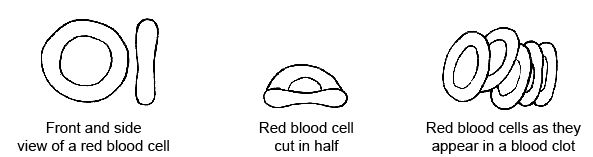
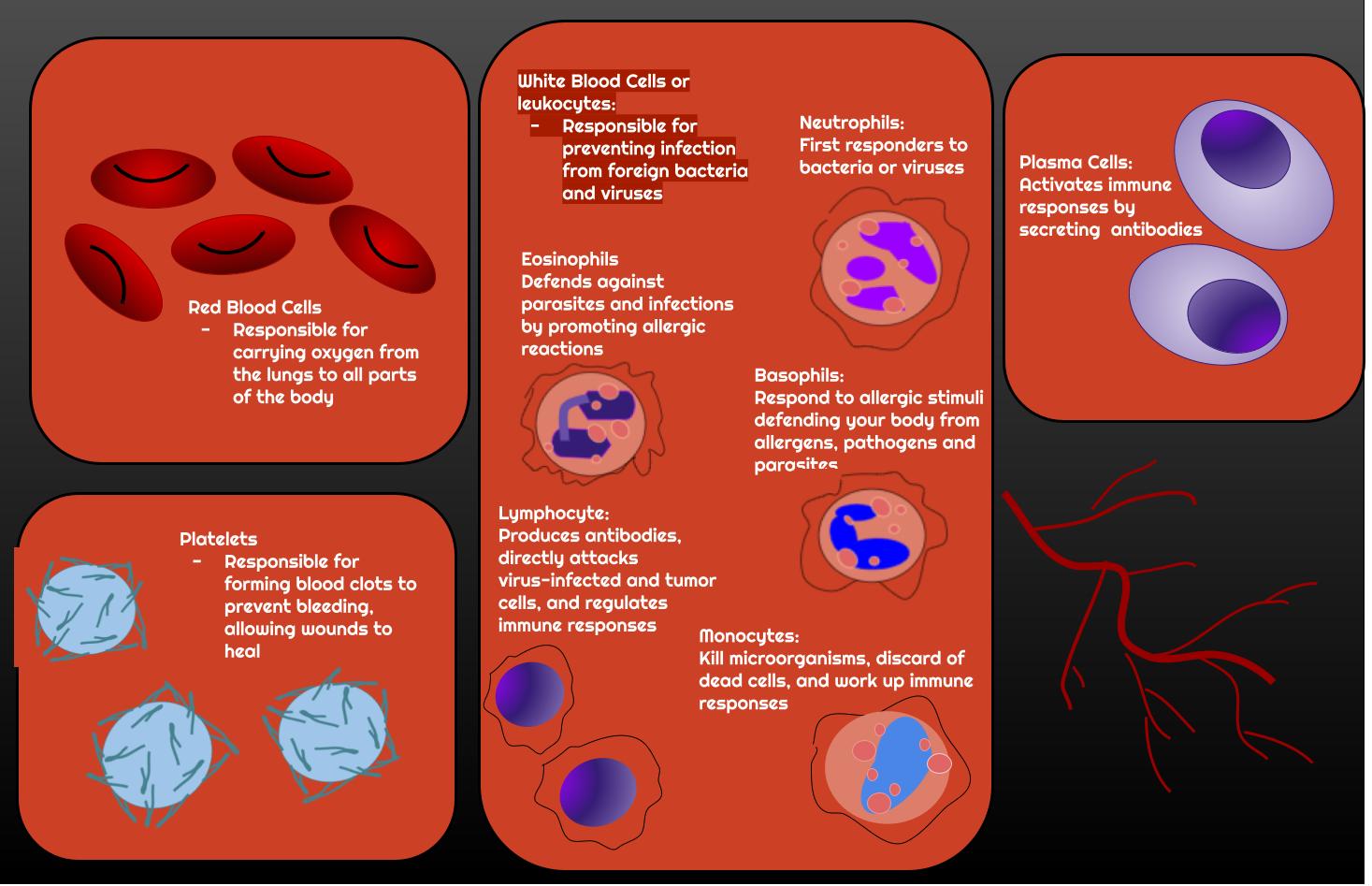
The Red variety of blood corpuscles is the most numerous in number. They are mainly meant to carry oxygen from the lungs to the body's tissue and to ferry carbon dioxide from the tissue to the lungs.
Structure: Biconcave disc shape, no nucleus, which increases the surface area for gas exchange.
 |
| Attribution- Arek Socha, CC0, via Wikimedia Commons |
 |
| Attribution: The original uploader was Sunshineconnelly at English Wikibooks., CC BY 3.0 <https://creativecommons.org/licenses/by/3.0>, via Wikimedia Commons |
Function: Carries haemoglobin, which is a protein that binds to oxygen as well as carbon dioxide.
Lifespan: Approximately 120 days from which the spleen and liver destroy them.
White Blood Cells (Leukocytes)
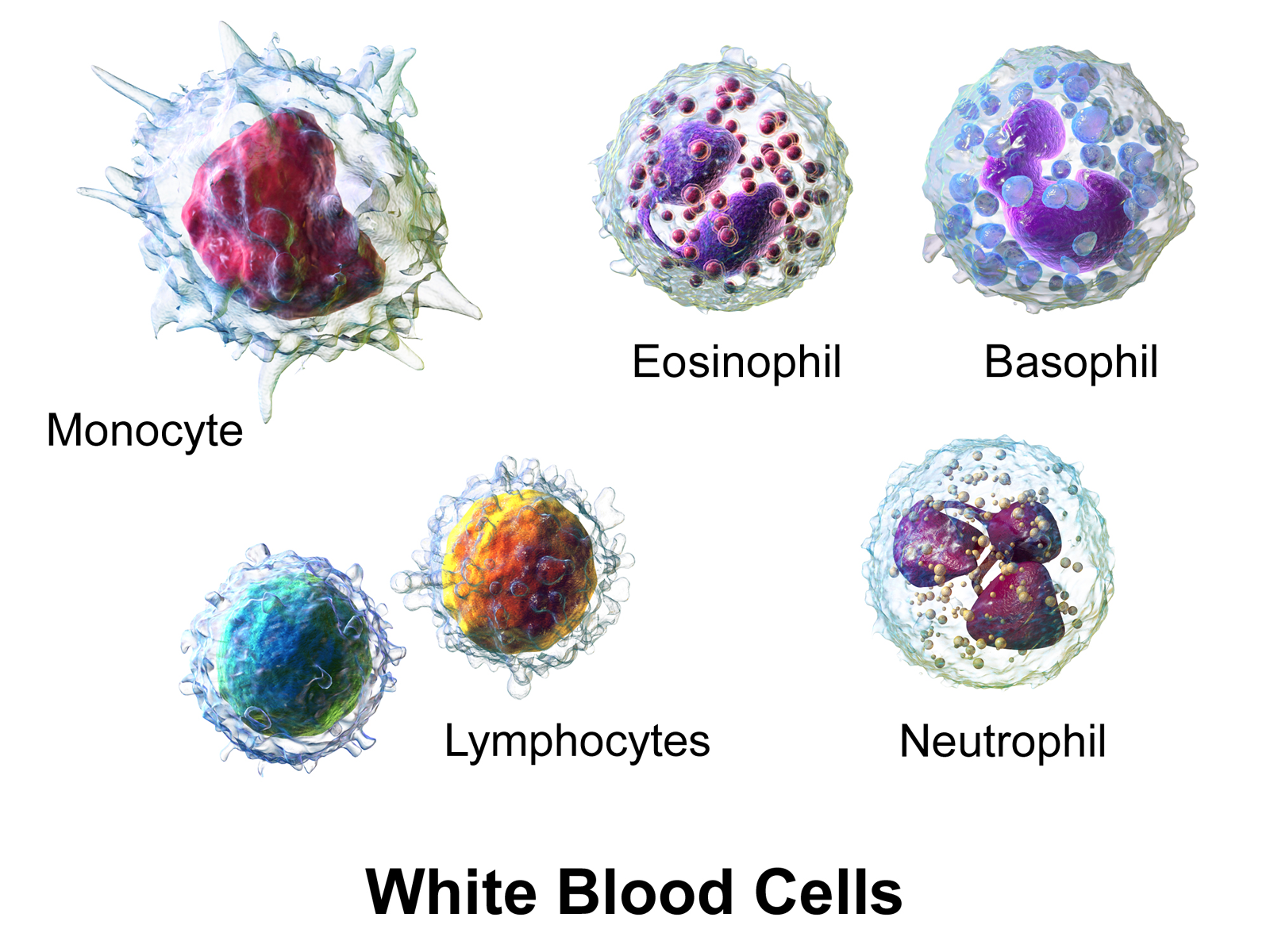
White blood cells play an important role in body defence. It defends the body against invading organisms. Defends the body against infectious diseases as well as other foreign materials.
Types:
Neutrophils: The first cell to get in contact with the microorganisms at the site of the infection. It attacks the pathogens by phagocytosis.
Lymphocytes: Two major subtypes of lymphocytes: T cells, which participate in cell-mediated immunity, and B cells, which give rise to antibody-producing plasma cells.
Monocytes: Precursor cells to macrophages and dendritic cells, are crucial players during instances of chronic inflammation as well as in the process of antigen presentation.
Eosinophils: Actively involved in the battle against multicellular parasites, eosinophils also play a role in allergic reactions.
Basophils: Responsible for the secretion of histamine in allergic events, which causes inflammation.
Platelets (Thrombocytes): Platelets are disc-shaped, and they lack a nucleus. Function: Aggregate at the site of blood vessel injury to form a temporary plug; concomitantly, they release chemicals that activate clotting factors.
 |
| Attribution: BerniceJTejada, CC BY-SA 4.0 <https://creativecommons.org/licenses/by-sa/4.0>, via Wikimedia Commons |
 |
| Attribution: BruceBlaus. When using this image in external sources it can be cited as:Blausen.com staff (2014). "Medical gallery of Blausen Medical 2014". WikiJournal of Medicine 1 (2). DOI:10.15347/wjm/2014.010. ISSN 2002-4436., CC BY 3.0 <https://creativecommons.org/licenses/by/3.0>, via Wikimedia Commons |
2. Haemopoiesis
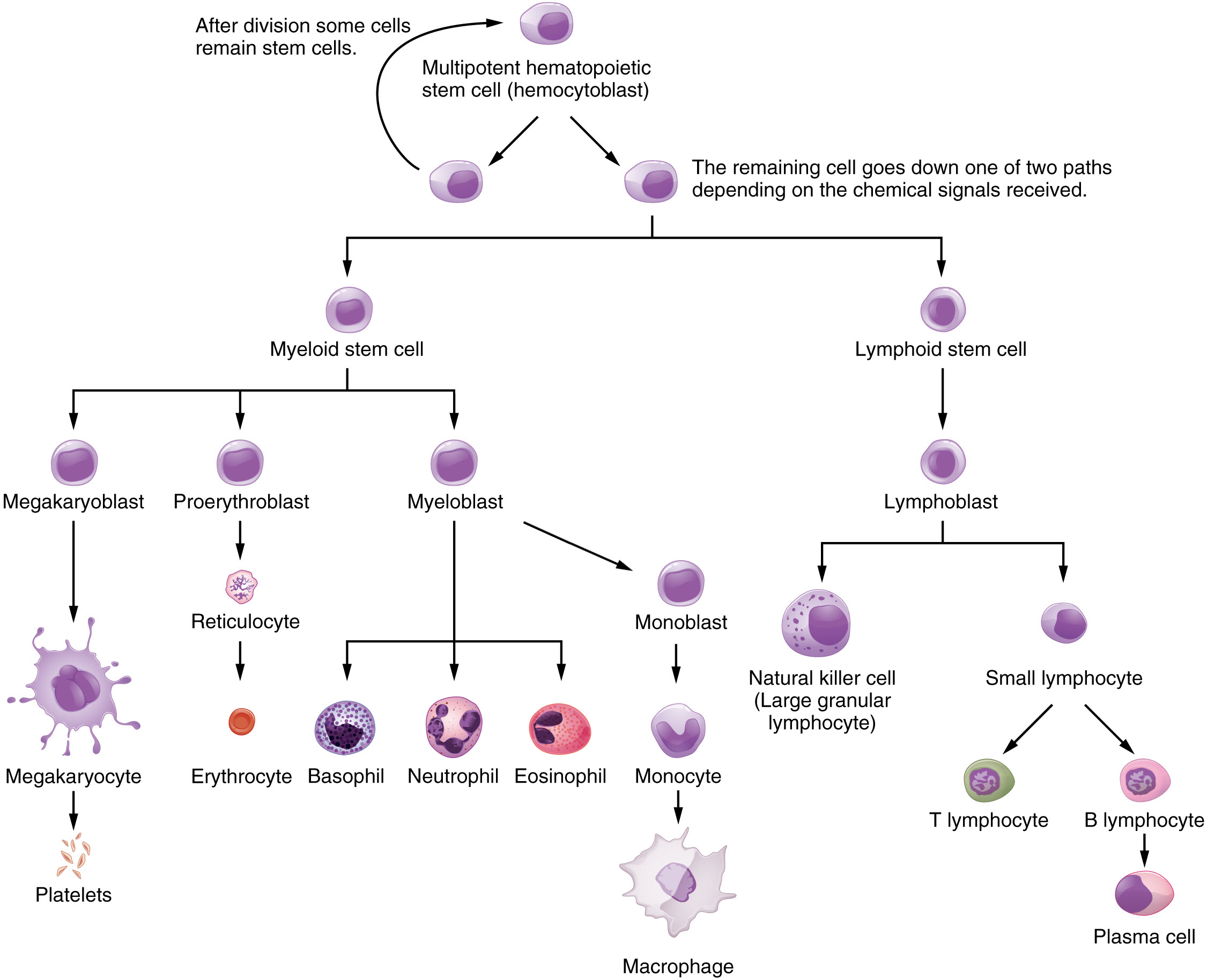
Blood cell formation is referred to as hemopoiesis, it occurs mainly in the bone marrow.
Stages:
Stem Cells: Haematopoietic stem cells give rise to all blood cells.
Differentiation: These stem cells differentiate into myeloid and lymphoid lineages.
Maturation: Further maturation into adult blood cells (e.g., from erythrocytes, leukocytes, platelets).
 |
| Attribution: JulieJenksButteCollege, CC BY-SA 4.0 <https://creativecommons.org/licenses/by-sa/4.0>, via Wikimedia Commons |
3. Formed Elements
Formed elements of blood pertain to erythrocytes, leukocytes, and platelets, which are suspended in plasma, with each performing specific functions in the body:
Erythrocytes: Transports oxygen and carbon dioxide.
Leukocytes: Represent the body's cells for immune response and protect the body from infection.
Platelets: Assist in the clotting of blood and the repair of injured blood vessels.
4. Plasma
The plasma is the liquid component of the blood and comprises about 55% of the total blood volume. It comprises water, electrolytes, proteins, hormones, and waste products.
Functions:
Transport: Transports nutrients, hormones, and proteins to sites where they are required.
Regulation: Maintains blood pressure and volume. Protection: Blood contains agents that help clotting and antibodies.
5. Blood Volume
Blood volume represents the total volume of circulating blood present within the body; approximately, it is about 5 litres in a normal adult human being.
Components: About 45 % of formed elements (cells) and 55 % of plasma. Variability: varies with age, sex, body size, and general health.
6. Maintenance of Blood Volume
The body regulates blood volume by various mechanisms:
Kidneys: control blood volume by regulating the volume of blood plasma by altering urine.
Hormones: Antidiuretic hormone (ADH), and aldosterone, regulate fluid balance.
Thirst Mechanism: regulates fluid intake, stimulating thirst when blood volume is low.
7. Blood Types
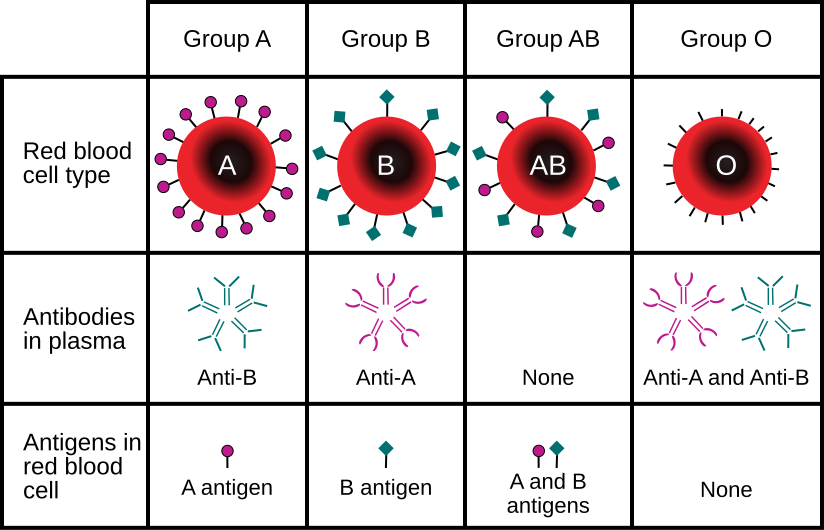
Blood types are classified based on the presence or absence of some antigens in the red blood cells' surface.
ABO System
Type A: A antigens in RBCs; plasma antibodies- anti-B
Type B: B antigens in RBCs; plasma antibodies- anti-A
Type AB: Both A and B antigens; no A or B antibodies; universal recipient.
Type O: No antigens, both anti-A and anti-B antibodies; therefore, it can be donated to anyone.
Rh Factor: The presence (+) or absence of Rh factor is also essential in blood transfusions.
 |
| Attribution- InvictaHOG, Public domain, via Wikimedia Commons |
8. Haemoglobin
Hemoglobin is the protein inside red blood cells that carries oxygen.
Structure: Consists of four globin chains, each attached to a heme group containing iron. Function: Oxygen is bound within the lungs and released in the tissues; it also helps in taking carbon dioxide back to the lungs.
9. Immunity
Defence of the body against infection by pathogens.
Types: Non-specific defence mechanisms available from birth, such as those present at the level of the skin and mucous membranes
Innate Immunity: Specific responses to specific pathogens involve lymphocytes Adaptive Immunity Types B cells produce antibodies Humoral Immunity.
 |
| Attribution: Architha Srinivasan, CC BY-SA 3.0 <https://creativecommons.org/licenses/by-sa/3.0>, via Wikimedia Commons |
Cell-mediated Immunity: T lymphocytes destroy infected cells and coordinate the immune response
 |
| Attribution: סתו כסלו, CC BY-SA 4.0 <https://creativecommons.org/licenses/by-sa/4.0>, via Wikimedia Commons |
10. Hemostasis:
Hemostasis is the process that stops bleeding or hemorrhage, that occurs when a blood vessel is injured.
Stages:
Vascular Spasm: Involves immediate constriction of a damaged blood vessel, which reduces blood flow
Platelet Plug Formation: Consists of platelets becoming sticky and adhering to the injured area forming a temporary plug
Coagulation: This is a cascade of events leading to the formation of a fibrin clot, stabilizing the platelet plug.
 |
| Attribution: Victdomi, CC BY-SA 3.0 <https://creativecommons.org/licenses/by-sa/3.0>, via Wikimedia Commons |
 |
| Attribution: Hofman.martijn, CC BY-SA 4.0 <https://creativecommons.org/licenses/by-sa/4.0>, via Wikimedia Commons |
Conclusion
The human body's circulatory system is a very complex network carrying out tremendously essential functions for living organisms. Understanding these processes, from cell development and regulation to highly sophisticated mechanisms of immunity and hemostasis, provides critical insights into how our bodies maintain health and respond to challenges. Whether through the transport of oxygen and nutrients, immunity to infection, or healing of injuries, all aspects of blood and circulation help sustain life.