
Imagine a world where we can understand, alter, and even create entirely new genetic sequences. This isn’t science fiction—it’s molecular biology and recombinant DNA technology at work. These transformative fields have given scientists the tools to study, modify, and harness the genetic material in every living organism. From isolating DNA, RNA, and proteins to cloning genes and engineering organisms for medical and agricultural purposes, molecular biology has reshaped the landscape of genetics, medicine, and biotechnology.
In this blog, we’ll dive into the fundamentals of these techniques, exploring the fascinating processes behind genetic research and the groundbreaking methods that scientists use to analyze and manipulate DNA. From isolating the building blocks of life to altering genomes and creating genetically engineered organisms, this journey will take you through the techniques that are pushing science beyond boundaries and toward a future filled with endless genetic possibilities.
Isolating DNA, RNA, and Proteins: The First Step in Molecular Exploration
Before scientists can study or modify genetic material, they need to extract it in its purest form. Isolation and purification of DNA, RNA, and proteins are the first steps, setting the foundation for any genetic experiment. Here’s how it all begins:
Extracting DNA and RNA
To get DNA and RNA, scientists start by breaking down cells to access their genetic contents. For DNA, they may use alkaline lysis for plasmid DNA or other techniques for larger genomic DNA. RNA, being more fragile, requires careful handling to avoid degradation, with phenol-chloroform extraction or silica-based column purification as common methods.
 |
| Attribution: Tetyana Yana-t Petruk, CC BY-SA 4.0 <https://creativecommons.org/licenses/by-sa/4.0>, via Wikimedia Commons |
Isolating Proteins
Proteins are essential for understanding cellular function and require different methods for isolation. Scientists may use affinity chromatography, ion exchange chromatography, or other separation techniques to ensure that they extract clean, functional proteins.
The result? Pure DNA, RNA, and proteins, are ready for experiments that can unlock genetic secrets and power groundbreaking discoveries.
Separation Techniques: Sorting and Identifying Molecules
Once isolated, genetic material and proteins need to be separated and analyzed, allowing scientists to identify specific molecules or understand their composition. Different methods are used depending on the size, charge, or properties of the molecules.
Gel Electrophoresis
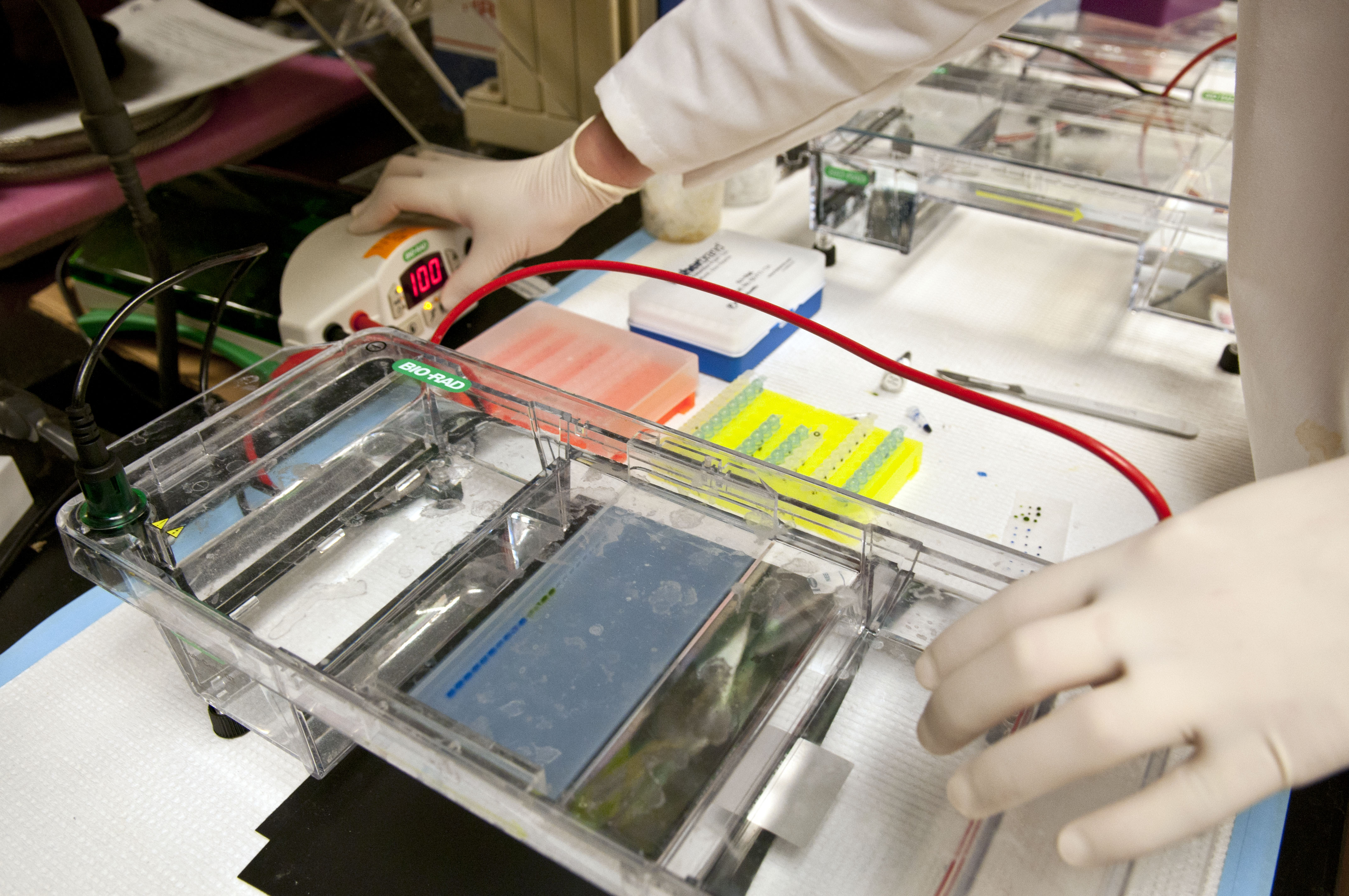
Gel electrophoresis is a powerful method that uses an electric field to separate DNA, RNA, or proteins based on size. Agarose gel electrophoresis is typically used for larger DNA and RNA fragments, while polyacrylamide gel electrophoresis (PAGE) is better suited for smaller fragments or proteins.
 |
| Attribution: School of Natural Resources from Ann Arbor, CC BY 2.0 <https://creativecommons.org/licenses/by/2.0>, via Wikimedia Commons |
 |
| Fig.- This is a diagram that illustrates the process of Gel electrophoresis. Gel electrophoresis is used for DNA fingerprinting, and is very useful in crime investigation since every individual has different DNA patterns. DNA can be extracted from any body fluid sample (i.e. blood, semen, or saliva). DNA is mixed with a restriction enzyme and amplified with PCR. The mixture of DNA fragments plus restriction enzyme is added into the wells of the agarose gel, which leads to a physical change instead of a chemical one. An electric current is applied to the gel from a power source. Negatively charged DNA moves toward the positive side. Larger fragments move slower and are located near the top whereas smaller fragments move faster and are near the bottom. Bands are stained but different shades indicate the amount of DNA each band contains Attribution: Jennifer0328, CC BY-SA 4.0 <https://creativecommons.org/licenses/by-sa/4.0>, via Wikimedia Commons |
Two-Dimensional Gel Electrophoresis
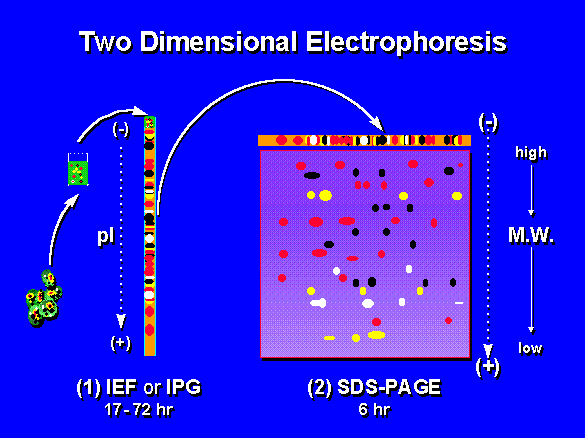
For studying proteins in greater detail, scientists turn to two-dimensional gel electrophoresis. This approach separates proteins based on both their isoelectric point (charge) and molecular weight, providing a comprehensive analysis.
 |
| Attribution: National Institute of Health, Public domain, via Wikimedia Commons |
Isoelectric Focusing
Isoelectric focusing (IEF) is another specialized technique for proteins, separating them based on their isoelectric points. This method provides exceptional accuracy in sorting proteins by their charge properties.
Together, these techniques allow scientists to separate, identify, and analyze molecules, offering insights into the complex makeup of cells and tissues.
 |
| Attribution: Mrbean427, CC BY-SA 3.0 <https://creativecommons.org/licenses/by-sa/3.0>, via Wikimedia Commons |
 |
| Attribution- G8hernan, CC0, via Wikimedia Commons |
Molecular Cloning: Copying DNA and RNA in Living Systems
Molecular cloning enables scientists to insert DNA or RNA fragments into host organisms, essentially creating living copies of the genetic material. This technique is invaluable for studying gene function, producing proteins, and even engineering cells for various applications.
Cloning in Bacterial Systems
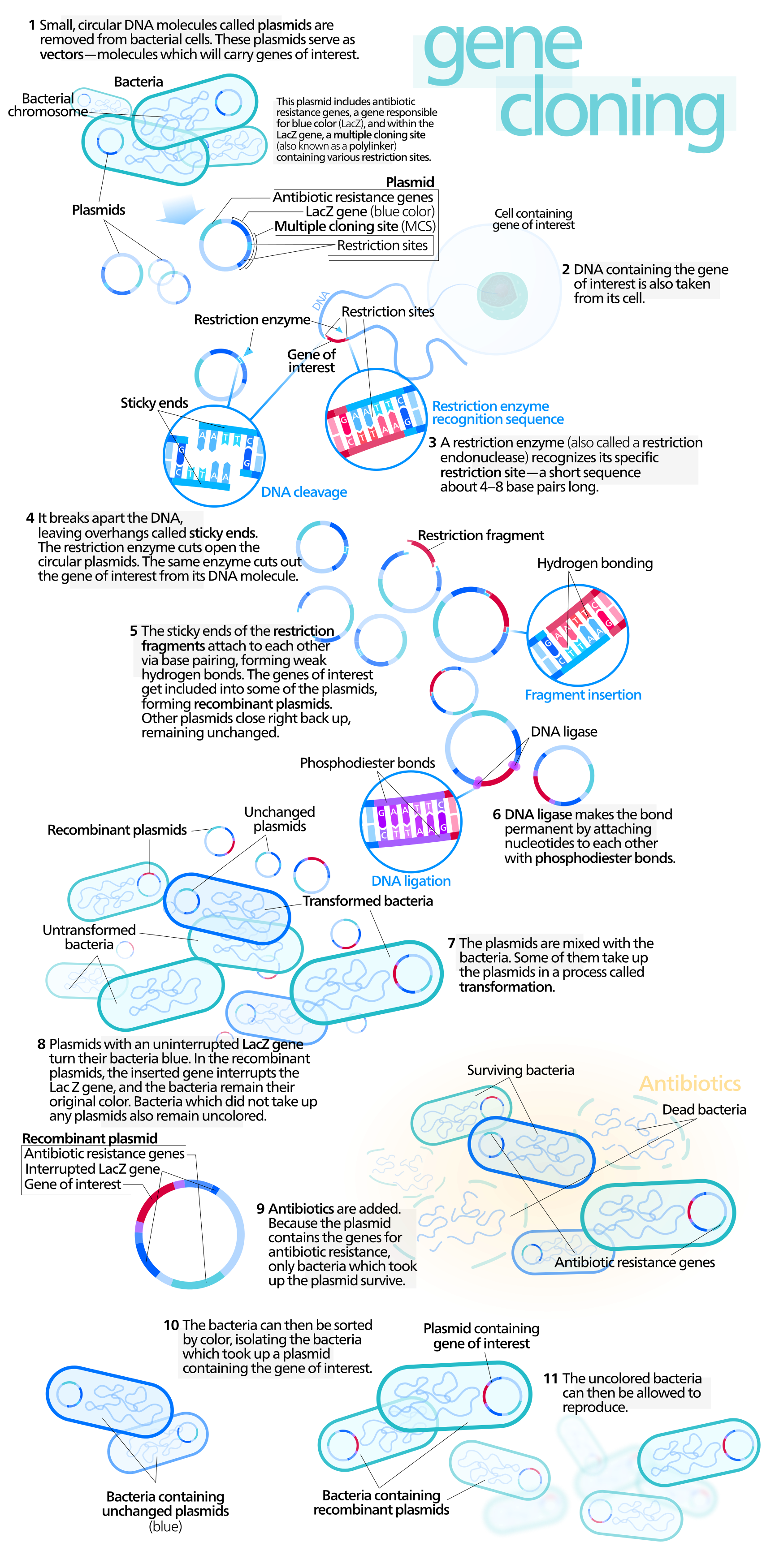
Bacteria, especially Escherichia coli, are ideal hosts for molecular cloning because they grow quickly and can easily replicate foreign DNA. Plasmid vectors carry the desired gene into the bacteria, where it replicates as the bacteria divide.
 |
| Attribution: Alexpicardal97, CC BY-SA 4.0 <https://creativecommons.org/licenses/by-sa/4.0>, via Wikimedia Commons |
 |
| Attribution- Kelvinsong, CC BY-SA 3.0 <https://creativecommons.org/licenses/by-sa/3.0>, via Wikimedia Commons |
Cloning in Eukaryotic Systems
For genes that require more complex cellular machinery, scientists turn to eukaryotic hosts, such as yeast or mammalian cells. Eukaryotic vectors often contain additional elements like promoters and enhancers to ensure that the inserted genes are expressed effectively.
This ability to clone genetic material has opened doors to countless discoveries, allowing scientists to study everything from basic gene function to advanced gene therapies.
Recombinant Protein Expression in Bacteria, Animals, and Plants
The expression of recombinant proteins—proteins created from genetically engineered DNA—is essential for producing biological materials, from enzymes to therapeutic proteins like insulin.
Bacterial Expression Systems
Bacteria, particularly E. coli, are widely used to produce proteins quickly and cost-effectively. However, some proteins require more complex cellular machinery for proper folding and function.
Using Animal and Plant Vectors
For proteins that need specific folding or post-translational modifications, scientists turn to mammalian or plant cells. Animal cells, for example, provide the right environment for proteins that need glycosylation (a complex modification), while plants can be used to produce proteins on a large scale.
This technology enables the production of a wide array of proteins for research, medicine, and even agriculture, highlighting the versatility of recombinant protein expression.
Targeting Specific DNA and RNA Sequences
When studying specific genes or sequences, scientists need methods to target and amplify those segments accurately. Techniques like polymerase chain reaction (PCR) make it possible to amplify DNA and RNA sequences, producing enough material for analysis and manipulation.
Hybridization techniques, such as Southern and Northern blotting, are also commonly used. These methods use complementary DNA or RNA probes to bind and identify specific sequences, allowing scientists to locate and quantify target genes in a sample.
These targeting methods are essential for gene research, enabling precise analysis of genetic sequences in everything from disease studies to ecological research.
 |
| Attribution: w:User:Mpaddock12, CC BY 3.0 <https://creativecommons.org/licenses/by/3.0>, via Wikimedia Commons |
Building Genomic and cDNA Libraries
Genomic and cDNA libraries are collections of DNA sequences that represent an organism’s genome or specific gene expression at a given time. These libraries serve as a resource for discovering, studying, and manipulating genes.
Types of Libraries
- Genomic Libraries: These contain fragments of an organism’s entire genome, housed in vectors like plasmids, bacteriophages, cosmids, BACs, or YACs. They’re essential for gene mapping and sequencing.
 |
| Attribution: Aluquette, CC BY-SA 3.0 <https://creativecommons.org/licenses/by-sa/3.0>, via Wikimedia Commons |
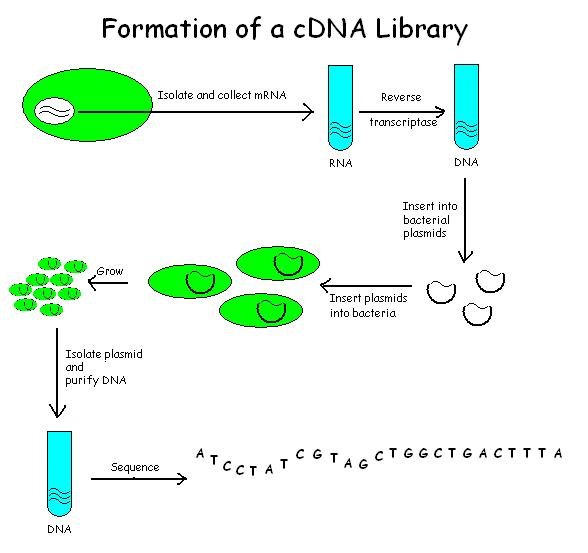
- cDNA Libraries: Made from mRNA, these libraries capture genes that are actively expressed in a particular cell or tissue, allowing researchers to study gene expression.
 |
| Attribution: PhD Dre at the English Wikipedia, CC BY-SA 3.0 <http://creativecommons.org/licenses/by-sa/3.0/>, via Wikimedia Commons |
With these libraries, scientists can efficiently study complex genomes, conduct gene discovery, and explore genetic functions across species.
In Vitro Mutagenesis and Gene Knockouts
One of the most powerful aspects of molecular biology is the ability to alter genes and observe the effects. Techniques like in vitro mutagenesis and gene knockout allow scientists to introduce mutations or completely disable genes to study their functions.
In Vitro Mutagenesis
In in vitro mutagenesis, scientists can make specific changes to DNA sequences, studying how these mutations impact gene and protein function. Techniques like site-directed mutagenesis enable precise modifications, which are invaluable for understanding diseases or creating genetically modified organisms.
Gene Knockouts
Gene knockout techniques allow researchers to “knock out” or deactivate a gene entirely in a model organism, helping scientists see how the absence of that gene affects the organism. This approach has been transformative in understanding gene function, especially in disease research.
These genetic tools provide insights into gene roles, disease mechanisms, and potential therapeutic targets.
 |
| Attribution: Yun-Zheng Le, CC BY-SA 2.5 <https://creativecommons.org/licenses/by-sa/2.5>, via Wikimedia Commons |
Protein Sequencing and Post-Translational Modifications
Understanding proteins requires more than knowing their amino acid sequences. Scientists also need to understand post-translational modifications (PTMs), which can alter a protein’s function, stability, and interactions.
Protein Sequencing
Protein sequencing methods like Edman degradation and mass spectrometry reveal the exact order of amino acids, providing the blueprint for how proteins function.
Detecting PTMs
PTMs such as phosphorylation, glycosylation, and ubiquitination are detected using specialized techniques like mass spectrometry and Western blotting. PTMs can change how a protein interacts within the cell, affecting everything from cell signaling to immune response.
Studying these modifications gives scientists a fuller picture of how proteins operate within the cell, which is essential for understanding complex biological systems.
DNA Sequencing and Genome Projects
DNA sequencing has advanced tremendously, allowing scientists to decode entire genomes quickly and cost-effectively. From the human genome to the genomes of plants, animals, and microbes, sequencing reveals the full genetic makeup of an organism.
Genome Sequencing Techniques
Several approaches are used, including whole-genome sequencing and targeted sequencing, which focuses on specific parts of the genome. With technologies like next-generation sequencing (NGS), scientists can sequence complex genomes and analyze genetic variations that contribute to health, disease, and evolution.
Genome projects provide the foundation for personalized medicine, evolutionary studies, and biotechnology, helping scientists decode the full genetic instructions for life.
Analyzing Gene Expression at the RNA and Protein Levels
Analyzing gene expression provides insights into how genes are turned on and off in response to environmental factors, developmental stages, or diseases.
Microarray Technology
Microarray technology allows researchers to measure the expression of thousands of genes simultaneously, giving a snapshot of gene activity under specific conditions.
qPCR and Western Blotting
Quantitative PCR (qPCR) measures RNA levels, while Western blotting detects protein levels. Together, these methods provide a comprehensive view of gene expression, from RNA transcription to protein synthesis.
These tools help scientists understand the complexities of gene regulation and the factors that influence gene expression, which is essential for everything from cancer research to developmental biology.
Carbohydrate and Lipid Analysis Techniques
While DNA, RNA, and proteins get much of the attention, carbohydrates and lipids are also crucial for cellular functions. Scientists use techniques like thin-layer chromatography (TLC), mass spectrometry, and high-performance liquid chromatography (HPLC) to separate, analyze, and identify carbohydrates and lipids.
By analyzing these biomolecules, researchers can study metabolic pathways, energy storage, and the impact of diet on health, broadening our understanding of biology beyond genetics.
RFLP, RAPD, and AFLP Techniques: Studying DNA Variation
Genetic variation is the basis of evolution and biodiversity. Techniques like Restriction Fragment Length Polymorphism (RFLP), Random Amplified Polymorphic DNA (RAPD), and Amplified Fragment Length Polymorphism (AFLP) help scientists study DNA variations that distinguish individuals or species.
These techniques are essential for genetic mapping, biodiversity studies, and understanding disease transmission, providing valuable insights into genetic diversity and evolution.
 |
| Fig.- RFLP Attribution: Kenneth.jh.han, CC BY-SA 3.0 <https://creativecommons.org/licenses/by-sa/3.0>, via Wikimedia Commons |
 |
| Fig.- AFLP Attribution- Barbarossa at Dutch Wikipedia, Public domain, via Wikimedia Commons |
Conclusion: The Boundless Potential of Molecular Biology
From the isolation of genes to the engineering of organisms, molecular biology and recombinant DNA technology have opened up new worlds of exploration and discovery. These tools give scientists unparalleled control over genetic material, enabling breakthroughs in health, agriculture, and environmental science. As these technologies continue to evolve, the possibilities for understanding life and solving complex challenges expand, promising a future where science and innovation are truly limitless.
The DNA revolution has only just begun, and as we unlock the secrets encoded within genomes, the potential for progress in genetics and biotechnology is boundless, reshaping our understanding of life itself.