
Think about the countless forms of life on Earth. Evolution is the driving force behind this stunning variety, but what exactly powers these changes over generations? Population genetics helps us dive into this process, spotlighting the critical roles of gene frequencies, migration, natural selection, and even genetic drift. Through these forces, life on Earth has become a vast, vibrant tapestry, constantly changing and adapting. Here, we’ll look closer at these genetic forces that guide evolution, tracing how they impact everything from tiny gene shifts to the creation of entirely new species.
What is Population Genetics?
Population genetics sounds complex, but it boils down to studying how genes change in populations over time. The essential components include populations, gene pools, and gene frequency. Together, they create the genetic foundation for evolution.
Populations and Gene Pools: In population genetics, a population is a group of organisms of the same species that reproduce together. A population has a gene pool—the full collection of genes in that group.
Gene Frequency: Inside this gene pool, gene frequency (or allele frequency) indicates how often a specific version of a gene pops up compared to others. Shifts in these frequencies drive evolution over generations and reveal the genetic variations within and across populations.
The Hardy-Weinberg Principle: Nature’s Baseline
The Hardy-Weinberg principle gives us a baseline to understand genetic stability. Essentially, it says that in an ideal world where nothing interferes, allele and genotype frequencies in a population would remain constant. For this stability to hold, five conditions must be in place:
 |
| Attribution- Angelahartsock, CC0, via Wikimedia Commons |
- No mutations altering the genes.
- Random mating within the population.
- No natural selection affecting survival.
- Large population size, keeping gene frequencies stable.
- No migration into or out of the group.
 |
| Attribution: Johnuniq, CC BY-SA 3.0 <https://creativecommons.org/licenses/by-sa/3.0>, via Wikimedia Commons |
This equilibrium is pretty rare in real life, but by understanding the principle, we can better identify the actual forces at work when gene frequencies start to shift.
Forces That Change Gene Frequency: The Essentials of Evolution
In the real world, populations don’t often meet the conditions of Hardy-Weinberg equilibrium. Gene frequencies change all the time, influenced by factors like selection, migration, and chance events.
Natural Selection: Evolution’s Strongest Force
Natural selection is the engine of evolution. When certain gene variations improve an organism's ability to survive and reproduce, they become more common over generations. This force has several forms:
- Directional Selection: Shifts the average trait towards one end of the spectrum, like faster speeds in cheetahs, favoring one extreme trait.
 |
| Attribution: Ibbiologystudentone, CC BY-SA 4.0 <https://creativecommons.org/licenses/by-sa/4.0>, via Wikimedia Commons |
- Stabilizing Selection: Favors average traits over extremes, such as average birth weight in humans, keeping gene frequencies stable by removing outliers.
 |
| Attribution: Keith Chan, CC BY-SA 4.0 <https://creativecommons.org/licenses/by-sa/4.0>, via Wikimedia Commons |
- Disruptive Selection: Favors the extremes, which may lead to the formation of new species by encouraging genetic differences over time.
 |
| Attribution: Azcolvin429, CC BY-SA 3.0 <https://creativecommons.org/licenses/by-sa/3.0>, via Wikimedia Commons |
Migration: Bringing in New Genes
When organisms move from one place to another, they bring their genes with them. Migration, or gene flow, introduces new gene variants to populations, boosting genetic diversity. However, if two populations exchange genes too frequently, they may lose their unique traits, blending into a more uniform group.
Genetic Drift: Evolution’s Roll of the Dice
Genetic drift refers to random changes in gene frequencies, especially powerful in smaller populations. It’s different from natural selection because it’s driven by chance, not survival advantages. The two key forms of genetic drift are:
- Bottleneck Effect: When a large part of a population is wiped out, leaving a smaller, genetically different group to repopulate.
 |
| Attribution: OpenStax, Rice University, CC BY 4.0 <https://creativecommons.org/licenses/by/4.0>, via Wikimedia Commons |
- Founder Effect: When a small group breaks away from a larger one, carrying only a small part of the original gene pool, which can lead to rapid genetic changes in the new group.
 |
| Attribution: Professor marginalia, CC BY-SA 3.0 <https://creativecommons.org/licenses/by-sa/3.0>, via Wikimedia Commons |
Adaptive Radiation: Evolution’s Rapid Response
Adaptive radiation happens when a single species branches out into several new species, each adapted to a specific niche. This often occurs after mass extinctions or when a species encounters a new environment with unoccupied roles. For example, Darwin’s finches in the Galápagos Islands descended from one common ancestor but evolved into many forms, each adapted to a unique food source.
Isolation Mechanisms and Speciation: Building New Species
For speciation, or the formation of new species, to occur, there needs to be some form of reproductive isolation, meaning groups within a population stop interbreeding. Isolation can occur in a couple of ways:
- Prezygotic Isolation: This prevents mating altogether through differences in behavior, timing, or physical compatibility.
- Postzygotic Isolation: Even if mating occurs, it results in hybrid offspring that are either sterile or less capable of surviving, limiting gene flow between the groups.
Speciation: Evolution’s Divergent Paths
Speciation can happen in several ways based on geographic and environmental factors.
Allopatric Speciation: This occurs when populations are geographically separated by physical barriers like rivers or mountains. Over time, genetic differences accumulate, and the two groups become separate species.
Sympatric Speciation: This occurs in the same geographic area, often because of ecological differences or niche specialization. Though rare, it leads to incredible biodiversity, like the diverse cichlid fish species that evolved within single lakes in Africa.
 |
| Attribution- Vanished user, Public domain, via Wikimedia Commons |
Convergent Evolution: When Different Species Share Traits
Convergent evolution occurs when unrelated species develop similar traits in response to comparable environmental pressures. A classic example is how sharks (fish) and dolphins (mammals) evolved streamlined bodies to glide through water, even though they don’t share a close ancestor. Convergent evolution highlights how similar environments can lead to similar adaptations in very different species.
 |
| Attribution- Chiswick Chap, CC BY-SA 4.0 <https://creativecommons.org/licenses/by-sa/4.0>, via Wikimedia Commons |
 |
| Attribution- Oleg Alexandrov, Public domain, via Wikimedia Commons |
Sexual Selection: When Evolution Takes a Romantic Turn
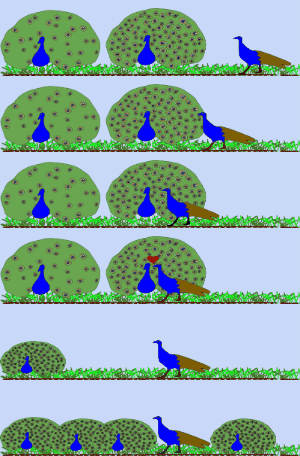
Sometimes, the driving force isn’t survival but attraction. Sexual selection is a type of natural selection where certain traits increase an individual’s chance of mating, even if they don’t necessarily improve survival. These traits can create sexual dimorphism—stark differences between males and females. Think about the elaborate tail feathers of a peacock or the flashy courtship dances in certain bird species. The stronger these traits are, the more likely they are to be passed on.
 |
| Attribution: Sizzlinggreg, CC BY-SA 4.0 <https://creativecommons.org/licenses/by-sa/4.0>, via Wikimedia Commons |
Co-evolution: The Mutual Influence of Species
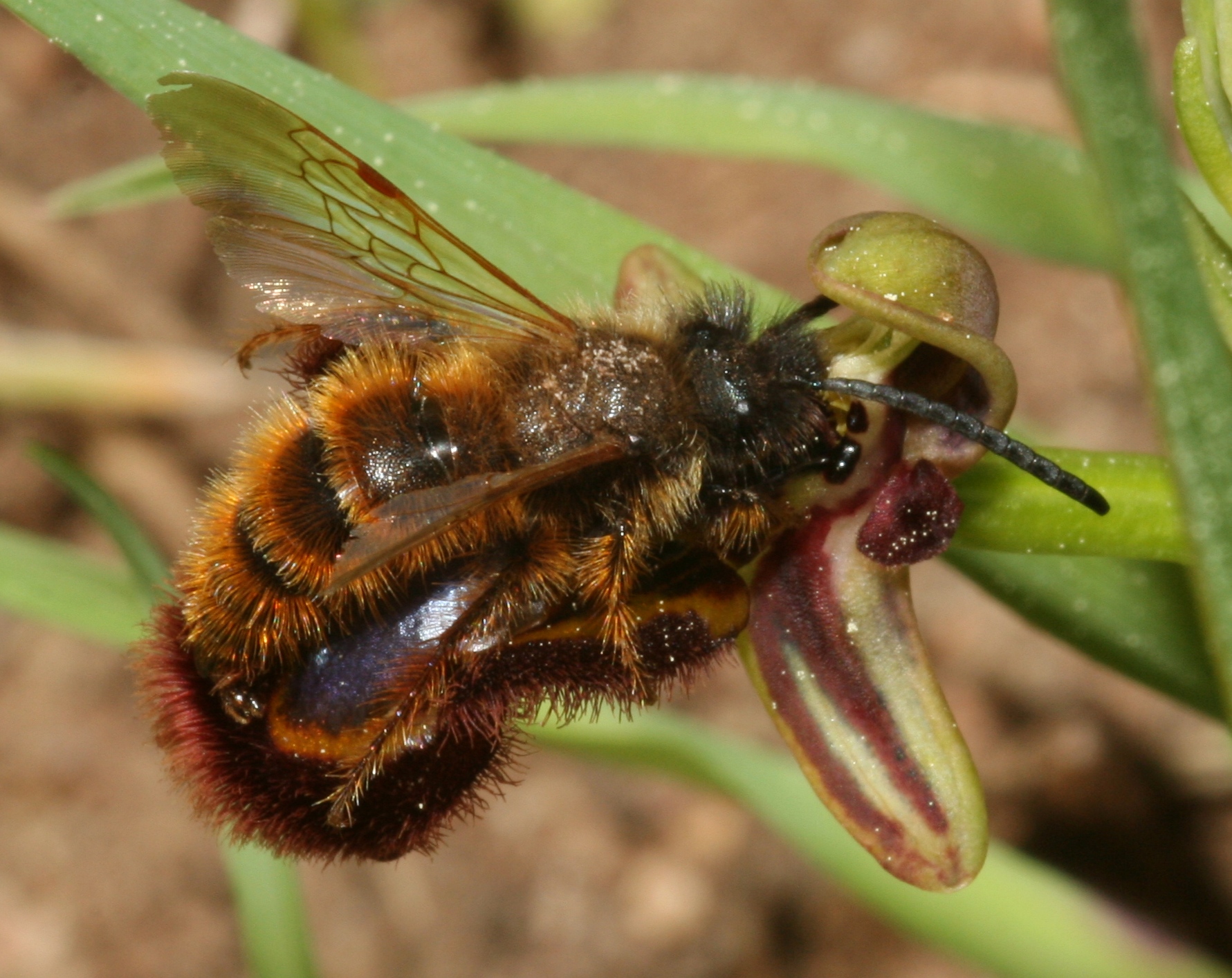
Co-evolution is the process by which two or more species evolve together, each influencing the other’s changes over time. This often occurs in symbiotic relationships like predator-prey, host-parasite, or mutualistic partnerships. A famous example is the relationship between bees and flowering plants. Over time, flowers have evolved vibrant colors and alluring scents to attract bees, and bees have developed ways to collect nectar and pollen efficiently. This co-evolutionary process ensures both species benefit and continue to thrive together. One another example is a relationship between a Leopard (Predator) and a Bunchbeck (Prey).
 |
| Attribution: NJR ZA, CC BY-SA 3.0 <https://creativecommons.org/licenses/by-sa/3.0>, via Wikimedia Commons |
 |
| Attribution- Pietro Niolu, CC BY-SA 3.0 <https://creativecommons.org/licenses/by-sa/3.0>, via Wikimedia Commons |
Conclusion: The Intricate Code of Life’s Evolution
From gene frequencies and adaptive radiation to speciation and sexual selection, evolution is far more than just survival of the fittest. It’s a dynamic, multi-faceted process that takes place over countless generations. By understanding these genetic mechanisms, we gain insight into how life on Earth adapts, diversifies, and sometimes even converges, responding to the pressures and opportunities presented by the environment. We uncover the intricate processes shaping the biological world through population genetics, illustrating how every gene shift, migration, and mutation contributes to the endless diversity of life around us.