In animal development, morphogenesis and organogenesis play pivotal roles in sculpting the structure and purpose of organisms. This blog provides a comprehensive exploration of various facets of these processes, with a specific focus on the intricate mechanisms of cell aggregation and differentiation in Dictyostelium, pattern formation in Drosophila, amphibians, and chicks, as well as the complex process of organogenesis. Additionally, we will delve into the fascinating realms of neuron differentiation, post-embryonic development, environmental influences, and the intriguing process of sex determination.
Morphogenesis
Morphogenesis is the intricate biological process through which an organism attains its distinctive shape, involving the orchestration of genetic, molecular, and environmental factors. On the other hand, organogenesis is the precisely regulated process that gives rise to the formation of specific organs and structures from embryonic cells. Both methods are crucial in the development and differentiation of organisms.
Cell Aggregation and Differentiation in Dictyostelium
Dictyostelium is a fascinating genus of single-celled amoeboid eukaryotes that serve as a model organism. One of the most remarkable features of these organisms is their capacity to come together and create multicellular structures under specific circumstances.
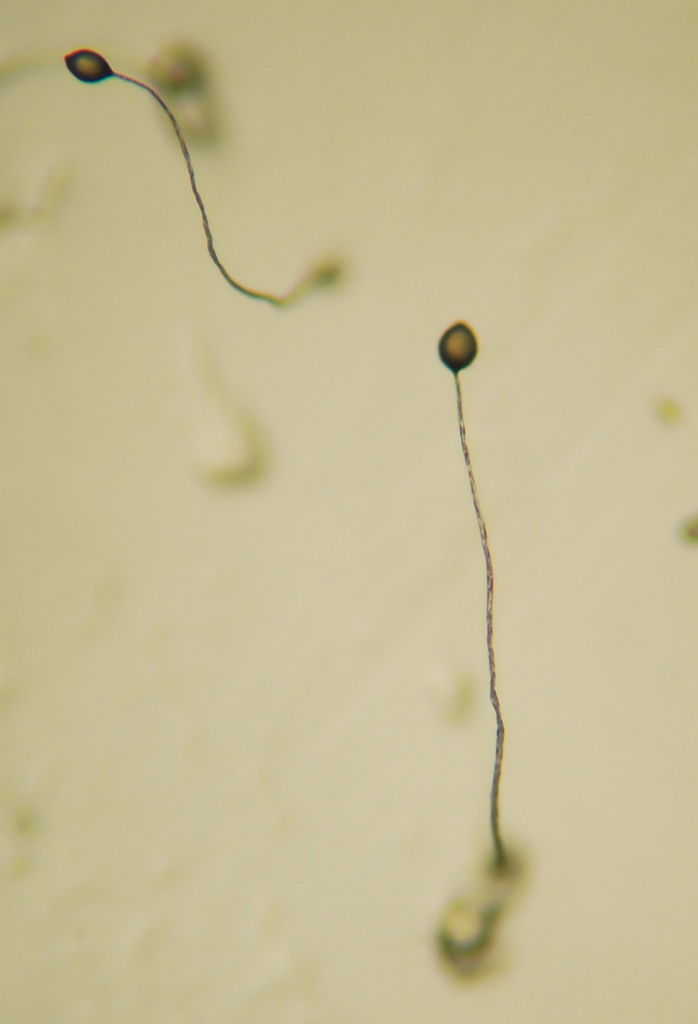 |
| Author: Bruno in Columbus, Public domain, via Wikimedia Commons |
Aggregation Process
Chemotaxis: Dictyostelium cells release cyclic AMP (cAMP) as a signalling agent, prompting adjacent cells to migrate towards the source of the signal.
Formation of the Aggregate: Cells come together to form a multicellular assembly known as a slug. This process is an essential part of the transition from a single-celled to a multicellular condition.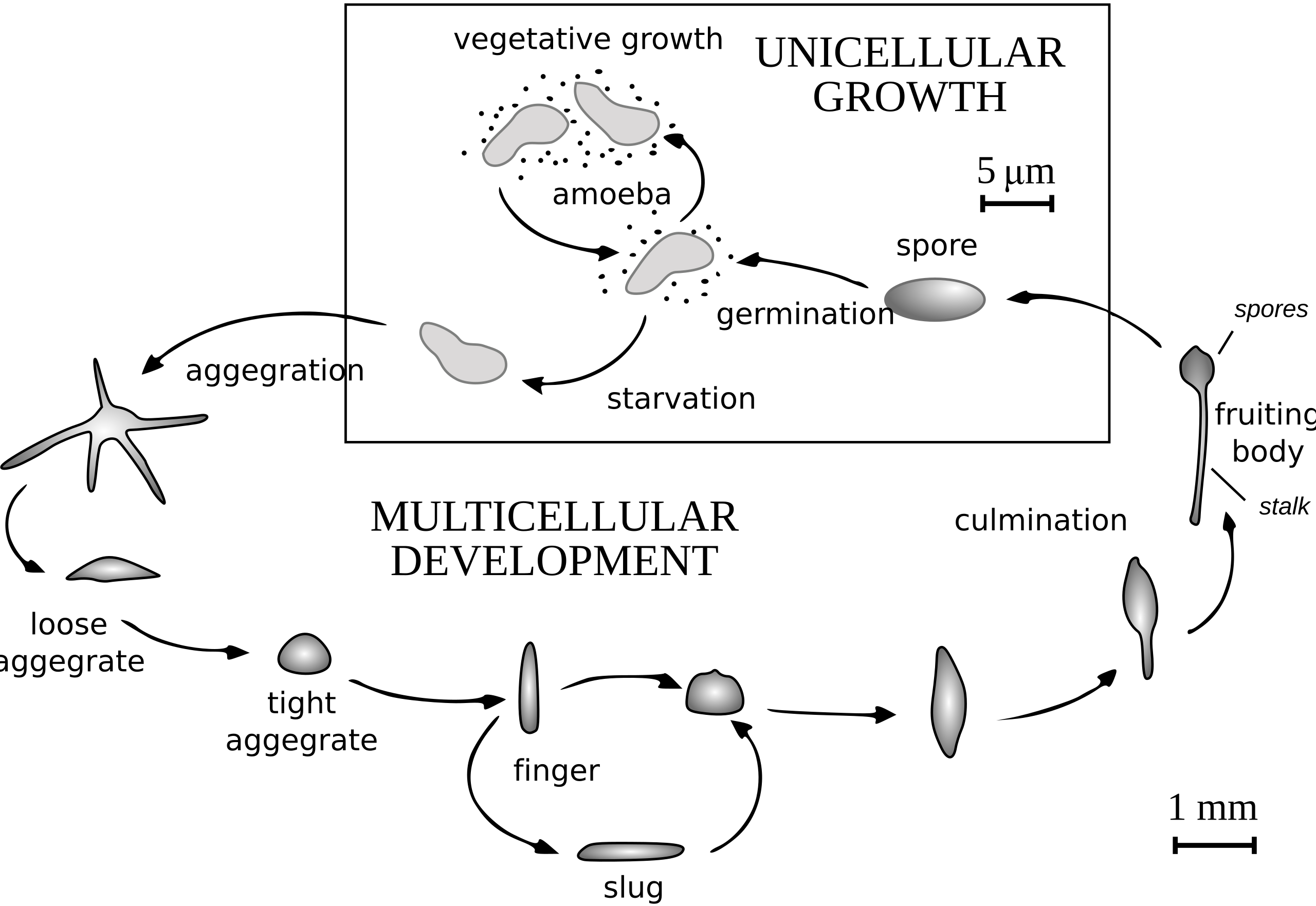 |
| Attribution: Tijmen Stam, IIVQ (SVG conversion) - user:Hideshi (original version), CC BY-SA 3.0 <http://creativecommons.org/licenses/by-sa/3.0/>, via Wikimedia Commons |
Differentiation
Cell Fate Determination: The aggregate consists of cells that differentiate into either stalk cells or spore cells.
Regulatory Genes: The process of cellular differentiation is controlled by specific regulatory genes and signalling pathways. One of the key signalling molecules involved in this process is DIF-1, which plays a crucial role in triggering the differentiation of stalk cells.
Axes and Pattern Formation
Drosophila
 |
| Attribution: Arthur206 (talk | contribs) No author, free illustration, CC BY-SA 4.0 <https://creativecommons.org/licenses/by-sa/4.0>, via Wikimedia Commons |
 |
Attribution: Debivort at en.wikipedia, Public domain, via Wikimedia Commons
|
Segmentation: Homeotic genes, such as the Hox gene cluster, have a significant role in determining the segments along this axis.
 |
Attribution:https://upload.wikimedia.org/wikipedia/commons/thumb/7/73/Gap_gene_expression.svg/2560px-Gap_gene_expression.svg.png
|
 |
Fig.-Pair-rule genesAttribution: Fred the OysteriThe source code of this SVG is valid. This vector image was created with Adobe Illustrator by v., CC BY-SA 4.0 <https://creativecommons.org/licenses/by-sa/4.0>, via Wikimedia Commons
|
Amphibia
Spemann-Mangold Organizer: The organizer in amphibians is essential for setting up the body axis and is located at the dorsal lip of the blastopore.
Inductive Interactions: This organizer induces nearby cells to take on particular fates, a process that relies significantly on signalling molecules such as BMPs and Wnt.Chick
Primitive Streak Formation: Primitive streak formation is a crucial event in chick development, marking the future anterior-posterior axis.
Hensen’s Node: Similar to the Spemann-Mangold organizer in amphibians, Hensen's node is crucial for axis formation and patterning.
 |
Fig. 1. Diagrams depicting the early stages of chick development.
The upper row of diagrams shows embryos at stages XI-XIV (pre-primitive streak), 2 (early streak), 3 (mid-streak) and 3+ (mid- to late streak), viewed from the dorsal (epiblast) side. The arrows denote the main morphogenetic movements (‘Polonaise’) occurring within the plane of the epiblast. After stage 4 (end of gastrulation), convergence of cells towards and ingression through the anterior part of the streak slows down or ceases (although these movements continue through the middle and posterior parts of the streak), while the epiblast anterior to the streak (prospective neural plate) elongates (Sheng et al., 2003); later, the streak starts to regress, further lengthening the neural plate posteriorly (Spratt, 1947). The lower row of diagrams shows an exploded view of the embryos at each of the above stages, with the top row of diagrams representing the upper layer (epiblast, shades of yellow), the bottom row showing the lower layer (shades of blue/green: hypoblast in dark green, endoblast in light green, definitive or gut endoderm in blue) and the centre row showing the middle (mesodermal) layer (primitive streak, in red). Within the epiblast, the central (yellow) region is the area pellucida and the outer (mustard) region the extraembryonic, area opaca.
Attribution: Octavian Voiculescu Lawrence Bodenstein I-Jun Lau Claudio D Stern, CC BY 3.0 <https://creativecommons.org/licenses/by/3.0>, via Wikimedia Commons |
Organogenesis
Vulva Formation in Caenorhabditis elegans
Anchor Cell: The gonad's anchor cell induces vulval development by secreting LIN-3, an EGF-like signalling molecule.
Signaling Pathways: The EGF/RAS/MAPK pathway becomes active, resulting in the vulval precursor cells differentiating.
Cell Lineage: The lineage and division pattern of vulval precursor cells are carefully controlled to be very precise i.e. meticulously regulated. |
| Fig.-Transverse section of head of chick embryo of fifty-two hours’ incubation, showing the lens and the optic cup |
Limb Development and Regeneration in Vertebrates
Apical Ectodermal Ridge (AER): The apical ectodermal ridge (AER) located at the tip of the limb bud releases FGF, which is necessary for the growth of the limb.
Zone of Polarizing Activity (ZPA): The ZPA at the posterior limb bud secretes Sonic hedgehog (Shh), which is crucial for anterior-posterior patterning.
Regeneration: Limb-regenerating species like salamanders form a blastema at the injury site, where cells dedifferentiate, proliferate, and differentiate into a new limb.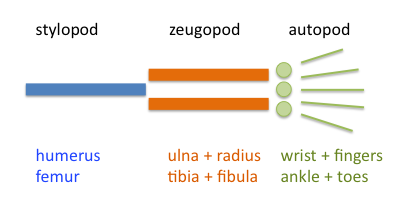 |
| Attribution: Peteruetz, CC BY-SA 3.0 <https://creativecommons.org/licenses/by-sa/3.0>, via Wikimedia Commons |
 |
Attribution: Fred the OysteriThe source code of this SVG is valid. This vector image was created with Adobe Illustrator by v., CC BY-SA 4.0 <https://creativecommons.org/licenses/by-sa/4.0>, via Wikimedia Commons
|
 |
Attribution: MaggieM14, CC BY-SA 4.0 <https://creativecommons.org/licenses/by-sa/4.0>, via Wikimedia Commons
|
 |
Fig.- Alignment of partial ZPA Regulatory Sequence (ZRS) in vertebrates show increased substitutions in advanced snakes compared to earlier basal snakes. Genomes were downloaded from the UCSC Genome Browser and GigaDB, and orthologous ZRS enhancer sequences were obtained by mapping the mouse sequence to the other genomes with BLAST in Kvon et al
Attribution: MaggieM14, CC BY-SA 4.0 <https://creativecommons.org/licenses/by-sa/4.0>, via Wikimedia Commons
|
 |
| Author: Zebra.element at en.wikipedia, Public domain, via Wikimedia Commons |
 |
Fig.- Early signals that define the craniocaudal (anterior-posterior), and proximodistal axes in vertebrate limb development.
Attribution: Peteruetz, CC BY-SA 3.0 <https://creativecommons.org/licenses/by-sa/3.0>, via Wikimedia Commons |
Differentiation of Neurons
Neurogenesis: The process of generating neurons from neural stem cells and progenitors.
Signalling Pathways: The Notch, Wnt, and Shh pathways are crucial in the process of neuronal differentiation.
Axon Guidance: Molecules such as Netrins, Semaphorins, and Ephrins direct the developing axons to their targets. |
Schematic showing the high-level multi-step process of neurogenesis and gliogenesis. Activation of proneural genes by EGF and FGF results in neural stem cell (NSC) differentiation. Upon Notch-Delta signalling between neighbouring NSCs, a subset of cells will become neuronal progenitors (giving rise to neurons), whereas the inhibited cells will become glial progenitors (giving rise to astrocytes and oligodendrocytes).
Attribution: Audrey Effenberger, CC BY-SA 4.0 <https://creativecommons.org/licenses/by-sa/4.0>, via Wikimedia Commons |
Post-Embryonic Development
Larval Formation
Metamorphosis in Insects: The transition from larva to adult entails substantial morphological changes, which are influenced by hormones like ecdysone.
 |
| Attribution: Username1927, CC BY-SA 4.0 <https://creativecommons.org/licenses/by-sa/4.0>, via Wikimedia Commons |
Larval Stages in Amphibians: Amphibians go through a developmental stage in which they start out as aquatic larvae and then transform into adults that live on land.
 |
| Author: Arthur Bartholemew, Public domain, via Wikimedia Commons |
Metamorphosis
Hormonal Control: The transformation of amphibians (Metamorphosis) is greatly influenced by thyroid hormones.
Morphological Changes: Metamorphosis includes significant remodelling of tissues and organs, for example, the transition from gills to lungs in amphibians.
Environmental Regulation of Normal Development
Temperature: The temperature of the environment plays a significant role in influencing developmental processes, including sex determination, in certain reptile species.
Nutrition: The presence of essential nutrients can influence the speed of development and the final results.
Teratogens: Exposure to harmful substances at specific stages of development can result in the formation of congenital abnormalities.
Sex Determination
Genetic Mechanisms: Many animal species rely on specific genes located on sex chromosomes to determine an individual's sex. For example, in mammals, the SRY gene plays a crucial role in sex determination. |
| Attribution: CFCF, CC BY-SA 3.0 <https://creativecommons.org/licenses/by-sa/3.0>, via Wikimedia Commons |
Hormonal Influences: Hormones are vital for the development of sexual characteristics and reproductive organs.
Conclusion
The development of animals involves complex and ever-changing processes known as morphogenesis and organogenesis. These processes are crucial for understanding how multicellular organisms take shape, grow, and adapt to their surroundings. Gaining insight into these processes is essential for progress in developmental biology, regenerative medicine, and evolutionary biology. Scientists are delving into the intricacies of development by studying model organisms such as Dictyostelium, Drosophila, Caenorhabditis elegans, and vertebrates. Through this research, they are uncovering the detailed mechanisms that govern development, with potential implications for advances in medicine and biotechnology.


.png)
